Your mate just pulled up in a new Hyundai Ioniq 6 and wants to know if you're on for a weekend in Kerry. Grand, you say. Then he mentions it's electric. Suddenly everyone in the group chat goes quiet.
Range anxiety is real. But is it still justified? That depends almost entirely on whether you plan the route or just wing it like you would in a diesel. Ireland's charging network has changed a lot in the last two years. Not enough to stop the complaints, but enough to make a proper electric road trip genuinely possible. If you know what you're doing.
Here's what the infrastructure actually looks like right now, which routes work, which ones still punish you, and what car you'd want under you for any of it.
What the Network Actually Looks Like in 2026
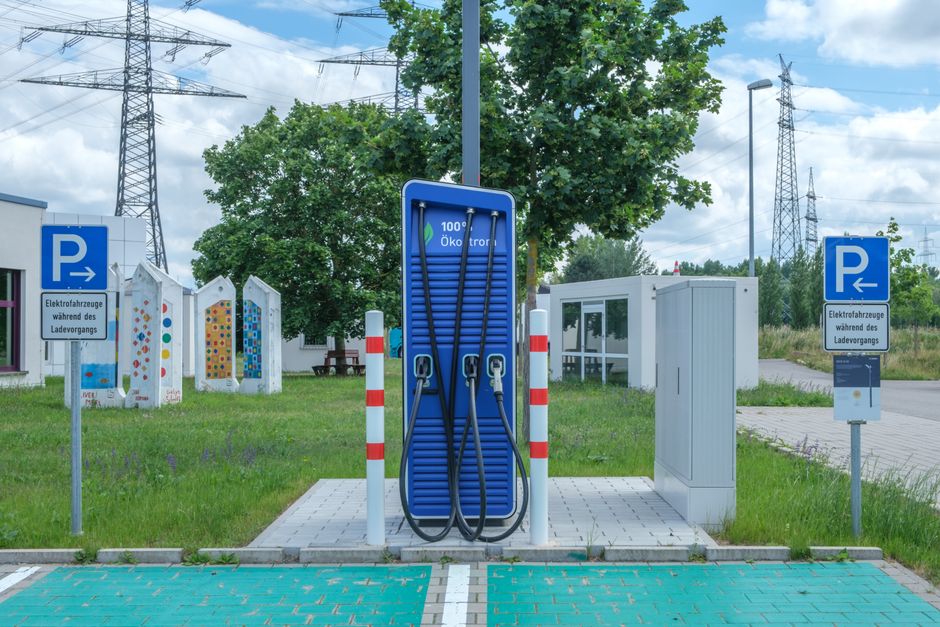
Ireland has somewhere north of 2,500 public charge points as of early 2026, according to the ESB's own published data. That sounds reassuring until you realise a big chunk of those are 22kW AC units that need three to four hours to meaningfully top you up. Useful if you're stopping for lunch and a long browse around a craft shop. Not useful if you're burning through motorway kilometres.
The fast and rapid chargers, meaning 50kW DC and above, are the ones that matter for road trips. ESB ecars has been rolling them out along the main N and M corridors. Ionity has planted high-power hubs at several motorway service areas. The Source-Siemens partnership is adding more. The coverage is getting serious. But it is not seamless, and the west coast is where the gaps bite hardest.
The Dublin to Cork Run: Actually Fine
This is the easiest long-distance electric route in the country. The M7 and M8 corridor is well serviced. You have rapid chargers at Portlaoise, Cashel, and multiple points around Cork city. In a car with a real-world range of 350km or more, like a 2024 Ioniq 6 long-range or a Model Y, you could do Dublin to Cork without charging at all and still arrive with buffer. Most people will stop once anyway, out of habit if nothing else.
Verdict: no anxiety required.
Dublin to Galway: Solid but Watch the West
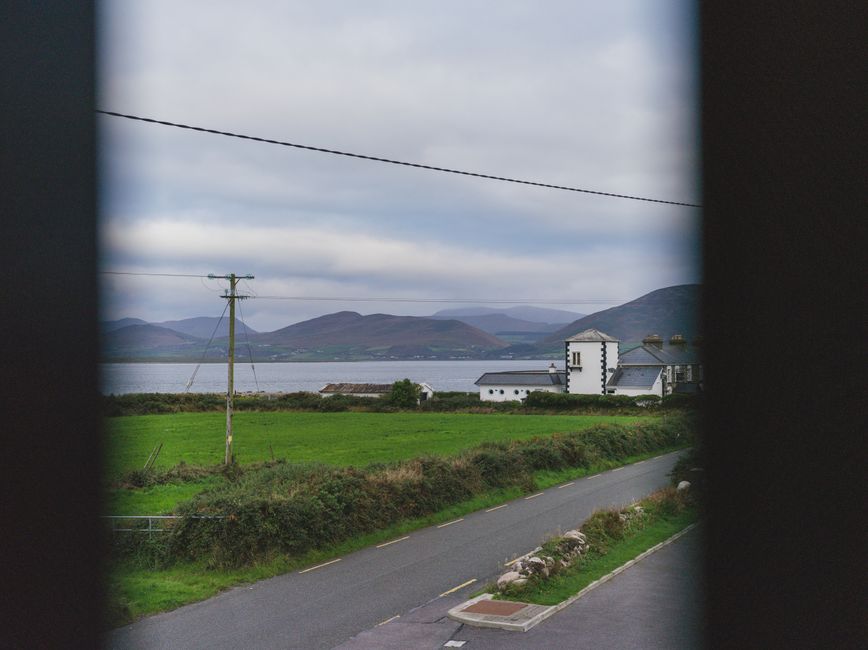
The M6 is fine. Athlone has chargers. Ballinasloe has chargers. Galway city has a decent spread of options. The problem starts when you leave Galway and head for Connemara or the Wild Atlantic Way. Out past Clifden, infrastructure thins considerably. You can do the scenic loop, but you need to plan charge stops in Galway before you head out, and again on the way back. Spontaneous detours to remote peninsulas require a bit more nerve.
Verdict: manageable with prep, sketchy without it.
Dublin to Dingle: The Real Test
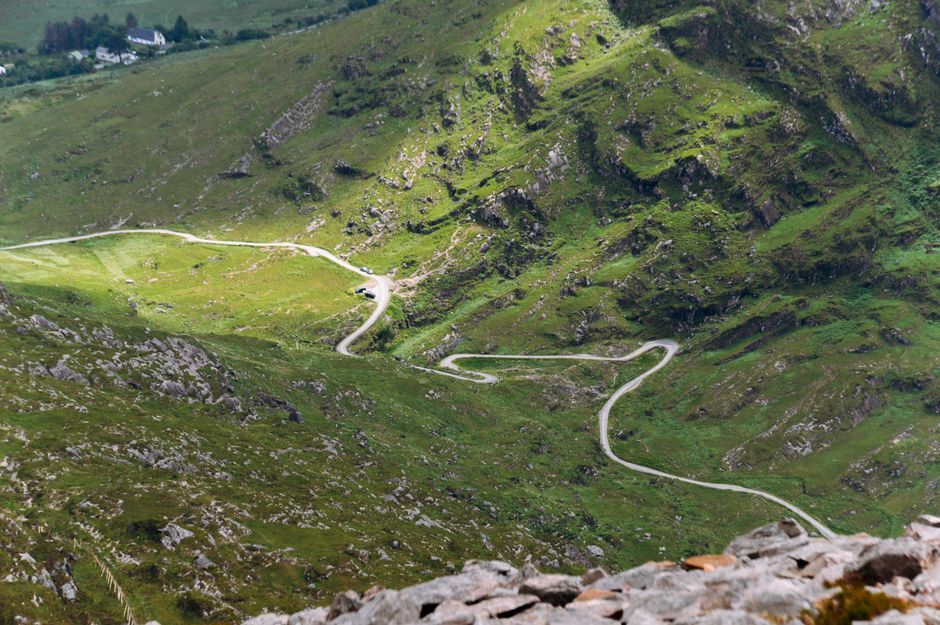
This is the one people worry about most. And honestly, it deserves some respect. The route south-west through Limerick and Tralee has improved. There are rapid chargers in Limerick, Tralee, and Killarney. Dingle town itself has charge points, though availability can be an issue in summer peak season. The Ring of Kerry loop adds mileage and has fewer safety nets.
In a 400km real-world range car, Dublin to Dingle is doable with one planned charge stop. In something with a 280km real-world range, you are looking at two stops and careful management. Not a disaster. Just homework.
Verdict: achievable, not effortless.
Belfast to Sligo: The Forgotten Route
Nobody talks about this one. The north-west is still underserved. If you are heading up through Sligo, Donegal, and across to Belfast or vice versa, the gaps between reliable rapid chargers stretch longer than is comfortable. Sligo town has options. Letterkenny has improved. But the stretches in between require either a very long-range car or genuine patience at a slower charger along the way.
Verdict: doable in the right car. Not the route to test a budget short-range EV.
What Car You Actually Want for This
Range matters more than marketing claims. Manufacturers quote WLTP range in lab conditions. In the real world, with Irish weather, headwinds, hills, and the heating on, knock 15 to 20 percent off that number.
Cars that handle Irish road trips well right now:
Hyundai Ioniq 6 Long Range. Around 450km real-world in good conditions. Fast charging speed is excellent, hitting 800V architecture. It eats the Dublin-Kerry run comfortably.
Kia EV6 GT-Line. Similar platform to the Ioniq 6. Slightly less range but well-equipped and genuinely rapid to charge.
Tesla Model Y Long Range. The Supercharger network is Tesla's real advantage. Their chargers are faster, more reliable, and more consistently located than most public alternatives. Frustrating as it is to admit for a non-Tesla person.
Volkswagen ID.4 Pro. Solid real-world range around 380km. CCS fast charging works well. Not exciting but deeply competent.
Anything with a sub-300km real-world range is a city car doing overtime on a road trip. Respect its limits accordingly.
The Practical Charging Playbook
A few things that make the difference between a good trip and a bad afternoon in a car park:
Use multiple apps. No single app covers every network. Zap-Map, the ESB eCars app, and Ionity's own app between them cover most of what you need. Download them before you leave.
Charge to 80 percent and move. Above 80 percent, charging slows dramatically on most batteries. Stop more often, charge less each time, and keep moving.
Book hotel with charging. More Irish hotels now offer EV charging. It is worth the five minutes of research to wake up with a full battery instead of hunting a charger before breakfast.
Have a backup plan for every stop. Chargers break. It happens. Know the next nearest option before you arrive at your primary target.
Check real-time status. A charger that exists on a map is not necessarily a charger that is working today. Zap-Map crowd-sourced reports are your friend here.
Is Ireland Actually Ready?
Mostly yes, on the main corridors. Partially yes, on the secondary routes. Not quite yet, in the more remote west and north-west. The network is improving faster than the complaints suggest, but slower than the marketing promises.
If you are considering making the switch, the costs and tax situation stack up better than most people realise. And the car options for 2026 are genuinely good. The infrastructure is the last piece, and it is catching up.
Your mate with the Ioniq 6 is right to suggest Kerry. Just tell him to download Zap-Map before you hit the Tralee bypass. The craft shops in Dingle will still be there when you've sorted the charging plan.