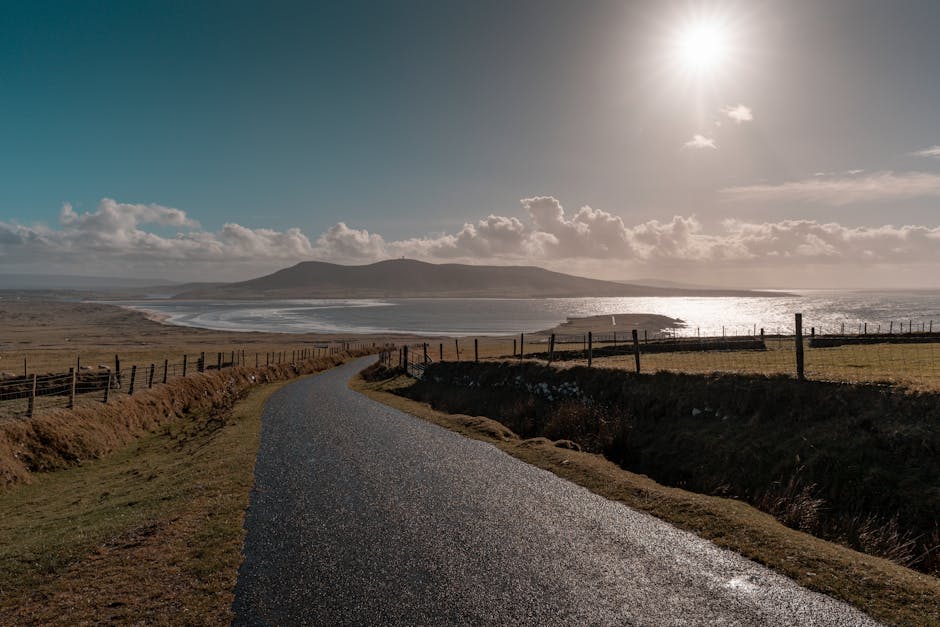
You've booked the days off. The route is mapped. Wild Atlantic Way, Cliffs of Moher, maybe a loop around the Dingle Peninsula. Then you remember you drive an EV, and suddenly the whole thing feels like a logic puzzle where the prize is not getting stranded in a field outside Clifden.
The good news: most of Ireland's iconic coastal routes are doable in an EV right now. The bad news: a few of them will humble you if you don't plan properly. Here's the honest picture.
The State of EV Charging on Irish Coastal Roads
Ireland has around 2,000 publicly accessible charge points as of early 2025, according to ESB ecars figures. That sounds decent until you spread them across a coastline that runs for over 2,500km. Urban areas are reasonably well served. The gaps appear the moment you head for the scenery, which is exactly where you want to go.
The network is dominated by ESB ecars, with Ionity fast chargers now adding serious capacity on major corridors, and a scattering of ChargePoint, Blink, and hotel-based chargers filling in around towns. App coverage varies. Reliability varies more. "Available" on an app does not always mean "working when you arrive at it in a light drizzle outside Doonbeg."
Your vehicle matters too. A 2023 Hyundai Ioniq 6 with 500km of real-world range is having a completely different conversation than a 2019 Nissan Leaf with a 150km ceiling and a battery that's seen better winters. Know your actual range, not the manufacturer's figure.
The East Coast: Grand, Actually
Dublin to Wexford via the N11 and coastal roads is one of the easier EV runs you can do. Bray, Wicklow town, Arklow, Gorey, Wexford town. ESB chargers are reasonably distributed, and you're rarely more than 40 to 50km from something useful. Greystones, Wicklow, and Gorey all have public fast chargers. Rosslare has charging too, useful if you're catching a ferry.
This route has enough town infrastructure to keep you comfortable. Stick to the R750 coastal road where you can and charge opportunistically rather than desperately. Confidence level for most modern EVs: high.
The Wild Atlantic Way: Pick Your Battles
This is where things get interesting. The WAW runs roughly 2,500km from Donegal to Cork. Doing it all in one EV trip without careful planning is ambitious. Breaking it into sections is smart.
Galway to Clifden (N59 and coast road, roughly 80km)
This stretch looks short on paper. It is short on paper. But Clifden has limited fast charging infrastructure, and some of the coastal detours add significant distance. An ESB charger sits in Clifden town, but it's not always fast, and there's not much backup nearby. If you arrive depleted, you're waiting. Plan to leave Galway with a full or near-full charge. Don't do the Connemara loop on a wing.
Clifden to Westport (via Leenane, roughly 100km)
Westport has a solid ESB fast charger in the town car park. Leenane has nothing. This run is beautiful and mostly fine for a car with 250km-plus of real range, but treat it with respect. Top up in Clifden before you leave, even if it costs you time.
Dingle Peninsula (roughly 50km loop from Dingle town)
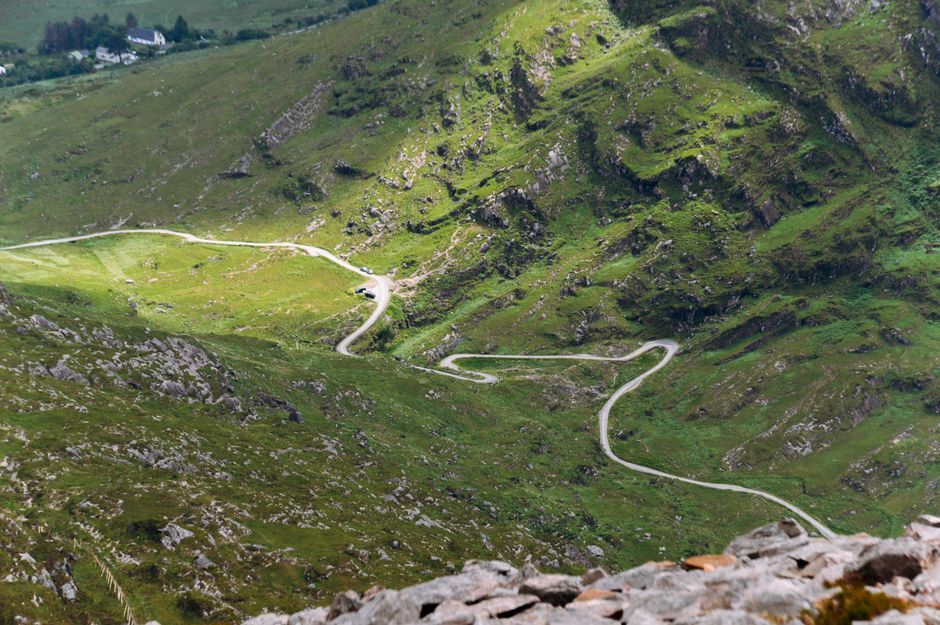
Dingle town has an ESB charger. The Slea Head Drive loop adds around 50km. On a car with limited range, charge fully in Dingle before attempting the loop. The roads are narrow, the views are worth it, and there are no chargers until you get back. This is a perfect example of a route that's completely doable with basic planning and a disaster without it.
Donegal: The Honest Answer
Parts of Donegal are genuinely underserved. Dungloe, Glencolmcille, the Inishowen Peninsula tips. ESB has chargers in Letterkenny, Donegal town, and Bundoran, which gives you anchors. But if you're doing the full dramatic coastal loop through Malin Head, you need a car with serious range and you need to treat every available charger as a stop rather than a maybe. The West Coast Winter Run guide covers some of these northern gaps in more detail and is worth reading before you commit.
The South Coast: Underrated and Better Served
Cork city to Kinsale, Clonakilty, Skibbereen, Bantry. This corridor has decent charging coverage relative to how scenic it is. Clonakilty has a charger. Bantry has a charger. Cork itself is well served as a starting and ending point.
The Ring of Kerry deserves its own mention. Killarney has multiple chargers. Kenmare has an ESB point. The Ring of Kerry is a 170km loop from Killarney, which is genuinely manageable in a modern EV if you start fully charged. Waterville has a charger. The issue is speed, not availability. If you're behind a tour bus doing 40km/h on the mountain roads (and you will be), your range anxiety might actually be solved by the time constraints rather than the geography.
Practical Rules for Coastal EV Road Trips
Charge to 80 percent, then go. Fast chargers slow dramatically above 80. Don't sit waiting for 100. Get to 80 and move.
Use A Better Routee or ABRP before you leave. A Better Route Planner integrates real-world EV range and Irish charging data. PlugShare shows user check-ins and working or broken reports. Cross-reference both.
Always have a Plan B charger mapped. The first choice is full. The backup is 12km away. Know this before you need it.
Hotel and guesthouse charging is real. Many coastal hotels now have Type 2 chargers, sometimes free for guests. Call ahead. A slow overnight charge often solves everything.
Cold and wind eat range. Atlantic coast in October is not the same as a manufacturer test in mild conditions. Add 15 to 20 percent buffer to your range calculations.
Which Routes Aren't Ready Yet
Honest answer: Donegal's far northwest, the more remote stretches of Mayo's coast above Achill, and some of the Waterford and Wexford coastal backroads feel thin. Not impassable, but not forgiving either. If your EV has under 200km of real-world range, these require serious pre-planning or a willingness to backtrack to chargers.
The infrastructure is improving. ESB ecars and Ionity's expanding Irish network have both committed to further coastal rollout. But "committed" and "installed and working" are different things, and the gap between them is where road trips go sideways.
Go anyway. Just know where your next charger is before the one you're at drops below 20 percent. The routes are there. The scenery is there. Most of the infrastructure is there. Plan like someone who's been let down by a "working" charger before, and you'll have a brilliant time.