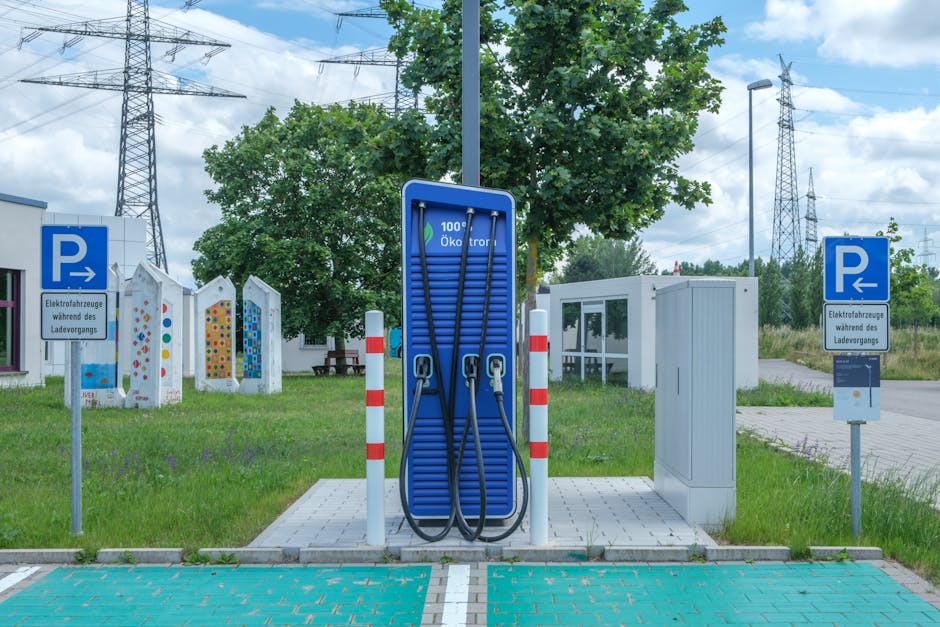
You pull up to a public charger somewhere outside Portlaoise. The screen is black. The cable won't lock. There's a sticker on the unit that says "Out of Service" and underneath it, in biro, someone has written "again." You've been there. Most Irish EV drivers have.
That broken charger experience is the single biggest thing holding back EV adoption in this country. Not range. Not price. The feeling that the infrastructure is held together with goodwill and cable ties. So when two companies quietly announce a partnership to overhaul how charger maintenance actually works, it's worth paying attention, even if the press release reads like it was written by a robot who'd never driven past Athlone.
What the Source-Siemens Deal Actually Is
Source, the Irish EV charging operator, has partnered with Siemens to take over field maintenance for a significant portion of the public charging network. In plain terms: when a charger breaks, Siemens engineers now respond, diagnose, and fix it. This isn't about installing new hardware. It's about what happens after the ribbon-cutting, which is the part everyone in the EV world has been quietly ignoring for years.
Siemens brings scale. They're already maintaining critical infrastructure across Europe. Source brings the network knowledge and the Irish footprint. The theory is that combining both means faster response times, better parts availability, and fewer units sitting dead for weeks because nobody could get a van to Roscommon on a Thursday.
Why This Matters More Than Any New Charger Announcement
Ireland adds new charge points fairly regularly. The government announces them. The operator holds a small ceremony. A local TD shows up. Fine.
But the slow charge point rollout and its real-world consequences have always been about reliability, not raw numbers. A network of 1,000 chargers where 30% are offline at any given time is worse than a network of 600 that actually work. ZEST, Ionity, and ESB ecars have all faced this problem. The hardware fails. The response is slow. Drivers lose faith. They tell their friends EVs are a nightmare. The whole thing circles the drain.
Siemens operates to industrial maintenance standards, meaning defined response windows, escalation protocols, and reporting. That last part is underrated. Right now, transparency about uptime on Irish public chargers is poor. If this partnership introduces real accountability metrics, that alone is progress.
What Irish Drivers Should Actually Expect
Realistic expectations matter here. This is a maintenance contract, not a magic wand.
Response times. The promise is faster turnaround on faults. What "faster" means in practice will depend on whether Siemens has engineers based regionally or whether everything routes through a central dispatch. Rural Ireland will be the test. Fixing a broken DC rapid charger in Sandyford is one thing. Getting to Ballyvaughan before the weekend is another.
Uptime figures. Look for Source to start publishing network uptime data publicly. If they don't, ask why. A well-run charging network should be hitting 95%+ uptime on rapid chargers. Anything below 90% is a problem.
The software side. A lot of charger failures aren't physical. They're firmware glitches, payment processor timeouts, network connectivity drops. Siemens brings engineering rigour but the software layer is often managed separately. Don't assume one partnership fixes every failure mode.
Your actual fallback. Until uptime improves measurably, plan routes with redundancy. If you're heading west, know where the backup charger is before you need it. This isn't pessimism. It's just experience.
The Bigger Picture: Consolidation Is Coming
This deal is part of a broader shift. The EV charging market in Ireland and across Europe is consolidating. Small operators are getting absorbed. Specialist maintenance firms are partnering with big infrastructure companies. The cowboy era, where a startup could bolt up some chargers and figure out maintenance later, is ending.
That's broadly good for drivers. More professional operations mean better service standards. It also means less fragmentation, fewer different apps, fewer different payment systems. The dream of tapping any card at any charger and it just working is still a few years off, but consolidation gets us closer.
For anyone considering an electric car right now, the network reliability question is still legitimate. But the direction of travel is right. The Source-Siemens deal is one data point in a trend toward treating public EV charging as real infrastructure rather than a tech startup experiment.
What to Watch For
Give it six months. Then check PlugShare reviews for Source charge points around Ireland. Not the ones in Dublin city centre. The ones in Castlebar, in Clonmel, in Letterkenny. If the "broken," "out of service," and "arrived to find offline" tags start appearing less often, the partnership is working.
If the Portlaoise charger still has that biro note on it come autumn, well. At least we'll know.