Your wipers are on full. The car in front has vanished into spray. You're doing 110km/h because everyone else is, and slowing down feels like admitting defeat. This is the moment most Irish motorway incidents begin, not with a dramatic event, but with a decision quietly made to keep going.
Recent weather events have put this in sharp focus. Storm systems rolling in off the Atlantic have left motorways across Ireland looking more like rivers than roads, and the emergency call logs to show for it. The problem isn't that Irish drivers are reckless. The problem is that motorway driving for new drivers gets minimal formal coverage in training, and experienced drivers tend to rely on habit rather than judgment. Habit works fine in ordinary rain. It fails badly when conditions tip into something else entirely.
The RSA's own figures show that adverse weather is a contributing factor in a significant proportion of serious collisions on national roads. What those figures don't show is the near-misses. The aquaplaning episode at junction 9. The lorry that jackknifed on the Kildare stretch during a January frost. The convoy of cars that stopped dead on the hard shoulder because nobody trusted the road and nobody trusted themselves to leave it. Those stories don't make the headlines. They should.
What "Dangerous" Actually Looks Like
It doesn't arrive with a warning sign. It builds.
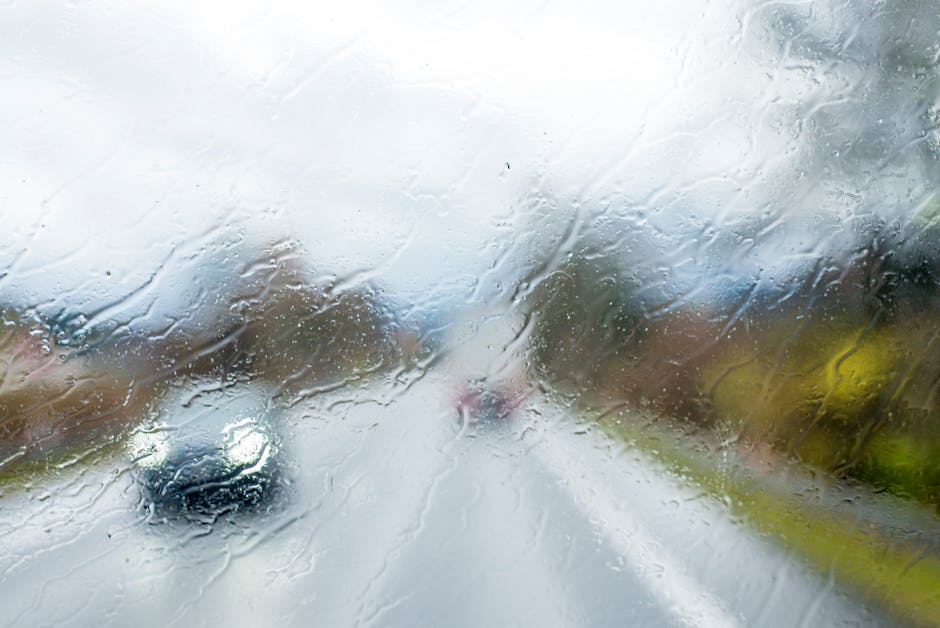
Heavy rain becomes standing water. Standing water becomes sheets of water crossing the carriageway. At that point, your tyres are no longer fully in contact with the road surface, and the physics of the situation have stopped caring about your good intentions. Aquaplaning can happen at speeds as low as 80km/h on a vehicle with worn tread. A 2017 Volkswagen Golf with 3mm of tread left is not a bad car. It is, however, a vehicle that will lose grip before its driver expects it to.
High winds are quieter in their danger. Side winds on exposed stretches, think the M18 through south Galway or the N7 heading into Kildare, can push a high-sided vehicle across a lane without any drama until there's a lot of drama. A loaded van or a car with a roof box becomes a sail. Gusts above 80km/h are not exceptional in Ireland between October and March. They're a Tuesday.
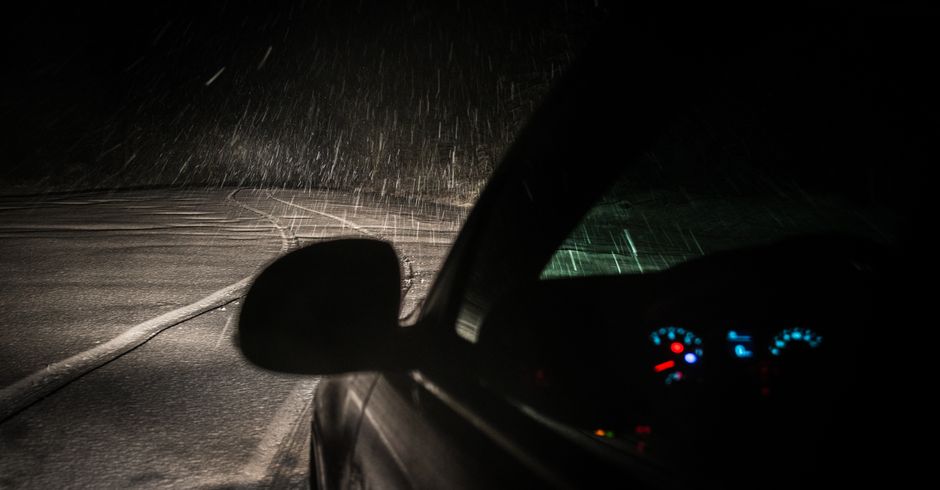
Snow and ice are more obvious, but Irish drivers have less experience with them, which makes the overconfidence problem worse. The car feels fine. The road looks fine. Then a bridge deck, which freezes before the carriageway because air circulates underneath it, catches someone out at the worst possible time.
The Warning Signs You're Ignoring
Spray from your own tyres entering the wheel arches. This sounds like a drum roll beneath the car. It means water depth is significant. Your tyres are working harder than they should.
Variable braking distances. If you test your brakes gently and the car's response feels hesitant or uneven, grip is reduced. This is especially telling if the car feels different at different points on the same stretch of road. That's standing water in specific areas.
Other drivers slowing significantly below the limit. Not one or two nervous types. Most of the traffic. When collective driver instinct kicks in, it's worth respecting. The motorway is not a place for an independent opinion about whether conditions are fine.
Your headlights becoming less effective than expected. Dense spray and low visibility go together. If your lights are on and you're still struggling to read the road 50 metres ahead, that's a functional visibility problem, not just inconvenience.
Wind buffeting in open stretches. A single gust that pushes the wheel is a signal, not an anomaly. Two or three in quick succession means conditions are worsening, not stable.
The Decision Points
This is the part that Irish driver training largely skips. It's not enough to recognise that conditions are bad. You need a decision framework for what to do about it.
The first decision point: entering the motorway. If you're at a motorway junction and conditions ahead look hostile, you have a choice that disappears once you merge. Motorway services are rarely more than 20 to 30 minutes apart on Irish routes. A coffee and 40 minutes off the road during the worst of a squall is not weakness. It's arithmetic.
The second decision point: the first sign of aquaplaning. If the steering goes light or the car slips sideways at all, ease off the accelerator, don't brake hard, and reduce your speed. If it happens once, it will happen again. That's the moment to consider pulling off at the next junction, not pressing on to see if it settles.
The third decision point: visibility below 100 metres. At this point you are, bluntly, guessing at what's in front of you. Hazard lights on, speed down to 60km/h or below, maximum following distance. If there's a service area ahead, that's your exit. If there isn't, you're in managed survival mode until visibility improves.
What Your Car Is and Isn't Doing For You
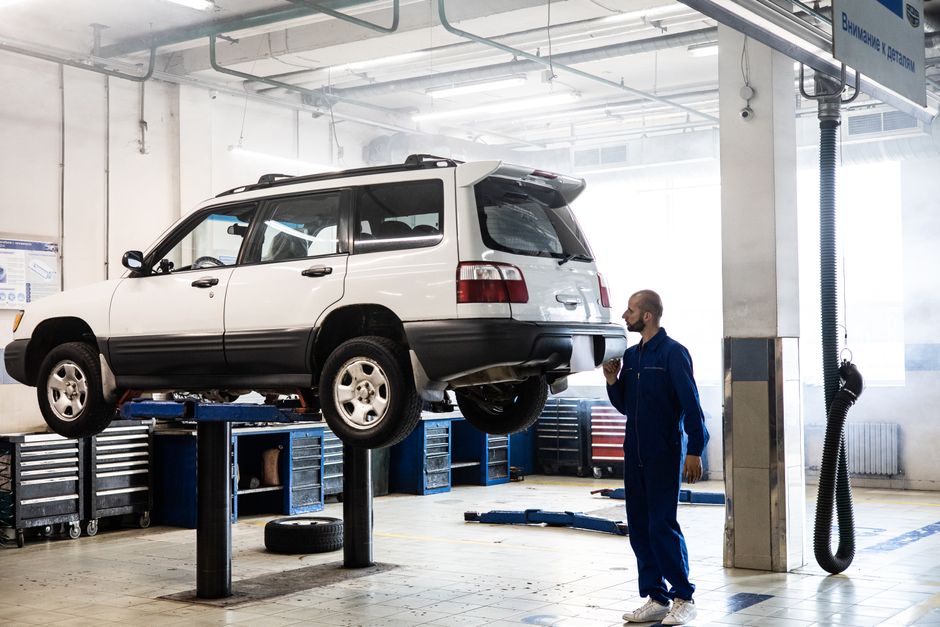
Modern vehicles have ABS, traction control, and stability systems that are genuinely impressive. They also have limits that most drivers have never discovered because discovering them on a wet motorway at 110km/h is a terrible classroom. Winter driving preparation starts with tyre condition because no electronic system compensates for rubber that can't grip.
Check tread depth before winter properly arrives. The legal minimum in Ireland is 1.6mm. The practical minimum for wet weather driving is closer to 3mm. There's a meaningful gap between those two numbers that the law won't rescue you from.
Tyre pressure also matters more in cold weather. Pressure drops as temperature falls. An underinflated tyre in cold, wet conditions handles worse than a properly inflated one. This is a five-minute check at a petrol station.
If You Get It Wrong
If you do find yourself in trouble on a motorway in extreme weather, get the car to the hard shoulder if you can do it safely. Hazard lights on immediately. Get everyone out of the car and behind the barrier if there's an embankment. The hard shoulder is not a safe place to sit in a stationary vehicle during a storm. Other drivers are also struggling to see.
Call 999 or 112. Give your location using the nearest kilometre marker post, small blue and white markers on the left side of the motorway, or the junction you passed. Motorway response times in Ireland have improved but they depend on accurate location information.
The motorway doesn't care about your schedule. It never did. The question is just whether you're making a real decision or a quiet surrender to momentum and the assumption that things will be fine.
Most of the time they are. The times they're not tend to start exactly like that.