Your first time on a motorway, you'll probably grip the wheel a little tighter than usual. That's fine. Everyone does.
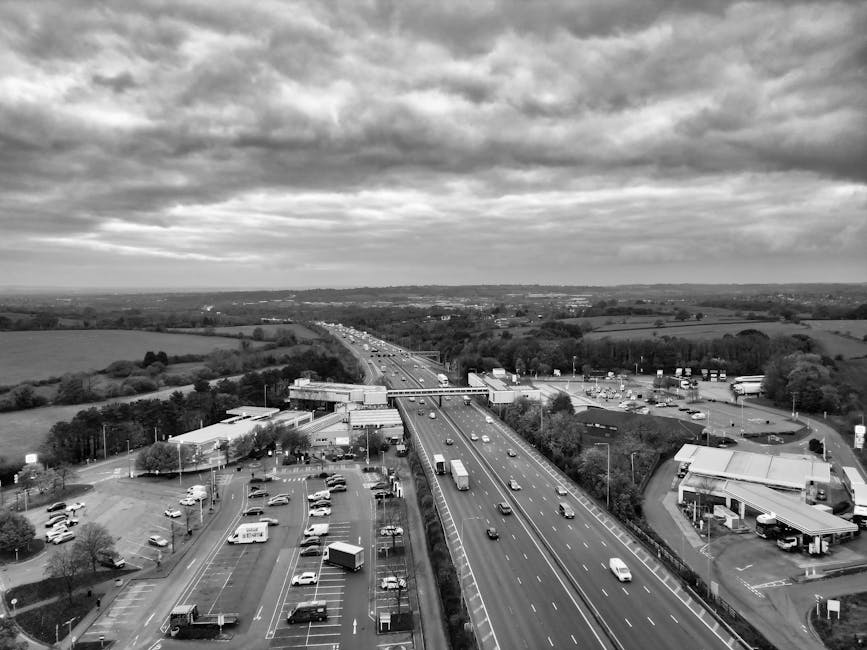
The fear is understandable. You've been doing 50km/h through estates and roundabouts for months. Suddenly there's a three-lane road, trucks the size of houses, and everyone doing 120km/h like it's completely normal. It is completely normal. And motorway driving is actually safer than most other roads, once you know what you're doing. The RSA's own figures consistently show that rural roads and national primaries cause far more fatalities per kilometre than motorways. The design works in your favour. No oncoming traffic. No pedestrians. No give-way signs.
You just have to learn the rules. Real ones, not the vague stuff.
When Can Learner Drivers Use Motorways?
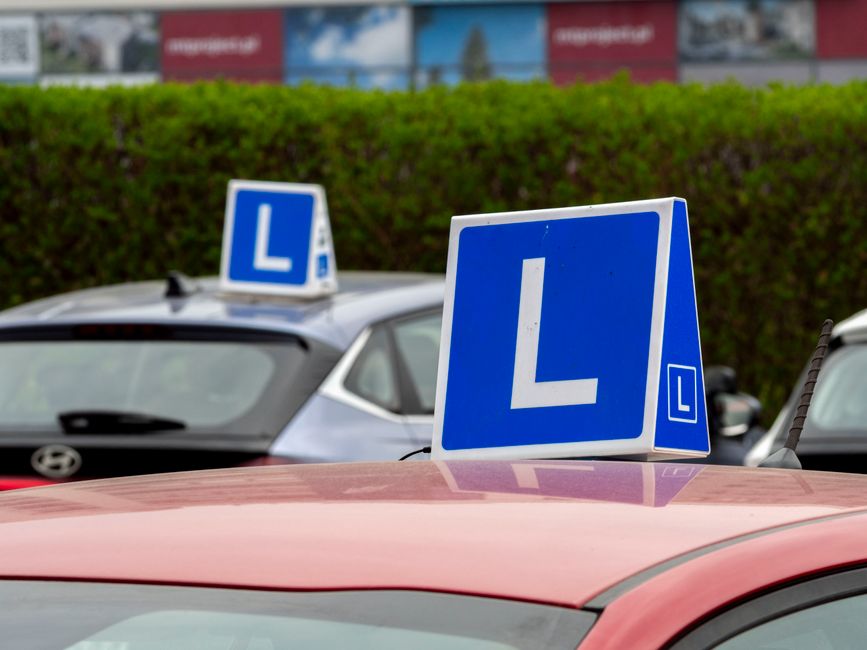
Short answer: not alone. Learner permit holders in Ireland are not permitted to drive on motorways under any circumstances. It's not a grey area. The rule is absolute. Motorways are off-limits until you hold a full licence.
So if you've just passed your test, or you're working through your EDT lessons, the motorway is something to look forward to rather than tackle right now. First time on one should ideally be with an experienced driver in the passenger seat, your full licence in your wallet, and no particular deadline on where you're going.
That said, new full licence holders get zero formal motorway training in Ireland. You pass your test on regional roads and suddenly you're legally free to join the M50. Which is why this article exists.
Joining the Motorway: Merging Done Right
The on-ramp is where new drivers make their first mistake. They slow down. Don't slow down.
The whole point of an on-ramp is to get you up to motorway speed before you join. You should be doing close to 100km/h by the time you reach the merge point. Check your mirror. Check your blind spot. Find a gap in the left lane. Accelerate into it smoothly.
You don't have priority. Traffic already on the motorway does. But you also shouldn't be crawling to a stop at the end of a slip road like you're waiting for a bus. Match the speed. Pick your gap. Go.
If there's no gap, ease off and wait for one to open. What you don't do is stop dead on the hard shoulder and hope for the best.
Lane Discipline: The Thing Most Drivers Get Wrong
Here it is, plainly. In Ireland, you drive on the left. On a motorway, the left lane is your lane. It is the lane you stay in when you are not overtaking. It is not the slow lane. It is not the lane for lorries only. It is the lane for everyone who is not actively overtaking.
The middle lane is for overtaking. The right lane (if there is one) is for overtaking when the middle lane itself is occupied. Once you've passed the vehicle ahead, you move back left. That's it. That's lane discipline.
Middle-lane hogging is one of the most common bad habits on Irish motorways. It causes unnecessary bunching in the right lane, it's illegal under the Road Traffic Act, and it's the kind of thing that makes experienced drivers quietly furious. Don't be that person.
Specific scenario. You're in the left lane doing 100km/h. There's a lorry ahead doing 90km/h. You move to the middle lane, pass the lorry, and move back left. Simple. Clean. Correct.
Speed and Following Distance
The national speed limit on motorways is 120km/h. That's the ceiling, not a target. In rain, in heavy traffic, or at night, backing off makes sense.
Following distance is the thing new drivers underestimate most. At 120km/h you are covering 33 metres every second. The old two-second rule is a minimum in dry conditions. In wet weather, double it. Pick a fixed point on the road ahead. When the car in front passes it, count. If you pass it before you've counted two seconds, you're too close.
Tailgating on a motorway isn't just aggressive. It leaves you no room to react if something happens 300 metres ahead.
What the Hard Shoulder Is (and Isn't) For
The hard shoulder is not a lane. It is not somewhere to pull in if you want to check your phone or argue with your passenger about which exit to take.
If your car breaks down, indicate left, get as far left as possible, and use the hard shoulder to stop safely. Get yourself and any passengers over the barrier if possible. Call for help from there. Never stand between your car and live traffic.
That's the hard shoulder. Emergencies only.
Motorway Exits: Don't Leave It Late
You will see the signs: 1 mile, half mile, the countdown markers. Use them. Start indicating and moving left in good time. You don't want to be crossing two lanes in a panic because your exit appeared faster than expected.
If you miss your exit, keep going. Take the next one. Coming to a stop or, worse, reversing on a motorway is genuinely dangerous and completely illegal. Missing a junction costs you ten minutes. A panic manoeuvre costs a lot more.
Dealing With the Fear Factor
First few times, it's loud. It's fast. The trucks push air as they pass and your car moves a little. That settles with time and familiarity.
What helps: drive it in daylight first. Pick a quiet time if you can, not rush hour on the M50 on a Friday. Keep the radio low enough that you can hear what's around you. Don't fixate on the car immediately in front. Look further ahead. Scan the full picture. Motorway driving rewards the driver who sees what's coming 400 metres away, not the one reacting to what's two car lengths ahead.
And honestly, once you've done it a few times? Grand. Your hands loosen up. Your shoulders drop. You'll get there.
The grip on the wheel is tight the first time. By the fifth time, you'll be wondering what the fuss was about.