The light turns green. Your foot finds the floor. You've done it a thousand times and nothing bad has happened yet. That word "yet" is doing a lot of heavy lifting.
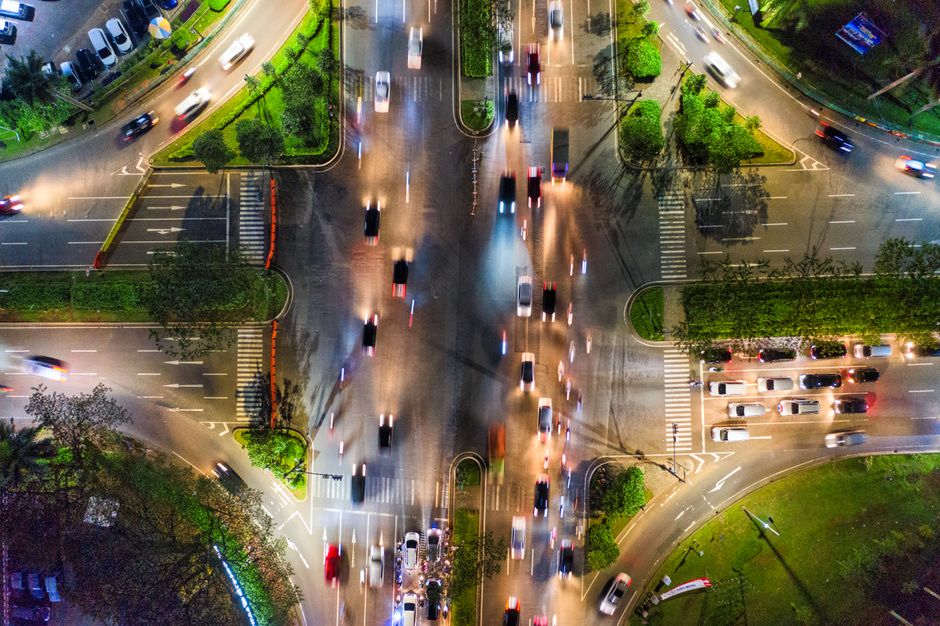
Junction accidents have been creeping up Ireland's road casualty statistics for years, but recent figures are starting to demand attention rather than footnotes. The RSA's own collision data points to junctions as the single most common location type for serious collisions on Irish roads. Not motorways. Not country bends in the dark. Junctions. The places we treat as a daily formality.
What's changed is the pattern inside those numbers. Researchers tracking rush-hour collision timestamps are finding a correlation that's uncomfortable to sit with: the spikes happen in the seconds immediately after lights change. Not during red-light running. After the green. The problem isn't impatience at the red. It's what happens when the red ends.
Why Your Brain Betrays You at a Green Light
There's a name for what happens to a driver who's been sitting in traffic for eight minutes watching a red light. Psychologists call it "goal frustration," and it's about as flattering as it sounds. You had somewhere to be. The light stopped you. Every additional second it stays red is a small insult your brain registers and stores.
When green arrives, it doesn't feel like permission. It feels like release. The brain shifts from suppression to action, and the throttle response often bypasses the part of your thinking that checks whether the junction is actually clear.
The problem is the lag. Amber shows, then green. But a car running a late amber from the opposite direction, a cyclist who misjudged the timing, a pedestrian who started crossing early: none of these have been factored into your foot's decision. You launched before you looked. Not because you're reckless. Because your brain had already committed.
The Rush-Hour Multiplier
Stress compounds everything. Distracted driving research on Irish roads consistently shows that cognitive load, whether from work pressure, financial worry, or just the accumulated frustration of a long commute, degrades hazard perception in ways drivers don't notice in themselves. You feel alert. You are not as alert as you feel.
Rush hour layers this perfectly. By the time you've been in stop-start traffic on the Naas Road or crawling through the Jack Lynch Tunnel, your patience is a spent resource. Every green light becomes a small promise of forward motion. Breaking that momentum, checking properly before you accelerate, requires active effort against a brain that has already decided to go.
Heavier vehicles make it worse. A 2015 Ford Focus with 140,000km stops in a different distance than a loaded van or an SUV running worn rear tyres. Closing speeds at junctions are higher than most people's instincts account for.
What Aggressive Acceleration Actually Looks Like
It doesn't have to look dramatic. This isn't necessarily about wheel-spin and noise. Aggressive acceleration at lights is:
- Going to full throttle within the first metre of movement.
- Not scanning left and right before pressing the pedal.
- Closing on the junction box at speed while the light is still transitioning.
- Treating the moment of green as a starting gun rather than a clearance to proceed.
Most drivers who do this would reject the label "aggressive." They'd say they're keeping up with traffic. Being efficient. Not holding people up. The road to a junction collision is mostly paved with that kind of reasonableness.
The Two-Second Scan That Changes Everything
There's a straightforward habit that costs almost nothing in real journey time. When the light goes green, pause one beat. Not a full stop. A beat. Use it to scan the junction. Left. Right. Pedestrian crossing ahead. Then go.
The cars behind you might object. Someone will beep. That's fine. A beep is not a collision. The habit that feels socially awkward at a set of lights is the same habit that gives you a half-second of reaction time when a cyclist appears from behind a van on the left.
Hazard perception is tested in the Irish theory exam precisely because it's a trainable skill. Most drivers pass the test and then gradually stop practising it. The junction is where that erosion shows up first.
EVs and the New Acceleration Problem
Worth noting here: electric vehicles have changed the physics of the green light. Instant torque means an EV can reach junction-crossing speed in a fraction of the time a petrol car takes. Drivers moving from a 2009 diesel hatchback to a new electric won't feel the difference in the seat the same way they would with a turbocharged petrol. But the closing speed at the other side of that junction has changed considerably.
This isn't an argument against EVs. It's an argument for recalibrating your green-light habits when you change vehicle. The behaviour that was mildly risky in your old car can be genuinely dangerous in a car with twice the torque response.
Breaking the Habit
Habits live below conscious decision-making, which means you can't just decide to stop. You need a cue. Here's one that works: every time you pull up to a red light, say out loud (or in your head) "I'm going to check before I go." That sounds ridiculous. It also creates a mental interrupt between the green light stimulus and the automatic acceleration response.
Longer term, the RSA's figures on whether Irish roads are actually getting safer make for sobering reading. Progress exists, but it's fragile and uneven. Junction behaviour is one of the places where individual habit change can actually move a needle.
Smooth, deliberate acceleration after a proper check. It's not slow driving. It's not timid driving. It's the kind of driving that gets you home.
The light turned green a thousand times and nothing bad happened yet. Keep the yet off the table.