You fill up in Newry, the gauge is sitting happy, and somewhere between the Spelga Dam and the back wall of the Mournes you stop thinking about fuel prices entirely. That's the deal Northern Ireland offers. Proper mountain driving with a side of cheaper diesel, if you time it right.
September is the crunch point. Summer blend fuel gives way to winter blend, refinery runs switch over, and historically that's when pump prices north and south both nudge upward. The gap between the two jurisdictions doesn't vanish, but it narrows. So if you're planning a run through the Antrim Coast or the Mourne Mountains, doing it before mid-September and fuelling up strategically on the northern side makes a real difference across a full tank.
The arithmetic is blunt. Diesel in the North has been running anywhere from 10 to 18 cent per litre cheaper than in the Republic through most of 2024 and into 2025, depending on the week and the station. Fill a 55-litre tank and you're looking at five to ten euro saved per fill. Do it twice on a long weekend loop and you've covered your lunch in Ballycastle. That's not nothing.
The Mourne Mountains: the A2 and Spelga Pass
Start here if you're coming up from Dublin or the midlands. Cross at Newry, fill up at one of the supermarket forecourts just over the border (Sainsbury's and Tesco on the northern side of Newry consistently undercut the independents), then head east toward Kilkeel on the A2 coastal road.
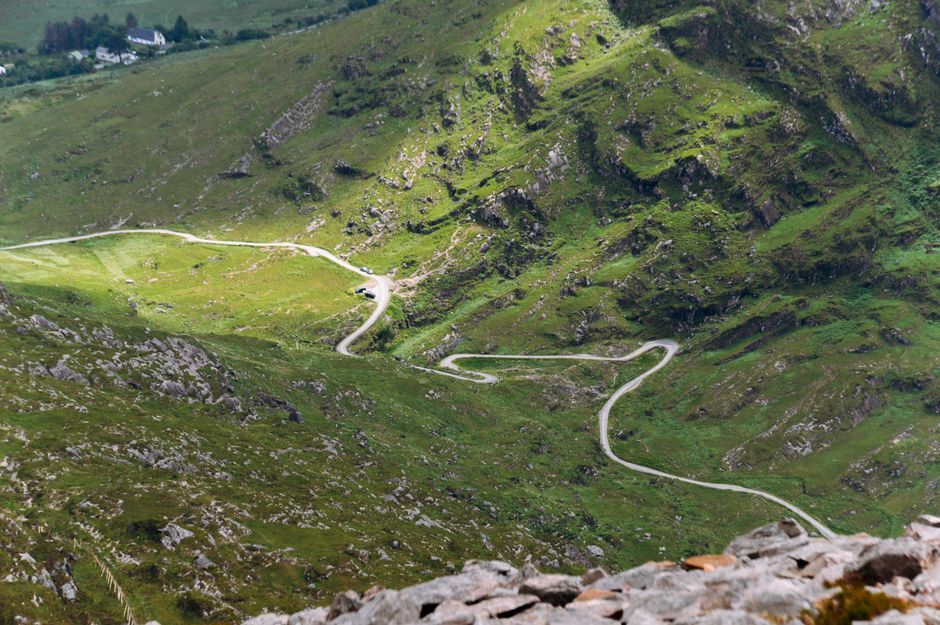
The A2 hugs Carlingford Lough and then opens into the Mourne coastal stretch. It's a genuinely rewarding drive, wide enough to feel confident but twisty enough to keep you honest. From Kilkeel, head north up through the Spelga Pass on the B27. This is the one. Reservoir on one side, granite peaks on the other, and very little traffic on a midweek morning. The road climbs sharply to around 400 metres. Nothing dramatic by Alpine standards, but in Ireland, where most of our "mountain passes" are glorified bog roads, this feels like the real thing.
Drop down the other side toward Hilltown, then pick up the road to Rathfriland if you want coffee and a scone from a bakery that doesn't know what a flat white is, which is meant as a compliment.
The Antrim Coast Road: the A2 North
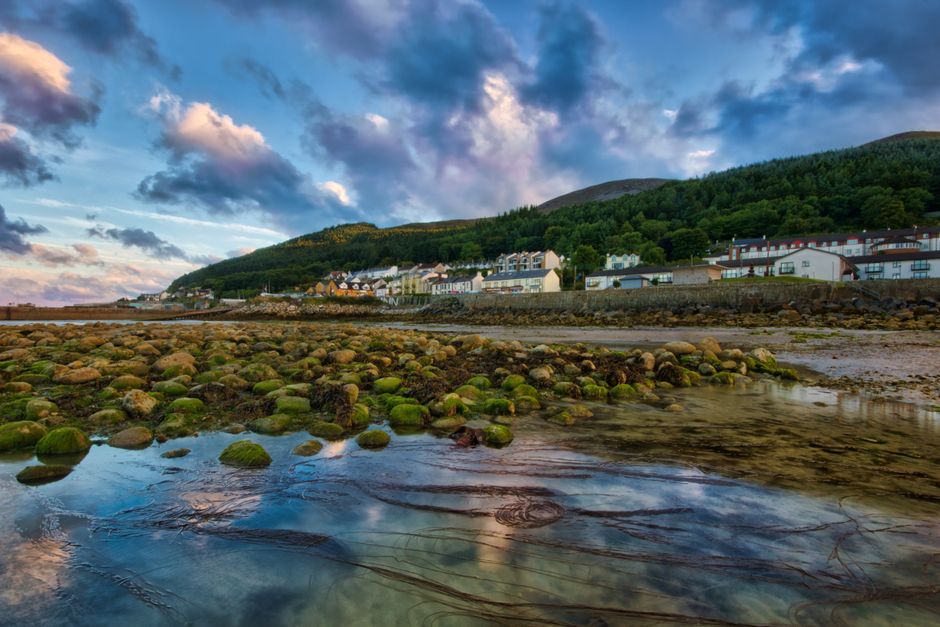
This is the one that gets on all the lists, and it earns its place. The A2 from Larne to Ballycastle is 60 kilometres of coastal drama. Cliffs above, North Channel below, and the kind of road surface that makes you feel the suspension tuning engineers actually had a point.
Fuel before you leave Larne. There's a cluster of stations near the town centre and prices are reasonable. Once you're on the coast road proper, options thin out. Carnlough has a station. Cushendall has a station. But you don't want to be watching the gauge rather than the sea.
The Glenariff Forest Park turn-off halfway up is worth the detour if you've got an hour. Park up, walk to the waterfall, come back. Straightforward. Then continue north through Cushendun (National Trust village, absurdly photogenic) and on to Ballycastle, which sits at the top of the peninsula like it knows it.
Benbradagh and the Glenelly Valley
Less famous than the Mournes or the Antrim Coast, which is exactly the point. The Glenelly Valley in County Tyrone cuts through the Sperrin Mountains and most people drive straight past it on the A6 to Derry without ever knowing it's there.
Come off the A6 at Park village and take the B47 east into the valley. The Sperrins are rounded, brown, treeless on the tops. Not dramatic in the Mourne sense, but genuinely lonely in a way that feels earned. Benbradagh rises to your left. The road through the valley is single-track in places, so slow down and use the passing places properly. The locals will not be sympathetic if you get it wrong.
Come out the eastern end of the valley near Draperstown, then either loop back west toward Derry or head south toward Cookstown. Fuel up in Cookstown or Maghera if you're heading further into the North.
The Glenshane Pass: Functional Beauty
The A6 over the Glenshane Pass between Dungiven and Maghera is the main road, not a hidden gem. But it's worth knowing because it crosses at 300 metres and the views across to the Sperrins on a clear autumn morning are genuinely good. It's also where you'll find consistent fuel pricing: the stations at either end of the pass are competitive because they're on a busy through-route and know it.
If fuel price timing is part of your planning, the Glenshane corridor stations are a reliable benchmark for what the northern market is doing on a given week.
The Cross-Border Fuel Logic
Here's the practical version of the economics. The price gap is largest mid-week and outside of bank holiday periods when southern drivers are crossing in volume. Station owners near the border know their audience: a lot of Republic plates rolling in for a cheap fill. The further you get from the border, the more competitive the pricing becomes within the northern market itself.
Supermarket forecourts in Newry, Enniskillen, and Derry tend to beat the independents. That's consistent. The A1 corridor north of Newry has several options within five kilometres of the crossing.
September specifically: the RSA's own figures and various fuel monitoring bodies have tracked the late-summer transition as a pricing inflection point. Not a cliff edge, but a slope. The first two weeks of September generally still reflect summer pricing. By the end of the month, winter blend pricing is usually embedded. Plan accordingly.
Navigating fuel costs across Ireland is a whole discipline at this point, and the North-South gap is one of the more reliable levers available to southern drivers willing to route their trips sensibly.
What Car to Bring
A few practical notes. The Spelga Pass and Glenelly Valley roads are not the place for a low-slung coupe with 20-inch rims. Ground clearance matters. A standard family hatchback handles all of these routes fine, but if you're in something that scrapes speed bumps in Dundrum, think twice about the Sperrins.
Diesel is still the economical choice for a trip like this, though a hybrid will reward you on the descents and on the slower coastal stretches where stop-start is relevant. Mountain roads at 40-60km/h suit a hybrid's efficiency profile better than motorway cruising does.
The Route Back South
Don't come back the same way you went. The whole point is to find a loop. If you've done the Antrim Coast going north, come back through the Glenshane and down through the Monaghan border crossing via Aughnacloy. Different road, different landscape, different fuel station to assess.
Fill up for the last time somewhere north of the border. Then cross back, watch the pump prices climb, and console yourself with the fact that you've just driven some of the best mountain roads on the island for the cost of two fills and a bad service station sandwich.
You filled up in Newry, the gauge sat happy, and you didn't think about fuel prices for three hours. That's Northern Ireland doing what it does best.