You pull into a forecourt somewhere outside Athlone, squint at the price board, and do the maths in your head. That's going to cost what? For a full tank? The drive home suddenly feels a lot longer.
Fuel prices in Ireland have been on a wild ride. They spiked past €2.20 per litre for petrol during the worst of the 2022 energy crisis, settled back, crept up again, and now hover in territory that still stings. The AA's fuel price tracker shows Irish motorists paying consistently more than the EU average when adjusted for local wages. You're not imagining it. It really is that bad.
But here's the thing. Not everywhere in Ireland charges the same price. Not every chain is equally competitive. And timing your fill-up correctly can mean the difference between a road trip that feels like a treat and one that feels like financial self-harm.
Why Prices Vary So Much by Region
Motorway forecourts are the worst offenders. Applegreen, Circle K, and Maxol all operate stations on the M1, M7, M8, and M11 corridors, and their prices typically run 8 to 12 cent per litre above the same chains' town-centre equivalents. That's not a conspiracy. It's captive audience economics. You're tired, you're low, you'll pay it.
Rural areas can be surprisingly competitive, but it depends heavily on local competition. Towns with two or more filling stations within 500 metres of each other tend to price more aggressively. Roscommon town, Castlebar, and Monaghan have all consistently shown lower average pump prices than their county sizes might suggest, simply because local competition keeps margins honest.
Dublin and the surrounding commuter belt are, predictably, messy. Stations in D4, D6, and around the M50 charge a premium. Move out to Tallaght, Blanchardstown, or Lucan and prices drop noticeably. The same trip to the airport costs you differently depending on which side of the Liffey you filled up on.
Which Chains Are Most Competitive?
Costco at Fonthill in Dublin regularly undercuts the main forecourt chains by 6 to 10 cent per litre. The catch is membership, which costs around €33.60 per year. If you fill up twice a month with a 55-litre tank, you break even on the membership within four or five fills. Worth doing the maths.
Tesco petrol stations are consistently competitive, particularly at large out-of-town retail parks. Their Clubcard discount mechanism isn't the most generous it's ever been, but combined with their base price, you're usually looking at below-average pump prices. Dunnes Stores petrol stations follow a similar pattern.
Among the dedicated forecourt brands, Applegreen tends to be more competitive in urban and suburban locations than on motorways. Their motorway pricing is where they make the margin back. Circle K runs a loyalty app that offers occasional fuel discounts worth having, though you need to actively use it rather than assume it's working in the background.
The independent stations are the wildcard. In towns like Strokestown, Ballinamore, or Thurles, a family-run forecourt will often be the cheapest option for miles around. No app required. Just eyes open.
Routes and Timing: Where the Savings Actually Live
A Dublin to Galway run on the M6 is about 220km. In a 2018 Toyota Corolla 1.8 petrol doing roughly 6 litres per 100km, that's around 13 litres of fuel each way. At the difference between motorway pricing and town-centre pricing, around 10 cent per litre, you save €1.30 per fill. Hardly thrilling.
But do it properly: fill up before you leave at a competitive Dublin station (Costco Fonthill, Tesco Liffey Valley, or a well-priced Applegreen in Lucan), plan to not need fuel again until you're in Galway city where pump prices are moderate, and avoid the motorway service stations entirely. On a full return trip, that approach can realistically save €15 to €20 compared with just stopping wherever you see a forecourt.
Dublin to Cork via the M8 is a longer haul, around 260km. The same logic applies but the motorway is even more tempting because the stretch between Mitchelstown and Cork is sparse. Fill up in Portlaoise or Cashel town (a short detour off the M8, but prices in the town centre are often 7 to 9 cent cheaper than the motorway). You'll lose four minutes and save a fiver.
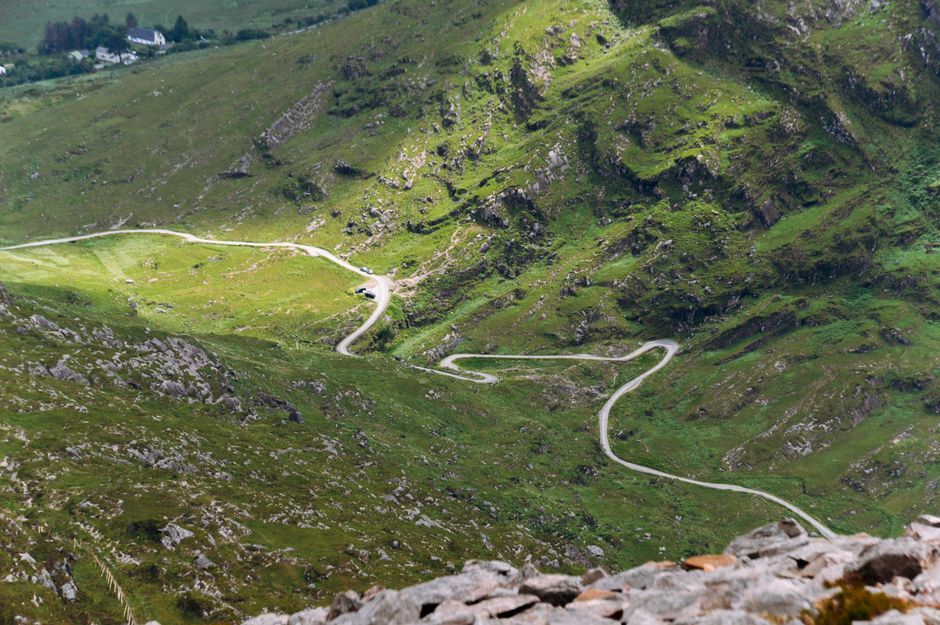
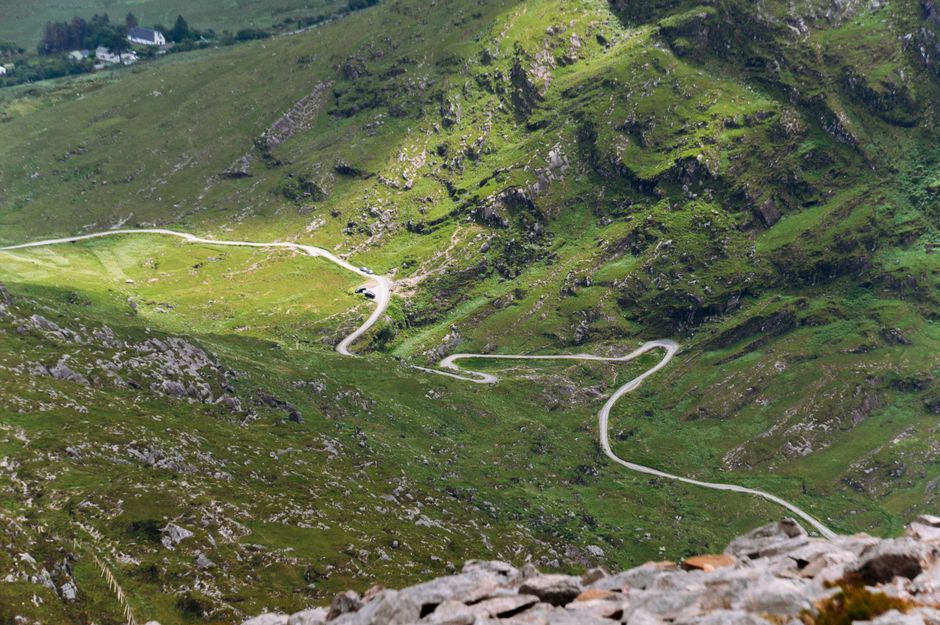
For anyone doing the western loop around Kerry or taking on some of Ireland's best driving roads, fuel planning matters more because towns are further apart. Killarney is competitive. Kenmare and Cahersiveen less so. Fill up in Killarney before heading around the Ring.
Timing Your Trip: Tuesday Is Your Friend
Fuel prices across Europe, including Ireland, typically adjust at the wholesale level mid-week. Retailers tend to pass on increases quickly and savings slowly, but data from the AA and PumpWatch shows prices are statistically lower on Tuesdays and Wednesdays than on Fridays and Saturdays.
Bank holiday weekends are the worst possible time to fill up. Retailers know the roads are busy and discretionary driving is high. Monday mornings after a holiday weekend can be better as some stations try to move volume again.
Morning fills are marginally better than afternoon in summer for a reason that sounds pedantic but adds up: fuel is denser at lower temperatures, so a litre of petrol pumped at 8am contains fractionally more energy than the same litre at 2pm. It's not going to transform your budget, but it's free money.
Apps and Tools Worth Downloading
PumpWatch.ie is the most useful Irish-specific fuel price tool. It's community-driven, which means accuracy depends on users, but in urban areas it's reliably up to date. Filter by fuel type and radius and you can usually find prices within a kilometre or two of your location.
The AA app also tracks fuel prices and sends alerts when averages shift significantly. It won't give you hyper-local granularity but it's good for planning longer trips and knowing roughly what to expect in a given region.
Google Maps recently started showing petrol station prices in some Irish locations when you search for nearby fuel. It's patchy, but improving.
The Car You Drive Matters More Than You Think
None of this advice works as well if you're driving something that drinks fuel. A 2015 Land Rover Discovery 3.0 diesel doing 11 litres per 100km is going to cost dramatically more than a 2020 Toyota Yaris 1.0 petrol doing 5.5 litres per 100km over the same route, regardless of which forecourt you choose. If you're doing regular long runs and fuel costs are a real concern, the case for a hybrid is worth revisiting.
Tyre pressure, roof boxes, driving style and air conditioning use all affect consumption meaningfully. A roof box adds 10 to 15 percent fuel consumption on motorway runs. That's not nothing when you're already watching the price board.
The Short Version
Fill up before you leave, not when you're desperate. Use PumpWatch or Google Maps to find the cheapest local station rather than the most convenient one. Avoid motorway forecourts unless you're genuinely running low. Tuesday or Wednesday morning beats Friday afternoon. And if you're planning a proper Irish road trip, factor fuel stops into the route rather than leaving them to chance.
The price board outside that Athlone forecourt is going to keep stinging for the foreseeable future. But the driver who planned ahead is already back on the road, €20 better off, heading west.