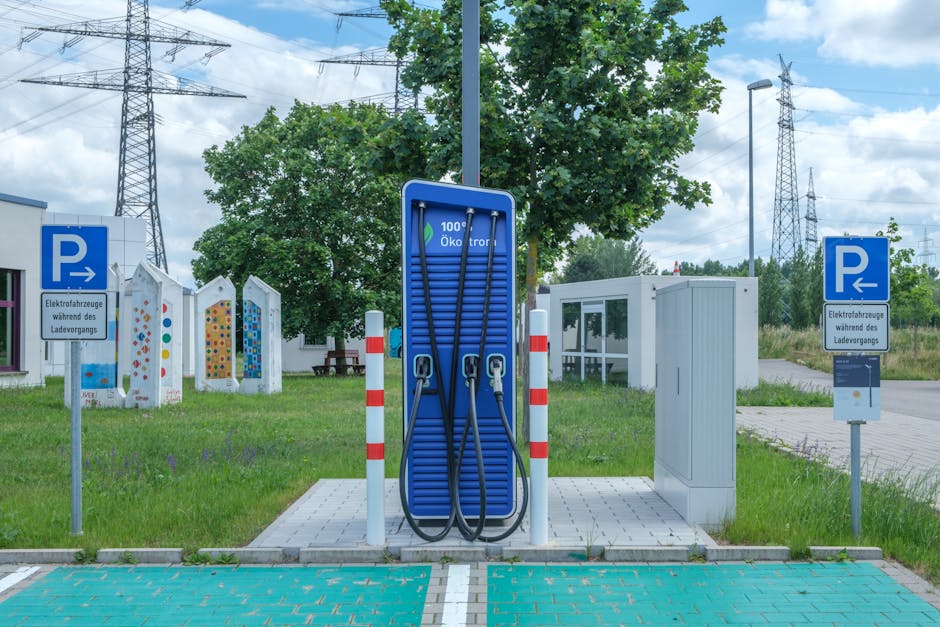
Your Nissan Leaf is at 8% on the M7, the next charger is 34km away, and the one you planned to use is out of order. Again.
This is not an edge case. This is Tuesday for a growing number of Irish EV drivers, and the gap between Ireland's charging ambitions and its charging reality is starting to look less like a policy embarrassment and more like a genuine safety hazard.
The Numbers Don't Lie
Ireland has committed to putting 945,000 EVs on the road by 2030. Grand. The charging infrastructure needed to support that goal is a different story entirely. The ESB's eCars network operates roughly 1,300 charge points across the country, a figure that sounds reasonable until you compare it to the Netherlands, which has over 130,000 public chargers for a population only two and a half times ours. Norway, population 5 million, has been building out its network for over a decade and shows what genuine political will actually looks like in practice.
The European Alternative Fuels Observatory has flagged Ireland repeatedly for failing to meet recommended charger-to-vehicle ratios. The RSA's own road safety data points to distraction, poor decisions under pressure, and fatigue as major crash contributors. Now imagine an EV driver, anxious about range, watching the battery percentage drop while hunting for a working charger on an unfamiliar route. That is a driver whose attention is not fully on the road.
Broken Chargers and Bad Planning
Here is the part that rarely makes it into the ministerial press releases. A charger that exists on the map but doesn't work is arguably worse than no charger at all. It creates false confidence. Zap-Map data and user reports from Irish EV forums consistently show fault rates at public chargers that would be unacceptable at any petrol station. Imagine pulling into a forecourt and finding the pump broken, with the next one 40km away.
ESB eCars has improved reliability in recent years, to be fair to them. But the network is patchy in a way that disproportionately punishes rural drivers. In counties like Leitrim, Roscommon, and large parts of Donegal, public fast chargers are sparse enough that a single broken unit can strand someone. The Ionity network has drawn interest from Irish EV drivers precisely because reliability matters more than price when the alternative is walking.
Motorway Charging is the Biggest Gap
The M6, M7, M8, M9. These are the arteries of Irish road travel, and their charging provision is thin. Services on major motorways often have one or two rapid chargers, which creates queuing problems during busy periods. A family on a long journey who pulls in to charge and finds both units occupied faces a choice: wait, skip the stop, or backtrack. None of those options are neutral from a safety perspective.
Range anxiety, a term often dismissed as a quirk of early adopters, is actually a measurable behavioural issue. Studies from transport researchers in the UK and Germany show that low-battery stress elevates cortisol, shortens attention span, and increases the likelihood of rushed decisions behind the wheel. You don't need a neuroscience degree to understand that a driver staring at a 5% battery icon is not driving the same way as one with a full charge.
What Desperate Charging Looks Like
Drivers are making detours of 20 to 30km off their planned route to use chargers that may or may not be working. Some are using slower AC chargers for rapid stops and underestimating how long they'll sit in a car park. Others, particularly newer EV owners who haven't yet learned their car's real-world winter range, are getting caught short on rural roads after dark.
Tips for driving at night always include the advice to plan your journey and know your route. For EV drivers in Ireland right now, journey planning requires a level of obsessive charger-checking that no petrol driver has ever had to do. That's not a feature. That's a failure of infrastructure.
What Needs to Happen
The government's National EV Charging Infrastructure Strategy sets targets for 2025 and beyond. The problem is that targets and installed hardware are two different things, and Ireland has a long track record of hitting planning milestones while lagging on physical delivery. A few things would make an immediate difference.
Mandatory redundancy at motorway services. A minimum of four rapid chargers per motorway service area, with clear maintenance SLAs and public uptime reporting. If a charger is down for more than 24 hours, there should be a notification system that updates real-time map apps automatically.
Reliability standards with teeth. Operators should be required to report uptime figures to the regulator, with licence conditions tied to performance. Right now there is no meaningful consequence for a charger sitting broken for a week.
Rural fast charging gaps filled as a priority. Urban drivers with home charging cope. It's the rural driver, the one who can't charge overnight and relies entirely on the public network, who faces genuine range risk. The commercial logic of charging networks points toward cities. The safety logic points toward the gaps between them.
Standardised real-time data. Every charger on public land should feed live status to a single national API. App fragmentation, where you need three different apps to check charger availability across different networks, is not just annoying. It's a distraction hazard.
The Irony Nobody Mentions
EVs are sold, correctly, as safer vehicles in many respects. Better crash structures, lower centres of gravity, regenerative braking. The technology inside the car has outpaced the technology outside it. We built a road system before we had motorways. We created motorways before we had the rules to match. The same lag is happening with charging, just faster, and with more people already committed to the technology.
Your Nissan Leaf is still at 8%, and the charger two exits back just came back online. You already passed it.