Your child has outgrown their infant carrier. Grand. So you grab the next seat up, strap it in, and off you go. Simple. Except it isn't, and a quick look at what Irish roads actually see every day confirms that.
Child seat use in Ireland is patchy. Not because parents don't care. They do, fiercely. But the rules have layers, the products are confusing, and the shop floor advice ranges from excellent to utterly useless. The RSA's own figures consistently show that a significant proportion of child seats observed in use are either the wrong type or incorrectly fitted. That's not a statistic about bad parents. It's a statistic about a system that doesn't explain itself clearly enough.
So here's what you actually need to know.
The Legal Baseline
Irish law requires all children under 150cm tall or under 36kg to use an approved child restraint. That's the headline. The law is based on EU Regulation ECE R44 (the older weight-based standard) and the newer ECE R129, known as i-Size. Both are legal in Ireland right now. Products certified under either standard can be sold and used.
The key point: it is the driver's legal responsibility. Not the child's parent if someone else is driving. The driver. If you're ferrying someone else's kids to football training, those seats need to be correct and fitted correctly. No exceptions, no "sure it's only down the road."
Weight-Based vs Height-Based: What's Changed
The older R44 standard groups seats by weight. Group 0+ covers babies up to 13kg. Group 1 runs from 9kg to 18kg. Group 2/3 covers 15kg to 36kg. You bought a seat for a "Group 1" child and figured that was that.
The newer i-Size standard (R129) shifted to height measurements instead. This matters more than it sounds. Two children can weigh the same but have very different body proportions. A taller child with longer legs sits differently in a seat, and in a collision the load paths through the body change. Height is simply a more accurate proxy for how a child fits the seat's protective geometry.
i-Size also extended the mandatory rear-facing period. Under i-Size, children must remain rear-facing until at least 15 months. The evidence behind this is solid: rear-facing spreads collision forces across the back, shoulders and head rather than concentrating them on the neck and spine. Scandinavian countries have used extended rear-facing for decades. Ireland is catching up.
ISOFIX: The Bit People Get Wrong
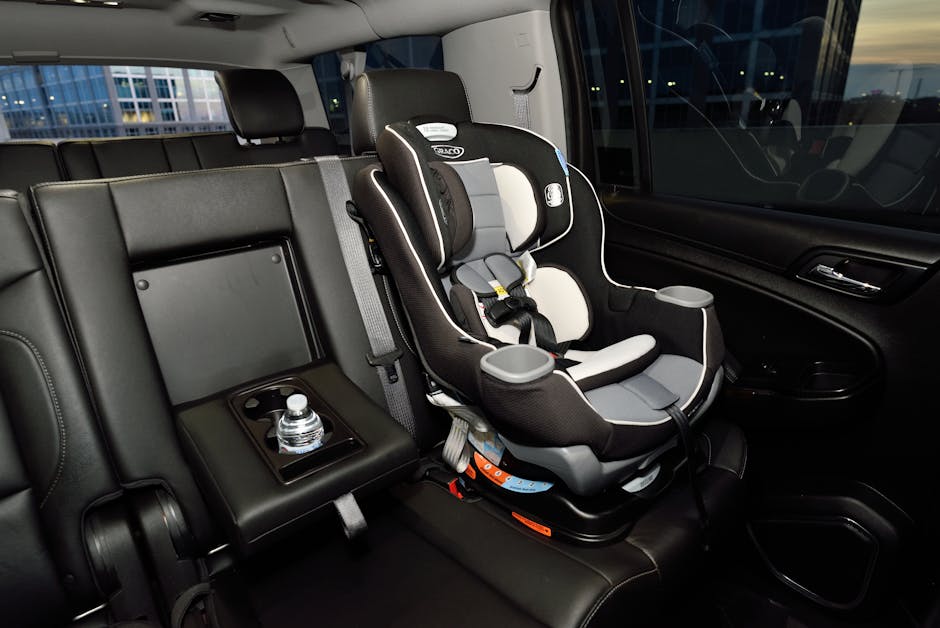
ISOFIX is a rigid anchor system built into most cars made after 2004 or so. Two metal anchor points in the seat base connect directly to matching anchors in the car's structure, bypassing the seatbelt entirely for the seat installation. The result is a seat that can't be incorrectly belted in, because belting doesn't come into it.
Here's the thing people miss. ISOFIX is a fitting method, not a safety standard in itself. An ISOFIX seat still needs to be the right size for your child. It still needs the top tether (that strap running to an anchor behind the seat) to be attached where required. And ISOFIX has weight limits. Most ISOFIX systems are rated to Group 2 at most, around 18kg. Larger children in Group 2/3 booster seats typically go back to using the car's own seatbelt to secure the seat, which is fine if done correctly.
Check your car's manual for ISOFIX anchor locations. Not every rear seat position in every car has them. Fitting an ISOFIX seat into a position without proper anchors is worse than using a belted seat correctly.
When Can They Stop Using One
This is where a lot of families get it wrong, in a very understandable direction. The child is tall enough to look cramped in the booster. They're complaining. You figure they're grand. But the law is clear: 150cm or 36kg. Whichever comes first.
The average Irish child hits 150cm somewhere between age 11 and 13. That's later than most parents assume. Until that point, the adult seatbelt geometry is wrong for a smaller body. The shoulder belt sits across the neck rather than the chest. In a collision, that's exactly the wrong place for that load.
The practical test: sit the child in the seat without a booster. If the shoulder belt doesn't sit flat across the chest and collarbone, and if the lap belt doesn't sit low across the hips rather than the belly, they need the booster. Full stop.
A Few Things Worth Knowing Before You Buy
Second-hand seats are a gamble. A seat that's been in a collision, even a minor one, can have structural damage that's invisible to the eye. Seat foam compresses in impacts. The shell can micro-crack. If you don't know the seat's full history, don't use it. [Ireland's roads carry real risks]((/articles/features/are-ireland-s-roads-getting-safer-to-drive-on/) and a compromised seat won't protect the way it should.
Installation errors are common with both belted and ISOFIX seats. Many large retailers and some RSA-affiliated stockists offer fitting checks. Use them. Bring the seat, bring the car, and have someone who knows what they're looking at check the whole setup.
If you're [buying a family SUV]((/articles/car-news/the-budget-family-suv-showdown-fiat-grande-panda-vs-kia-seltos-vs-citro-n-c3-air/) or any new car with young children in the mix, ISOFIX anchor positions across all rear seats and top tether anchor points should be on your checklist, not an afterthought.
Travel systems that extend from pram to car seat are convenient, but check the i-Size or R44 certification on the car seat element specifically. The pram rating tells you nothing about the crash protection.
The Gap Between Legal and Safe
Legal minimum means your child is covered if you're stopped. It doesn't mean the seat is optimally fitted, ideally sized, or correctly installed. The gap between "technically legal" and "actually protected" can be significant.
The RSA runs periodic free seat-checking clinics around the country. They're worth attending even if you're confident. The people running them see the same fitting errors repeatedly, and catching one before you need to rely on the seat is obviously the better outcome.
Your child complained that a booster made them look like a baby. You heard a lot of that too, didn't you. The answer is the same every time: 150cm or you keep the seat.
Note: One markdown link above contained a formatting error (double parenthesis). Corrected versions below for editorial use: