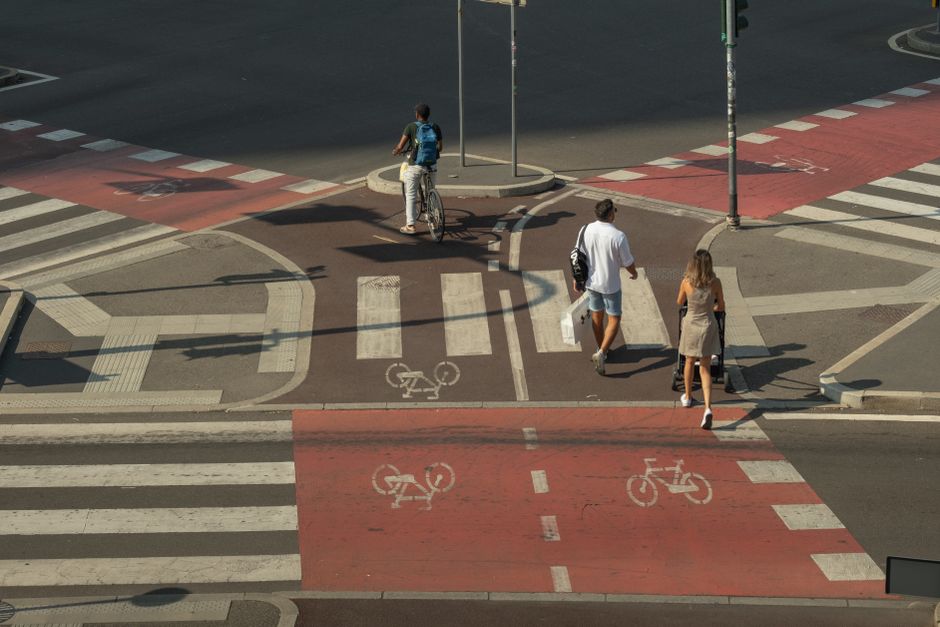
A cyclist pulls away from the lights on the North Quays. A pedestrian steps out at a zebra crossing on Grafton Street. A child on a scooter appears from behind a parked van on a housing estate road. These moments happen thousands of times a day across Irish cities. How a driver responds in each one is the whole ballgame.
The RSA has made protecting vulnerable road users a central plank of its current road safety strategy, backing it with a dedicated conference, new data, and policy pressure on local authorities and driver behaviour alike. This isn't a PR exercise. The numbers behind it are grim enough to demand attention.
What the RSA's Own Figures Actually Show
The RSA's own figures show that pedestrians and cyclists consistently account for a disproportionate share of road fatalities relative to their presence on the road. In recent years, roughly a third of all people killed on Irish roads were not in cars at all. They were walking. Cycling. Living their lives on streets that were designed, for the most part, around vehicles.
Dublin is where the pressure is sharpest. Cycling numbers in the capital have grown steadily, particularly on key commuter corridors like the Grand Canal and the Liffey Quays. Dublin cycling infrastructure has expanded, but the road network hasn't caught up evenly. More cyclists on roads built for cars, with drivers who learned to drive before protected lanes were common, is a combination that produces close calls daily and collisions more often than it should.
What's Actually Changing on the Ground
The conference isn't just talk. There are real shifts happening that affect every driver in an Irish city.
Speed limit reductions. If you've been caught off-guard by the new 60km/h limits on local roads, you're not alone. Urban areas are seeing more 30km/h zones rolled out as part of a deliberate strategy. Lower speeds don't just reduce severity. They expand reaction time. At 50km/h, a pedestrian struck by a car has a reasonable chance of surviving. At 70km/h, they largely don't. That's the physics that drives the policy.
Protected cycling infrastructure. More segregated lanes, rising kerbs, and junction designs that separate cyclists from turning traffic. The theory is sound. The implementation is patchy. But the direction is clear, and drivers need to understand what these changes mean at junctions.
Improved pedestrian crossings. Longer green phases, more raised crossings, better lighting at high-risk points. The school run hotspot problem is real, and it's been getting attention in ways it never did before.
How Your Driving Habits Need to Change
Here's the part that actually requires something from you.
The door zone is lethal, and most drivers ignore it. When you park on a street with a cycle lane, opening your door without checking your mirror first is the kind of thing that can put a cyclist in hospital. Look. Every time.
Overtaking cyclists requires more space than you think. The RSA recommends at least 1 metre of clearance when passing a cyclist at low speed. At higher speeds, that goes to 1.5 metres. On a typical urban road, that often means waiting. Not accelerating past with inches to spare, hoping for the best.
Junction behaviour around cyclists needs a rethink. The most dangerous moment for a cyclist is when a driver turns left across them. The cyclist is going straight. The driver looks for oncoming traffic and turns without checking the nearside. This happens constantly. It doesn't require malice. It just requires inattention.
Yielding to pedestrians at zebra crossings is not optional. It has never been optional. But compliance is visibly worse on busy roads where drivers are focused on traffic flow rather than the person waiting at the kerb. If someone is at a zebra crossing, you stop. Full stop.
Speed in housing estates. Twenty kilometres per hour feels painfully slow. That's the point. A child can appear from anywhere. So can a dog, a ball, and then the child chasing the ball. The speed gives you the reaction time. Nothing else does.
The Bigger Picture Drivers Often Miss
There's a tendency to see this as cyclists versus drivers, or pedestrians versus traffic flow. It's not. It's a question of what kind of streets Irish cities want to have, and who gets to use them safely.
More people cycling or walking means fewer cars on the roads you're driving on. That's in your interest. But it only works if the people in cars treat the people not in cars with the margin of care that their vulnerability requires.
The RSA's push on this isn't going away. Enforcement is increasing. Camera coverage is expanding. The cultural shift toward treating a 2-tonne car as the thing that carries responsibility, rather than pedestrians and cyclists carrying all the risk themselves, is slow but it's moving.
Irish roads have been getting safer overall in recent decades. But the progress on vulnerable road users has been slower, and the urban environment is where the gap is most visible. A major safety conference focused specifically on this is the RSA flagging that the status quo isn't good enough.
The cyclist on the North Quays, the pedestrian on Grafton Street, the child on the scooter: they're not inconveniences in your commute. They're the whole reason the safety plan exists.