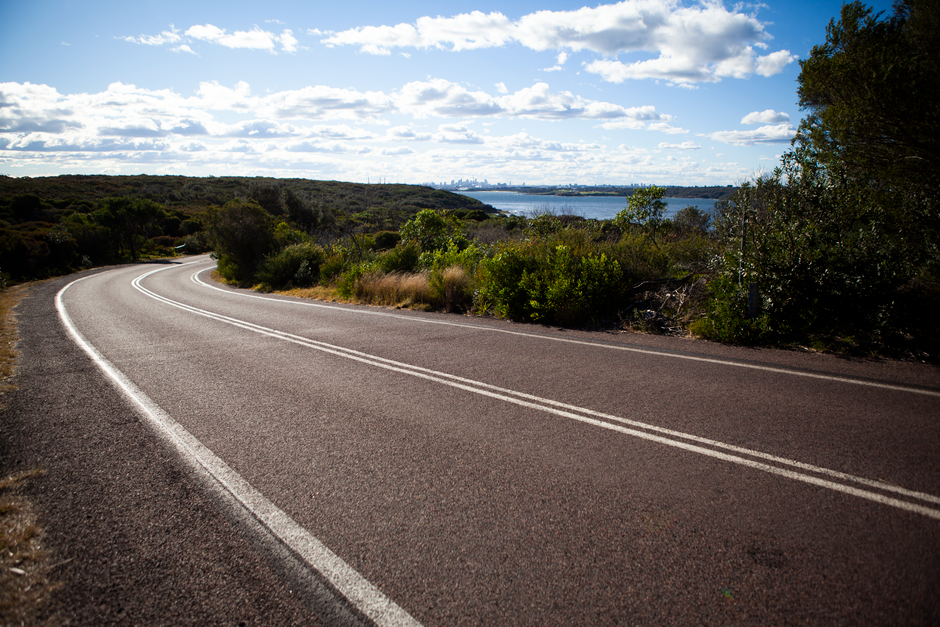
You're driving a road you've driven a thousand times. Same bends, same hedges, same pothole near the crossroads. The sign used to say 80. Now it says 60. And you're wondering if anyone's actually serious about this.
They are. Mostly.
What Changed and When
Ireland's default speed limit on local and rural roads dropped from 80km/h to 60km/h. This isn't a local council decision or a pilot scheme. It's a national change, introduced under the Road Traffic and Roads Act 2023, with the lower limit taking effect across the country's regional and local road network.
The RSA pushed hard for this. Their own figures show that rural roads account for a disproportionate share of serious collisions. The argument is straightforward: local roads were never designed for 80km/h. Many of them are narrow, poorly surfaced, and shared with cyclists, tractors, and people on foot. The 80km/h limit was always optimistic. The 60km/h limit is an attempt to match the law to the reality of the road surface under your tyres.
National primary and secondary roads are not affected. Motorways stay at 120km/h. The change targets the roads most people would describe as "the back roads," the ones with grass growing down the middle, the ones Google Maps sends you down when there's traffic on the N-road.
Why the RSA Wanted This
Speed is a factor in roughly a third of fatal collisions in Ireland. That's not a new statistic, but it's a stubborn one. Are Ireland's roads getting safer? is a question the RSA has been trying to answer with a "yes" for years, and progress has stalled. Road deaths in 2023 and into 2024 refused to trend downward in the way the agency hoped.
The physics are simple. At 80km/h, a driver who spots a hazard and brakes will travel significantly further before stopping than one doing 60km/h. On a narrow local road with poor sightlines, that gap is the difference between a close call and a fatality. The RSA knows this. They've known it for years. The change was always a matter of political will.
There's also an EU context. Ireland's road safety strategy is tied to European targets aimed at halving deaths by 2030. The default speed limit cut is one of the more visible ways the country can show movement on that goal.
What the New Signs Actually Look Like
Here's where it gets practical. You won't see a 60km/h sign on every local road in Ireland. That's not how the system works.
The default limit applies where no other sign is posted. So if you're on a local road and there's no speed limit sign visible, the limit is now 60km/h. Signs only appear where the limit deviates from the default: back up to 80km/h on certain roads that councils have assessed and designated, or down to 50km/h through villages and built-up areas.
Councils have the power to apply for derogations, essentially exemptions that allow specific roads to retain the 80km/h limit where it's genuinely appropriate, a wide, well-surfaced regional road with good visibility, for example. Some councils moved quickly to do this. Others are still working through their road networks. The result is a patchwork, which means the safest approach is to treat any unmarked local road as a 60km/h zone until you see a sign telling you otherwise.
How Garda Enforcement Works
This is the question everyone's actually asking. Is anyone going to bother enforcing this?
Gardaí enforce speed limits through a combination of fixed cameras, mobile speed vans, and checkpoints. The fixed camera network is concentrated on higher-volume roads. Mobile units can operate anywhere. The legal limit is the legal limit regardless of whether there's a camera watching.
The honest answer is that enforcement on remote rural roads is patchy by necessity. There aren't enough resources to patrol every back road in the country. But that misses the point in two ways. First, speed detection technology has become more mobile and more widespread. Second, if you're caught doing 75km/h on an unmarked local road that is now a 60km/h zone, the penalty is the same as any other speeding offence: fixed charge notice, penalty points, and if it goes far enough, disqualification.
The tolerance window that many drivers mentally apply, the idea that you're fine up to 10 or 15km/h over the limit, has never been officially sanctioned. Gardaí can issue a fixed charge from the first kilometre per hour over. Most don't, in practice, but "most don't" is a different thing from "they can't."
What This Means If You Drive Local Roads Every Day
For rural commuters, tradespeople, and anyone who uses local roads as part of a regular route, the adjustment is real. A 20km/h reduction on a 40-minute drive adds time. Not a huge amount. But enough to be noticeable if you're used to moving quickly on roads you know well.
A few things worth getting straight:
Familiarity isn't a speed limit. Knowing a road well doesn't change the legal limit or the stopping distances involved.
Unmarked means 60. If there's no sign, assume 60km/h. This is the default now.
Your satnav may lag behind. Many GPS navigation systems and in-car speed limit displays pull from mapping databases that update slowly. Don't rely on your dash display to tell you the current legal limit on a local road. Check the signs, or assume the default applies.
Insurance implications are real. A speeding conviction affects your premium. If you're already watching what your cover costs, this is worth factoring in.
The Broader Picture
The 60km/h change is one part of a wider effort to make Irish roads less dangerous. It sits alongside increased investment in road design, better lighting, and ongoing driver education programmes. None of those things work in isolation.
The most effective road safety intervention, consistently, is the one the driver applies themselves. Knowing the limit. Matching speed to conditions. Leaving enough space.
The road you drive every day just got a new number on the signs, or more likely, no sign at all, which means the number is 60. That's not a suggestion.