You lean on the horn. You shout something out the window. The lad in the high-vis holds up a stop sign and you lose three minutes of your life. Grand so. Except it's not grand at all, and from here on out, it's going to cost you considerably more than three minutes.
The Numbers Behind the Hi-Vis
A survey carried out by the Irish Road Workers Safety Alliance found that over 80% of roadworkers in Ireland have experienced verbal abuse from drivers. Not occasional. Not once in a career. Regularly. Consistently. As a feature of the job.
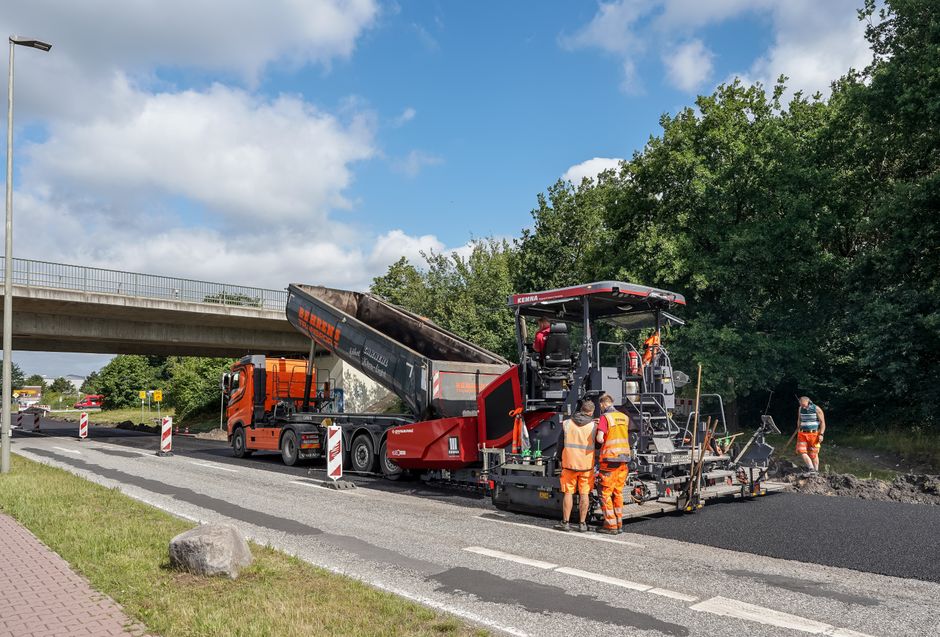
These are people digging out broken tarmac on the N11 in horizontal rain, managing signals on a contraflow outside Athlone at 7am, or laying fresh surface dressing on a country road in Roscommon while your man in a 2022 Volkswagen Tiguan revs his engine two metres behind them. The job is already one of the most dangerous on Irish roads. Being screamed at through a car window is not a reasonable addition to it.
The RSA's own figures consistently show that work zones are overrepresented in serious collision statistics. Speed is the main factor. Aggression and inattention follow closely behind. The roadworks stretch is not a mild inconvenience dropped into your morning. It is an active construction environment staffed by people with no barrier between themselves and traffic.
What "Stricter Enforcement" Actually Means
Irish authorities are preparing a stepped-up approach to driver behaviour in and around roadworks. That means more fixed penalty notices for failing to comply with temporary speed limits, more garda presence at flagged zones, and clearer pathways for workers to report abuse directly to An Garda Síochána.
The penalty for ignoring a temporary 50km/h or 30km/h speed limit is the same as any other speed offence, including penalty points on your licence. Those points compound. If you are already carrying points from a phone offence or a previous speed fine, another two from a roadworks zone puts you closer to a disqualification than you might realise.
Verbal abuse directed at a worker can constitute threatening or abusive behaviour under Section 6 of the Criminal Justice (Public Order) Act 1994. That is not a fixed penalty. That is a matter for the courts, with potential fines of up to €2,500 and a criminal record attached.
Your Dashcam Is Not Your Friend Here
Here is the part people have not fully caught up with yet. The dashcam you bought to protect yourself against fraudulent insurance claims can now be used as evidence against you.
An Garda Síochána can and do request dashcam footage from drivers involved in incidents. If your camera captured you doing 72km/h through a 50km/h zone, or recorded audio of you shouting abuse at a worker with a stop sign, that footage is admissible. Some roadworks sites now carry their own CCTV. Mobile cameras mounted on barriers are becoming more common. Workers carry phones.
The idea that you can vent freely at a temporary traffic management operative and drive off clean is becoming less reliable by the month.
What the Law Actually Requires You to Do
This is the practical bit. When approaching roadworks in Ireland, you are legally required to:
Comply with all temporary speed limits. A 50km/h sign in a roadworks zone is not advisory. It carries the same legal weight as a permanent sign. Same for 30km/h zones closer to active work.
Follow the instructions of authorised traffic management personnel. A person holding a stop/go lollipop sign has the same authority as a traffic light at that point. Ignoring them is an offence.
Maintain a safe distance from workers and machinery. There is no specific statutory distance written into one clean rule, but driving dangerously close to a worker on foot is covered under reckless driving provisions.
Not use your phone. Yes, in a contraflow crawl. Yes, even when you are barely moving. Phone detection cameras are coming to Ireland, and slow-moving traffic through roadworks is exactly the kind of environment they are designed to monitor.
Why People Snap, and Why It Does Not Matter
The frustration is not mysterious. Roadworks in Ireland can be badly signed, inconsistently managed, and timed at peak hours for reasons that defy logic. A stretch of the N7 that has been partially dug up for eleven weeks with no visible activity on a Tuesday morning is a legitimate irritant.
None of that changes the legal position of the person holding the sign. They did not design the project plan. They did not schedule the utility works that added three weeks to the timeline. They showed up for a shift in a reflective jacket on a road where vehicles occasionally clip workers and drive away.
Directing aggression at that person achieves nothing except putting you in legal jeopardy and making someone's already difficult job worse.
If the roadworks are genuinely dangerous, badly managed, or causing disproportionate disruption, the route for that is a complaint to Transport Infrastructure Ireland, the relevant local authority, or the contractor's safety officer. Not the window of a moving vehicle.
The Practical Upshot
Slow down before you see the cones. Not at the cones. Before them. The posted limit applies from the sign, not from the moment you decide the zone is real.
Keep your window up if you are the type to narrate your frustrations aloud. Not for the worker's sake alone. For yours.
And if your dashcam is running, which it should be, factor in that it records you as well as everything else.
Three minutes in a contraflow. That is usually what this is about. And it is not worth a fixed penalty, a court date, or two more points on a licence you need to keep.
You leaned on the horn. You shouted something. The lad in the high-vis held his ground. Next time, he might be writing down your plate.