You're waiting to turn left into a side street in Galway city centre. A woman steps off the kerb. You honk. She jumps back. You drive on. And you've just broken the law.
Most drivers don't know that. Most drivers wouldn't believe you if you told them. The Highway Code rules around pedestrian protection are some of the least understood pieces of road legislation in Ireland, and the gap between what drivers think the rules say and what they actually say is wide enough to cause serious harm.
The RSA's own figures show pedestrians account for a significant proportion of fatal and serious road casualties every year in Ireland. Urban areas are where most of those incidents happen. And the rules designed to prevent them are routinely ignored, not out of malice, but out of genuine ignorance.
The Junction Rule Drivers Keep Getting Wrong
Here is the one that catches most people out. When you are turning at a junction, whether left or right, and a pedestrian is already crossing the road you are turning into, you must give way to them. Full stop.
It does not matter that you have a green light. It does not matter that the pedestrian crossed without looking. The road you are turning into is their space until they have cleared it. Your green light gives you permission to move through the junction. It does not give you priority over anyone already in the crossing path.
This is not a grey area. It is explicitly covered in the Rules of the Road, the Irish equivalent of what the Highway Code lays out. Drivers who creep forward while a pedestrian is mid-crossing are not being assertive. They are breaking the law.
Zebra Crossings Are Not Optional
You would think this one was nailed on. It is not. The rule is clear: once a pedestrian has stepped onto a zebra crossing, you must stop. Not slow down. Not flash your lights to wave them through. Stop.
A pedestrian waiting at the kerb does not legally require you to stop, though it is good practice. But the moment a foot leaves the pavement and lands on the striped surface, you are legally obliged to yield. Fully. Without creeping.
What actually happens on Irish roads is a different story. Drivers slow to a crawl, make eye contact, give a small wave as if granting a favour, and ease through anyway. That is not compliance. It is a minor performance of compliance while still committing an offence.
Pedestrian Lights and the Amber Phase
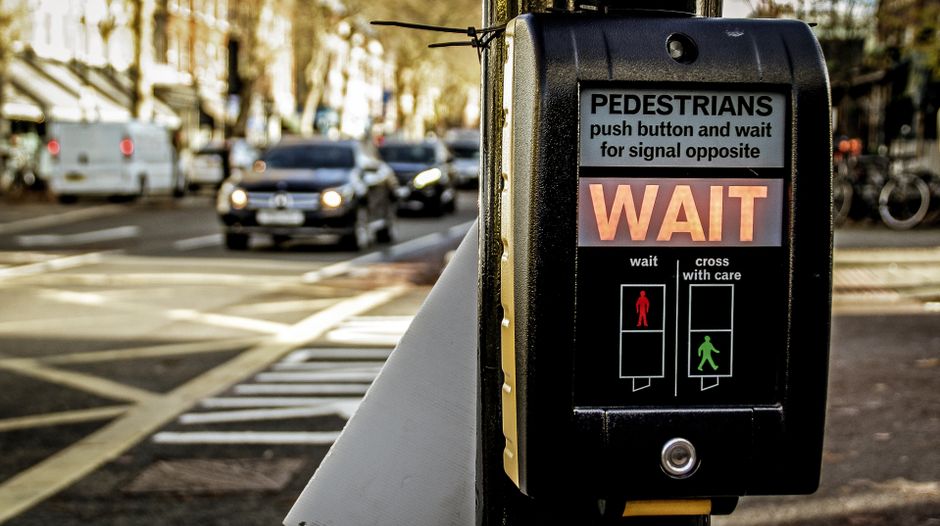
A lot of drivers treat an amber pedestrian phase at a signalised crossing the same way they treat an amber traffic light: as a signal to accelerate. It is not.
If pedestrians are already crossing when the green man starts to flash or the signal changes, they are legally entitled to complete their crossing. You do not get to pressure them by inching forward. You wait until the crossing is clear.
This matters especially in town centres where older pedestrians, people with prams, and people with mobility issues need longer to cross. The light changing is not an instruction for them to run. It is not a countdown for you to launch.
School Zones and 30km/h Limits
Irish towns and cities have seen a significant push toward vulnerable road users in Irish cities being better protected through lower speed limits and school zone rules. The 30km/h zones outside schools during drop-off and pick-up times are legally enforceable speed limits, not suggestions. The RSA has been clear on this. Many drivers treat them as advisory.
At 30km/h, a pedestrian struck by a vehicle has a reasonable chance of surviving. At 50km/h, they do not. Speed inside urban areas is not just about fines. It is about the difference between someone walking home and someone not making it.
The Bus and Tram Stop Situation
Here is one almost nobody knows. When a bus or tram is stopped and passengers are alighting, you are expected to slow and be prepared to stop if pedestrians cross in front of or behind the vehicle. Passengers stepping off a bus often step directly into the road. The vehicle blocks your view of them and blocks their view of you.
The rule does not require you to telepathically know someone is there. It requires you to treat the situation as a hazard and reduce your speed accordingly. Drivers who barrel past a stationary bus at full speed are not just being reckless. They are ignoring a specific provision in the rules designed for exactly that situation.
What Drivers Actually Need to Do
None of this requires advanced driving skills. It requires paying attention to what the rules actually say rather than what years of habit have taught you to assume.
The Irish driving test does cover pedestrian scenarios, but passing a test fifteen years ago and remembering every nuance of it are two very different things. The RSA's data on pedestrian casualties is not improving fast enough to suggest Irish drivers have this under control.
A few practical reminders:
At junctions: Scan the road you are turning into before you turn. If someone is crossing it, they have priority. Wait.
At zebra crossings: The trigger is the foot on the crossing, not the pedestrian looking at you. Stop before the line.
At signalised crossings: A changing light is not a starting gun. Wait until the crossing is clear.
Near buses and trams: Treat them as a hazard zone. Slow down before you get there.
In school zones: The 30km/h limit is a limit, not a target minimum.
The woman stepping off the kerb in Galway was not in the wrong. She was crossing a road you were turning into. You had the obligation to wait. That is not a technicality. That is the rule as written, the same rule that exists specifically to stop pedestrians from getting hurt by drivers who assumed they had right of way when they did not.
The honk does not help her. Knowing the rule might.