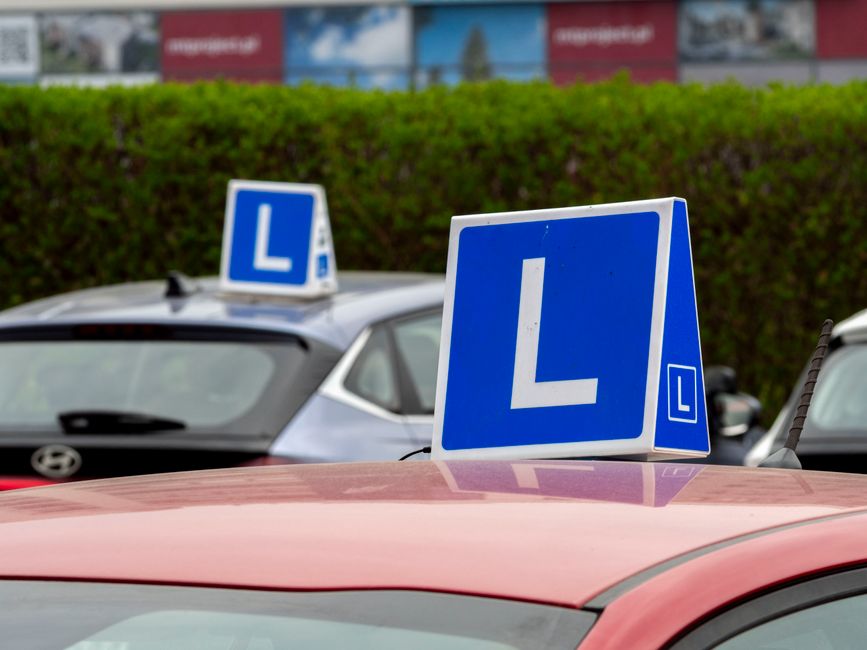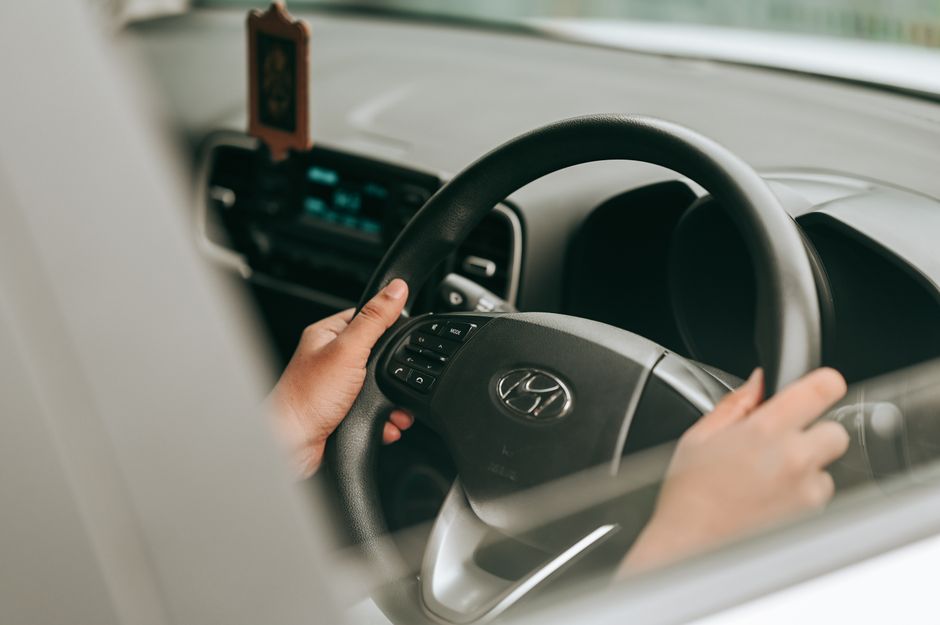
Your mate's cousin bought a nearly-new Hyundai Tucson and hasn't stopped talking about the lane-keeping assist. He thinks he's basically driving a spaceship. He is not driving a spaceship.
This is the reality facing learner drivers right now. Cars that cost thirty grand come loaded with technology that beeps, nudges, brakes, and steers on your behalf. At the same time, Tesla's Autopilot system keeps landing in courtrooms and on front pages, which sends one of two wrong messages: either this stuff is dangerously unreliable, or it's so good you don't need to bother learning properly. Neither is true. The actual truth is more boring and more important.
The RSA's own road safety data continues to show driver error as the dominant factor in serious collisions on Irish roads. Not bad roads. Not bad weather. Decisions made, or not made, by the person behind the wheel. No currently available production car changes that equation. What they do is add a layer of assistance that works well in specific conditions and fails quietly in others. Learners who don't understand that distinction are setting themselves up for a nasty surprise.
What Driver-Assistance Actually Means
"Autonomous" is a word the car industry has badly abused. What you'll find in most modern cars is driver-assistance technology, not self-driving technology. The distinction matters enormously.
Driver-assistance systems are designed to support an attentive driver. They are not designed to replace one. The legal responsibility for what your car does remains yours, always. If you drift into another lane because you assumed the lane-keeping system would sort it, that's on you. The system will tell that to absolutely no one.
Here's what you'll actually encounter behind the wheel of a modern car as a learner:
Automatic Emergency Braking (AEB): Detects an obstacle ahead and applies the brakes if you don't react in time. It works reasonably well on motorways and dual carriageways. It can struggle with stationary objects, cyclists, or anything it doesn't recognise as a threat. It is not a substitute for maintaining a safe following distance.
Lane-Keeping Assist (LKA): Uses cameras to detect lane markings and nudges the steering wheel if you drift. It requires clear, visible lane markings to work. On a typical Irish rural road with worn paint and no central reservation, it has nothing to work with. It will not save you on the R400 on a wet November evening.
Adaptive Cruise Control (ACC): Maintains a set speed and adjusts it automatically to keep a gap from the car ahead. Useful on motorways. Not a replacement for motorway driving skills, which take time and practice to build. And it does not steer. At all.
Blind Spot Monitoring: Lights up a warning in your mirror when a vehicle is in your blind spot. Helpful. But it doesn't replace the physical act of checking your mirrors and performing a head check before changing lanes. The RSA test examiner will want to see you do that manually.
Parking Sensors and Cameras: The one everyone loves. Beeps at you when you're getting close to something. Honestly grand for parking. But if you learn to park entirely by listening to beeps, you will fail your test manoeuvre and feel genuinely confused about why.
What Tesla's Headlines Actually Tell Us
Every time a Tesla Autopilot story breaks, two camps emerge online. One says the technology is a death trap. The other says human drivers cause far more accidents anyway, so let the robots take over. Both camps are missing the point.
What the ongoing legal cases and investigations actually reveal is a misuse problem as much as a technology problem. Autopilot is a Level 2 driver-assistance system. Level 2 means hands on the wheel, eyes on the road, attention fully engaged. The clue is in the word "assistance." Tesla has been at the centre of collisions where drivers treated Level 2 as Level 4 or 5, meaning full autonomy. It isn't. Not even close.
For learners, the lesson is this: if experienced drivers with years behind them can be lulled into over-reliance on these systems, imagine how easy it is for someone still learning to read the road. The technology can create a false sense of security at exactly the point in your development when you need to be building real skills.
Why These Systems Won't Help You Pass
Your driving test examiner does not care about your car's technology. They are assessing you. Your observations. Your decision-making. Your spatial awareness. Your ability to manage a roundabout without treating it as a suggestion.
The Irish driving test is specifically designed to test the human driving the car, not the car's computers. If your AEB stops the car because you weren't paying attention, that's a fault. If your lane-keep assist tugs the wheel because you drifted, the examiner saw that. Automated interventions during your test are not neutral events.
Beyond the test, there's the longer game. The skills you build as a learner become the instincts you rely on for the rest of your driving life. Hazard perception, spatial awareness, reading other road users: none of that is outsourced to a camera and an algorithm yet. You still have to do it yourself. Mastering hazard perception early is one of the most transferable things you can do as a learner, no matter what car you eventually drive.
How to Use These Features Sensibly as a Learner
This isn't an argument against the technology. It's an argument for understanding it properly.
If you're practising in a car with AEB, know it's there but don't count on it. Keep your following distances. Use your own braking judgment. Treat the system as a last resort, not a first line of defence.
If you're in a car with adaptive cruise control, use it on a motorway in light traffic to understand how it behaves. Then turn it off and do the same stretch manually. Feel the difference. That's learning.
Check whether lane-keeping assist is on and understand when it won't work. Knowing a system's limits is as important as knowing its capabilities.
Most importantly: ask your instructor. Not all cars behave the same way and a good instructor will walk you through what the car you're training in can and can't do. That conversation is worth more than any amount of YouTube explainer videos.
The technology in modern cars is genuinely impressive. It can make driving safer for experienced drivers who understand what they're working with. For learners still building the foundational skills? It's background noise at best and a distraction at worst.
Your man in the Tucson still thinks he's in a spaceship, by the way. He also took out a wing mirror last Tuesday.