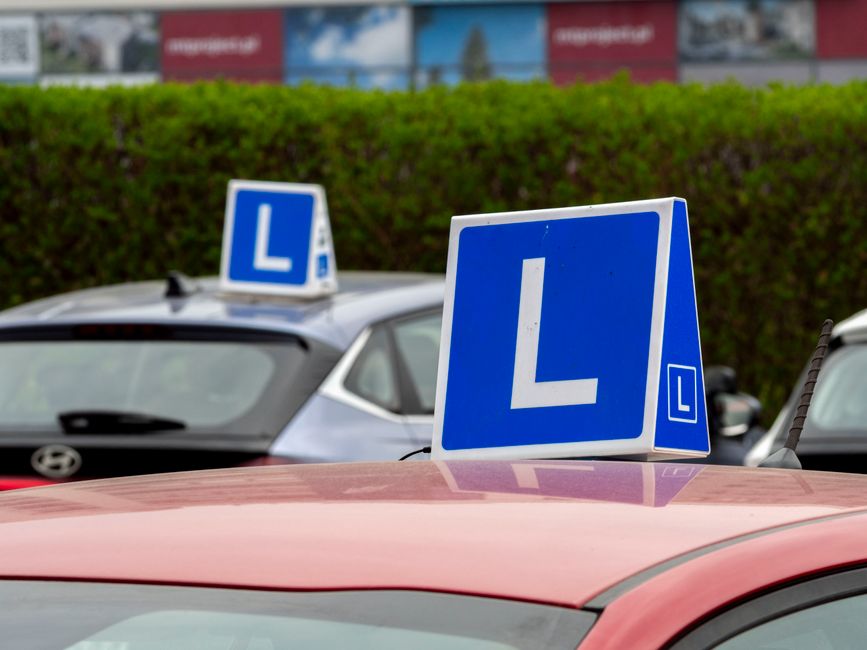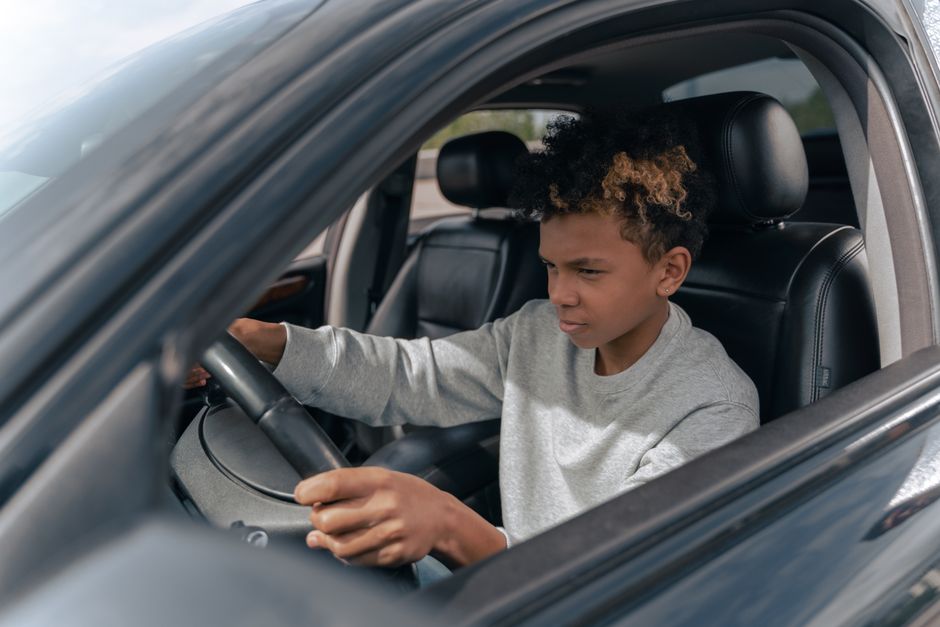
Your examiner sat down, clicked their seatbelt, and said nothing. That silence is the test. Not the three-point turn. Not the hill start. The question they're answering for the next half hour is simple: does this person actually see what's happening on the road?
Hazard perception is the skill most learners think they have and most learners don't. It's not about reacting when something goes wrong. It's about reading the road far enough ahead that nothing goes wrong in the first place.
What Hazard Perception Actually Means
The RSA defines a hazard as anything that causes you to change speed or direction. That covers a lot of ground. A lorry pulling out. A dog off a lead. A puddle that's deeper than it looks. A cyclist who's been riding in a straight line but is about to wobble because they hit a pothole you can already see from thirty metres back.
Novice drivers tend to drive the car. Experienced drivers tend to drive the road. The difference is attention span and where you aim it.
You're not just watching the car in front. You're watching the car two cars ahead, the side street on your left, the school that's coming up, and the lad on his phone who's about to step off the footpath without looking. All at once. Constantly.
That sounds exhausting. It becomes automatic. But only if you train it deliberately.
Why Irish Roads Make This Harder
Irish road conditions don't exactly give you an easy classroom. You've got rural boreens where a tractor can fill the entire road. You've got urban junctions where cycle lanes, bus lanes, and pedestrian crossings all converge in one chaotic twenty metres. You've got dual carriageways that merge into single lanes with approximately no warning.
Traffic complexity has increased too. More cyclists. More e-scooters operating in legal grey areas. More delivery vans double-parked. More electric vehicles that arrive at junctions nearly silently, which matters when you're relying on sound as part of your awareness.
Are Ireland's roads getting safer? The data is mixed. Fewer fatal collisions in some categories, but more complexity and more variables. As a learner, you're arriving into that complexity fresh.
The Hazards Your Examiner Is Specifically Watching For
Examiners aren't guessing. They have a mental checklist. These are the situations where most learners either miss the hazard entirely or react too late.
Junctions and emerging vehicles. You should be reading every side road you pass. Not glancing. Reading. What's the sightline like? Is there a vehicle nose poking out? Is there a vehicle that could poke out if the driver doesn't see you?
Parked cars. Every parked car is a potential door opening or a person stepping out. Give them space. Not a little space. Enough space that if the door swings fully open, you clear it without drama.
Pedestrians, especially near schools. Children do not look before they cross. Adults near schools are distracted. Slow down before you need to, not because you need to.
Cyclists changing position. A cyclist moving out from the kerb is about to do something. Pass them only when you have the room and the speed to do it safely, with at least a metre of clearance. If you can't, you wait.
Weather and surface conditions. A wet road after a dry spell is treacherous. Leaves in autumn. Ice in winter. Gravel on a bend after a farm entrance. These are all hazards. The road is not a constant.
How to Actually Build the Skill
Reading about hazard perception won't make you better at it. You need to practise the mental habit.
Narrate your drives. Out loud or in your head. "There's a junction ahead on the right. I can't see into it. I'm slowing." "That van is indicating. I'm giving it room." This sounds ridiculous. It works. It forces your brain to process consciously what it needs to eventually do automatically.
Practise as a passenger. You don't need to be behind the wheel to train your eye. Sit in the front seat and spot hazards before the driver reacts to them. See how often you're right. See what you miss.
Use your EDT lessons deliberately. Each lesson has a focus, but hazard perception runs through all of them. Ask your instructor to narrate their own hazard reading while they demonstrate. Ask them to point out what you're missing, not just what you're doing wrong.
Drive at different times. Rush hour is different from a quiet Sunday morning. Night driving changes everything. The hazards shift. Your reactions need to shift with them.
The Difference Between Seeing and Responding
Spotting a hazard is step one. Responding correctly is step two. They're not the same skill.
A lot of learners see the hazard and then freeze or over-react. Slamming the brakes when gradual easing would have handled it fine. Jerking the wheel instead of a calm, considered line change. The examiner isn't just marking whether you saw it. They're marking whether your response was measured and appropriate.
Smoothness is the signal. A smooth response means you saw the hazard early. An abrupt response means you saw it late or panicked. The examiner can tell the difference every time.
What You're Up Against in the Test
The Irish driving test isn't designed to catch you out. It's designed to check that you're safe to drive alone. Hazard perception failures tend to cluster around a few recurring moments: emerging at junctions too confidently, getting too close to parked cars, not adjusting speed for pedestrians, and not anticipating what the vehicle ahead is about to do.
Nerves are real. They narrow your attention. When you're anxious, you watch the road immediately in front of you and miss the bigger picture. The antidote is a routine. Scan far ahead. Check mirrors. Scan again. Give it enough repetitions in your lessons that it runs even when your palms are sweaty.
One More Thing
The examiner who clicked in beside you at the start isn't your enemy. They want you to pass. Genuinely. Every test they conduct where someone fails is more paperwork and a longer waiting list.
But they can't pass you if you're not safe. And safety, at its core, is just seeing what's actually there.
Spot the danger before it becomes one. That's the whole game.