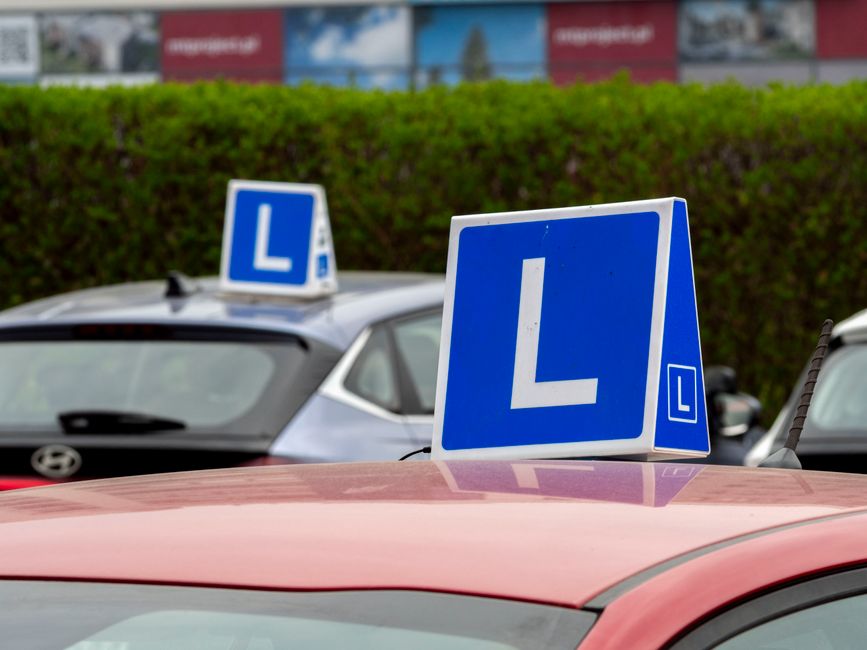
You pass your test on a Tuesday. By Thursday you're staring at a quote for €2,800 and wondering if you've made a terrible mistake. You haven't. But the insurer is absolutely hoping you think you have.
The Irish motor insurance market is not set up to reward new drivers. It's set up to price them at the outer edge of what they'll tolerate, then wait. Most young drivers accept the first or second quote they get, pay it, and move on. Insurers know this. They've built their pricing models around it.
Here's what's actually happening inside that quote, and what you can do about it.
What Insurers Are Actually Measuring
Your premium isn't a reflection of how well you drove on test day. It's a statistical bet. Insurers group you with every other driver who shares your characteristics, and they price for the worst of that group.
Age is the biggest factor. The RSA's own figures show that young drivers (17 to 24) are significantly overrepresented in serious collision statistics. Insurers have been burned by this cohort for decades, and they price accordingly. That's not entirely unfair. But here's the problem: the model is blunt. A 19-year-old who completed all 12 Essential Driver Training lessons, drives a 2018 Toyota Yaris 1.0 petrol, and lives in a rural county is priced almost identically to a 19-year-old who did the minimum, drives a 2010 Volkswagen Golf 2.0, and lives above a chipper on a busy city street.
The individual nuances get lost in the group average. And the group average is expensive.
The Hidden Factors Pushing Your Quote Up
Beyond age, insurers are quietly weighing a few things most new drivers don't think about.
Your car's engine size. A 1.0 or 1.2 litre engine will generally attract a lower premium than a 1.6 or above. If you're buying your first car, this matters more than the colour. A 2017 Ford Fiesta 1.0 EcoBoost and a 2017 Ford Mondeo 2.0 diesel might cost similar money to buy. The insurance difference between them will not be subtle.
Where the car is kept overnight. Locked garage beats driveway beats on-street every time. If you're in a city and parking on a public road, you're paying more. This is one factor you can sometimes shift with a named driver who has a different address, though insurers are wise to artificial arrangements.
Who else is on the policy. Adding an experienced driver (a parent, an older sibling) as a named driver on your policy can reduce the premium meaningfully. This is legitimate. What isn't legitimate is "fronting," where the experienced driver is listed as the main driver when they're not. That's fraud, and if it comes out at claim time, your policy is void.
Your job title. Occupation affects your quote. "Student" and "unemployed" tend to attract higher premiums than "teacher" or "nurse." It sounds absurd. It isn't something you should misrepresent. But it's worth knowing the system is doing this.
The excess you've chosen. A high voluntary excess reduces your premium. A €500 voluntary excess on top of your compulsory excess is a genuine saving mechanism, provided you can actually cover that amount if something happens.
What You Can Do Right Now
Shopping around is the obvious one. Use comparison sites, but also ring brokers directly. Some deals don't appear online. Young drivers and rising insurance is a topic worth understanding before you make any calls, because knowing your position changes how you negotiate.
Complete your EDT lessons properly. All 12 of them. Some insurers now ask for your EDT certificate and will discount accordingly. Even if your insurer doesn't ask, having it on record is useful as the market moves toward rewarding formal training.
Consider a telematics policy. These are "black box" policies where a device (or an app) monitors your driving: speed, braking, time of day, mileage. If you're genuinely a careful driver, you can earn real discounts over 6 to 12 months. The downside is that late-night driving tends to be scored poorly, and you'll need to be consistent. If you're the kind of person who can live with that, telematics can cut your second-year premium significantly.
Check whether your insurer offers a multi-car discount. If your parents already have a car insured, adding yours to the same policy is sometimes cheaper than insuring it separately.
On your car choice: a small, low-powered car in a low insurance group will save you more in year one than you'd expect. The learner's guide to understanding car insurance jargon is worth reading before you commit to anything.
The Stuff That Takes Longer But Actually Works
One year of no claims is worth more than any discount code. After 12 months of claim-free driving, your premium will drop. After two or three years, you start to look like a different kind of risk entirely. The only way through is through.
If you're in a position to pay annually rather than monthly, do it. Monthly payment plans typically add 10 to 15 percent to the total cost of the policy. That's a lender's margin wearing an insurance hat.
Keep your licence clean. A penalty point for a minor offence is a premium increase waiting to happen at renewal time. Two points can move your quote by hundreds.
What Doesn't Work
Lying on your application. Misrepresenting your occupation, your annual mileage, where the car is kept, or who the main driver is. If you claim at any point and the insurer investigates (and they do investigate), a material misrepresentation voids the policy. You're left with nothing and a fraud marker on your record that will follow you for years.
Buying a "project car" with a powerful engine because it's cheap. The cheap part is the purchase price. The expensive part is everything after it.
The Quote Is Not Final
That first number they give you is real, but it's not fixed. Comparison sites, direct calls, brokers, named drivers, telematics, engine size. Every one of these is a lever. You probably can't pull all of them at once in year one. But you can pull enough.
You passed your test on a Tuesday. By Thursday you understood that insurance is a market, not a verdict. Work it like one.