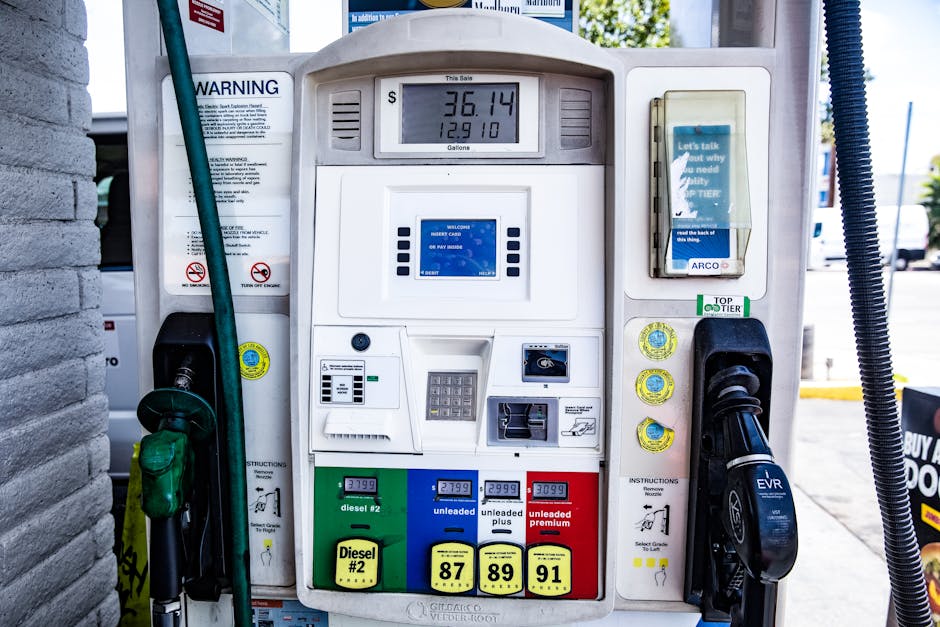
The pump flicks past €2 and your stomach does that thing. You know the thing. You've been doing it for over a year now, and it hasn't got any less grim.
Petrol and diesel prices in Ireland have been sitting stubbornly above the €2/litre mark through 2025 and into 2026, with brief dips that feel more like taunts than relief. The government's excise reductions, introduced to cushion the blow during earlier price spikes, have been wound back incrementally. The AA's fuel price tracker shows Irish drivers are consistently paying among the highest pump prices in Western Europe, a combination of taxation, distribution costs, and the simple geographical fact that we're an island at the end of a supply chain. The result: a 60-litre fill of diesel in a family car is costing north of €120. That's a weekly sting for a lot of households.
And no, this article isn't going to tell you to buy an EV. If that were on the table, you'd know. This is about what you can actually do, this week, with the car sitting in your driveway.
Coast More, Brake Less
The single most effective thing you can do costs nothing. It just requires changing the way you think about the road ahead.
Aggressive drivers use dramatically more fuel than smooth ones. Hard acceleration followed by hard braking is basically converting petrol into heat and noise rather than forward motion. The fix is to look further ahead, lift off the throttle earlier when approaching lights or junctions, and let the car's momentum do more work. In modern cars with fuel injection, lifting off the accelerator completely while in gear cuts fuel delivery to near zero. You're rolling on engine braking, burning nothing.
This matters most at 80-120km/h on motorways and national routes, where aerodynamic drag becomes the dominant force eating your fuel. Sitting at 110km/h instead of 130km/h on the M7 can cut fuel consumption by 15-20% on that stretch alone. That's not a small number when you're doing it five days a week.
Tyre Pressure Is Boring Until You Do the Maths
Under-inflated tyres increase rolling resistance, which increases fuel consumption. The RAC estimates that tyres at 25% below recommended pressure increase fuel use by around 2%. Across a year of commuting, that adds up to real money for essentially zero effort.
Check your pressures monthly. The correct figure is in the door sill sticker or your owner's manual, not the maximum figure moulded into the tyre sidewall. Takes five minutes at any garage forecourt, most of which still have free air.
Route Planning Isn't Just About Distance
A 12km commute on stop-start urban roads will burn more fuel than a 17km route on a clear national road. The stop-start cycle is punishing on consumption, particularly for older petrol engines without start-stop technology or hybrid assistance.
Experiment with timing, too. Leaving 25 minutes earlier or later can shift you out of the worst congestion bands entirely. It sounds obvious. Most people don't actually try it because the routine is comfortable. The routine is costing you.
Apps like Google Maps and Waze now show traffic-adjusted fuel consumption estimates for different routes. Use them. Specifically, look at the "eco" route option, which optimises for fuel rather than time.
The Carpool Maths Are Uncomfortable to Ignore
Two colleagues sharing a commute halves the fuel cost per head. Four people sharing cuts it to 25%. That's not marginal, that's transformative on a monthly basis.
The barrier is usually social awkwardness or schedule mismatch. Neither is insurmountable. The Liftshare and Ipool platforms have Irish users, and a lot of large employers (multinationals especially, across Dublin, Cork, and Limerick) run formal carpooling schemes that even come with priority parking spots. Check if yours does. Most people don't bother to look.
Fuel Cards and Loyalty Schemes: Use What Exists
Circle K's Nectar points, Applegreen's app discounts, and Texaco's partner schemes are not going to transform your finances. But if you're already buying fuel, there's no rational reason not to capture the discount that's sitting there. Circle K regularly runs promotional pricing through its app that knocks 4-6 cent per litre off the pump price. On a 60-litre fill, that's €3.60. Over 50 fills a year, that's €180 back in your pocket for downloading an app.
Beyond loyalty schemes, fuel price comparison sites like pumps.ie let you see which stations near your route are cheapest on a given day. The variance between the cheapest and most expensive station in any given town can be 5-8 cent per litre. You're already driving past stations. You might as well drive past the cheaper one.
Consider What You're Actually Driving
This isn't a prompt to buy a new car. But if you're running a 2014 diesel SUV for a 9km urban commute, the engine is spending most of its time cold and inefficient, diesel particulate filters are clogging, and you're getting a fraction of the fuel economy the official figures imply.
For short urban commutes, a smaller, older petrol car often works out cheaper to run than a newer diesel, once you factor in the higher purchase price, diesel servicing costs, and the fuel consumption penalty of cold short-trip driving. It's worth actually running the numbers on your specific situation rather than assuming bigger or newer means better on costs. Budget petrol options in the new Irish market for 2026 have improved significantly, for what it's worth.
The Maintenance You Keep Putting Off
A clogged air filter, worn spark plugs, or old engine oil all increase fuel consumption. The AA estimates a poorly maintained engine can use up to 10% more fuel than a properly serviced one. If your service is overdue, the cost of the service might be less than the fuel you'd waste by skipping it over the next year.
Specifically: fresh oil reduces internal friction. A clean air filter lets the engine breathe properly. New spark plugs (on petrol cars) ensure complete combustion. None of this is exciting. All of it works.
The pump is still sitting above €2. Probably will be for a while yet. But that 15-20% you can claw back through smoother driving, correct tyre pressures, and a smarter route? That's yours to take, starting tomorrow morning, with the car you already have.