Bosch is testing fully supervised autonomous driving on public roads in Beijing right now. Not in a lab. Not on a closed circuit. On actual streets, in actual traffic, with actual pedestrians making bad decisions.
And here in Ireland, we're still arguing about whether a learner driver needs a fully licenced passenger in the car at all times. Which they do. Just so we're clear.
So What Even Is Level 3 Automation?
The SAE (Society of Automotive Engineers) breaks driving automation into six levels, from zero to five. Most of us are driving Level 0 to Level 1 every day. Lane keeping assist, automatic emergency braking, adaptive cruise control. These are all still you driving, just with a nervous co-pilot nudging the wheel.
Level 2 is where things like Tesla's Autopilot and GM's Super Cruise live. The car handles steering and speed simultaneously. But you must stay alert and keep your hands nearby. The system is driving. You are supervising. Crash on Level 2 and the liability question gets very messy very fast.
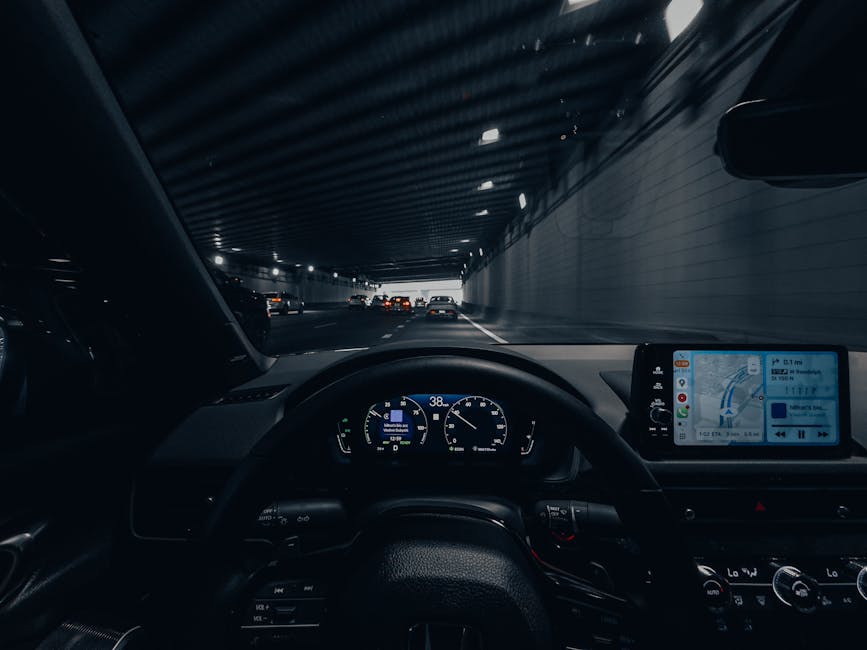
Level 3 is the one that changes everything. The car drives. You are officially a passenger, for now. You can legally look away, check your phone, zone out. The system handles the full driving task within specific conditions, usually defined speeds, mapped motorways, good weather. But here is the critical bit: the car can ask you to take back control with a warning, and you must be able to do so within a set handover time. Usually around ten seconds. That is the reason Level 3 is harder to regulate than Level 4 or 5. Someone still has to be ready to drive. They just do not have to be driving right now.
Level 4 means the car handles everything within its operational zone, no human needed at all. Level 5 is the full autonomous dream: anywhere, any conditions, no steering wheel required.
Bosch's Beijing tests are operating at Level 3, on mapped urban roads, in controlled conditions. It is genuinely impressive. It is also a long way from your morning commute on the N7.
Why Is China Moving Faster Than Europe?
Three reasons: regulation, infrastructure, and appetite.
China's government decided it wanted to be the global leader in autonomous vehicle technology and then built policy around that goal. Cities like Beijing and Shanghai have designated zones where AV testing is not just permitted but encouraged. The data companies collect there feeds back into faster development cycles.
Europe's approach is more cautious. The EU's type-approval framework for vehicles is thorough, rigorous, and slow. Germany became the first European country to legally allow Level 3 operation on public roads in 2021, under the Autonomous Driving Act. Mercedes-Benz got official approval for their Drive Pilot system in 2023 on certain German motorways at speeds up to 60km/h. That is real progress. It is also 60km/h. On a motorway.
The liability question is what keeps lawyers and manufacturers up at night. When a Level 3 vehicle is in autonomous mode and something goes wrong, who is responsible? The driver who was legally allowed to stop paying attention? The manufacturer whose software was in control? The answer to that question has to be settled in law before mass deployment happens anywhere. Germany said the manufacturer carries liability during autonomous mode. Other EU countries have not yet followed.
Where Does Ireland Fit Into This?
Honestly? Ireland is watching from a reasonable distance and waiting to see who blinks first.
The Road Safety Authority has no specific framework yet for Level 3 vehicles on Irish public roads. The EU's General Safety Regulation, which came into force in 2022, mandated several Level 2 features as standard on new vehicles sold in Europe. Things like intelligent speed assistance, lane keeping, and emergency braking. That is the floor rising. The ceiling on full autonomy remains undefined here.
Ireland's road infrastructure adds another layer of complexity. Bosch's Beijing tests rely heavily on detailed HD mapping of road surfaces, lane markings, and junctions. Ireland's roads getting safer is a real and documented trend, but the physical infrastructure varies wildly. A perfectly mapped M50 is not the same problem as a rural road in Mayo where the white lines were last repainted when Bertie was Taoiseach.
There is also the weather. Autonomous systems rely on cameras, radar, and lidar. Heavy rain, low winter sun, and the kind of horizontal sleet that Ireland specialises in from November through March all degrade sensor performance. Cold weather performance testing for AV systems is happening in Scandinavia. Wet, low-visibility Irish conditions are their own specific challenge.
What Realistic Timeline Should Irish Drivers Expect?
Here is the honest version, not the press release version.
2025 to 2027: Level 2 features become standard on most new cars sold in Ireland under EU regulation. You will have them whether you want them or not. Some will feel like useful safety tools. Some will feel like a nervous driving instructor who grabs the wheel at inopportune moments.
2027 to 2030: Level 3 vehicles will become available to buy in Europe, primarily from German manufacturers and Chinese brands pushing into the EU market. Whether Irish roads and Irish law are ready for them is a different question. Expect motorway-only, low-speed approval first if it comes at all in this window.
2030 and beyond: This is where genuine change becomes possible. EU-wide harmonisation of AV legislation, improved road mapping, better sensor technology for adverse weather. Level 4 in defined urban zones, probably in Dublin first, is plausible within this decade. A fully autonomous car picking you up in a Galway car park in 2032 is still science fiction.
The technology is moving faster than the law. The law is moving faster than the infrastructure. And the infrastructure is moving faster than the political will to fund it.
What Should You Actually Do With This Information?
Nothing urgent. The car you buy today will not drive itself. The car you buy in four years probably will not drive itself either, at least not on Irish roads in any meaningful way.
What will change is the driver assistance technology becoming standard on every new vehicle. Learning how those systems work, when to trust them and when to override them, is quietly becoming part of what it means to be a competent driver. The theory test does not cover it yet. It probably will.
Bosch is testing autonomous driving in Beijing today. Irish roads will get there eventually. Just not before we've all queued at Páirc an Chrócaigh and discovered the N3 is still grand, thanks.