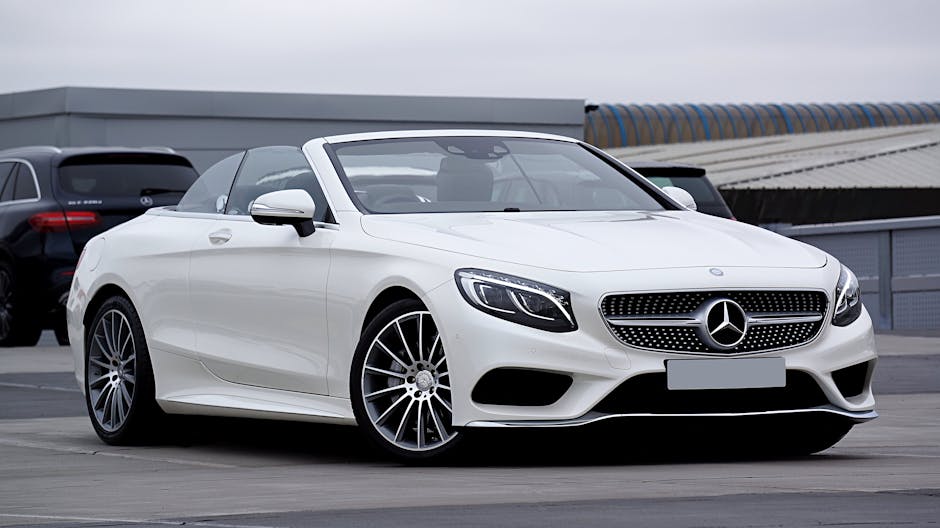
The most hushed car ever built just got quieter. Rolls-Royce's Spectre, the marque's first fully electric vehicle, is already on Irish roads. And if your reaction is "grand, good for them," you're missing what this actually means.
Because when a brand that sells silence as a product goes electric, something has shifted. Not just at the top of the market. Everywhere.
What Rolls-Royce Actually Did
The Spectre starts at around €430,000. It has a 102kWh battery, roughly 530km of claimed range, and a body so well-sealed that engineers had to add artificial sound to stop occupants feeling sensory-deprived. That last detail is not a joke. The car is so quiet it makes people uncomfortable.
Rolls-Royce didn't go electric because someone in Goodwood had a green epiphany. They went electric because an electric drivetrain is actually better at delivering what Rolls-Royce buyers want. Instant torque. No gear shifts. No engine vibration. The combustion engine, for all its mechanical poetry, shakes. Electric motors don't. For a car whose selling point is that you feel nothing unpleasant, this is obvious in hindsight.
The parent company is BMW. BMW's own electrification roadmap is aggressive. Bentley, owned by Volkswagen Group, has made similar commitments. Aston Martin is hedging. Ferrari is moving slower but still moving. The direction of travel is not ambiguous.
Why This Matters Beyond Merrion Road
Here's the part that actually affects the rest of us.
Luxury car manufacturers are where automotive technology gets developed, tested, and eventually filtered down. Anti-lock brakes. Traction control. Air suspension. Adaptive cruise control. All of it appeared in premium cars years before it was standard in a 2015 Ford Focus with 140,000km on it. The Spectre is a rolling development lab for electric drivetrain refinement, battery thermal management, and software integration that will trickle into BMW 3 Series, then into whatever replaces the Volkswagen Golf, then into the budget end of the market.
The premium EV segment is also where charging infrastructure investment follows. When wealthy early adopters are using a network, that network gets maintained. It gets expanded. It's not a noble reason, but it's a functional one. Ireland's slow charge point rollout has been a genuine concern. Demand from the top of the market doesn't fix it overnight, but it doesn't hurt either.
The Tax Angle (Because It's Always the Tax Angle)
Ireland's VRT and motor tax system is built around CO2 emissions. Electric vehicles, producing zero tailpipe emissions, sit in the lowest band. That applies whether you're buying a Rolls-Royce Spectre or a Dacia Spring. In practice, this means the Spectre benefits from the same zero-emission VRT relief as a car that costs a fraction of the price. The tax band structure was designed to incentivise cleaner choices, and at the top end of the market, it does exactly that. The government isn't losing sleep over this. Wealthy buyers importing a Spectre are still paying serious customs and registration costs. But it illustrates how the policy architecture pushes in one direction regardless of price point.
What "Luxury" Even Means Now
There's a version of this conversation that gets philosophical, and it's worth having briefly.
The internal combustion engine has a sound. A smell. A physical presence when it's working hard. A Rolls-Royce Silver Shadow pulling away from traffic has a particular mechanical timbre that is, genuinely, pleasurable to a certain kind of person. That's not nostalgia talking. It's acoustics and sensation and decades of association.
Electric motors offer different pleasures. The pull is immediate and linear. The absence of noise becomes its own luxury. Different, not lesser. But the people who bought Rolls-Royces for the V12 burble are being asked to reframe what they value. Some won't. Some already have.
For the rest of us watching from behind the wheel of something considerably less exotic, the question is simpler. The technology gets refined at the top and descends. Battery costs fall. Range anxiety becomes a 2024 problem rather than a 2030 one. What Rolls-Royce is doing now is essentially roadtesting the future for everyone else.
Should Irish Drivers Actually Care?
Honestly? Not urgently. If you're weighing up your next car purchase and it involves a five-figure budget, what's happening in the budget EV and SUV segments is far more relevant to your life than what's happening in Goodwood.
But zoom out two car-buying cycles and it matters more. The charging network matures because premium demand justifies it. Battery chemistry improves because Rolls-Royce and Bentley and BMW pour engineering resource into it. Software gets better because rich customers will not tolerate glitchy screens in a car that costs more than a house in Longford. The standards get set at the top and the rest of the market has to meet them.
There's also something to be said for the signal this sends to the market generally. When the most conservative, tradition-obsessed car manufacturer in the world commits to electric, the debate is over. It's not if. It's when and how fast.
The Part That Doesn't Change
The Rolls-Royce Spectre will whisper past you on the M50, and you will not hear it. That's new. What isn't new is the basic shape of the market: a narrow slice of buyers at the top pulling technology forward, a broad base of drivers waiting for the same technology to become affordable, and everyone in between arguing about whether range anxiety is real or imagined.
It was always going to go quiet. The only surprise is that Rolls-Royce got there looking quite so comfortable about it.