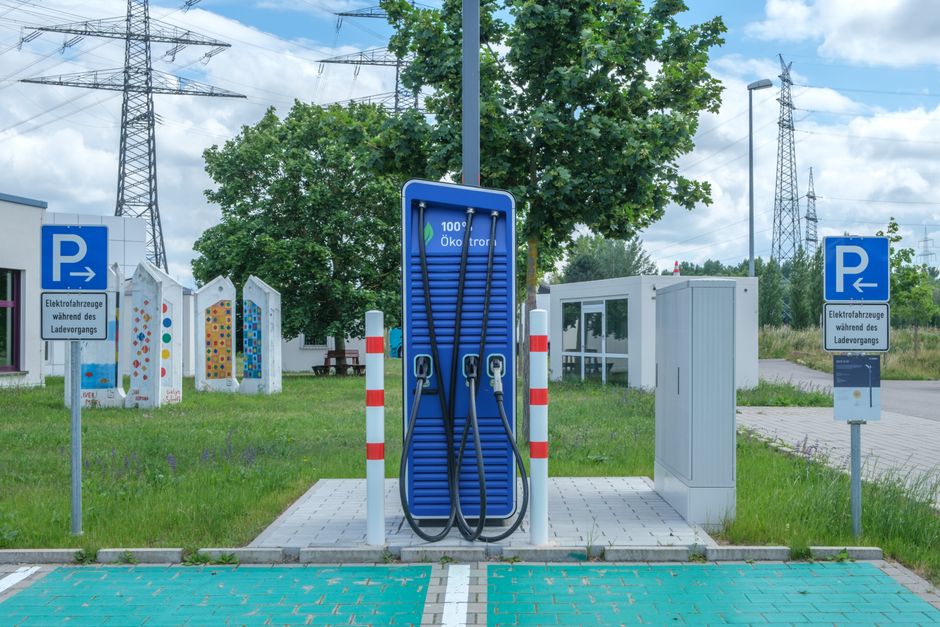
The brochure says 657km. The rain says otherwise.
That figure, the official WLTP range on the latest Mercedes GLA 350e and its high-range EV rivals, looks brilliant on paper. It looks less brilliant when you're doing 120km/h into a westerly on the M8 somewhere outside Cashel with the heater on and the range display dropping faster than you'd like.
The Number That Started This
WLTP figures are better than the old NEDC cycle, which was essentially fantasy. But they still don't fully account for Irish conditions. The test protocol uses a mix of urban, rural, and motorway driving at modest speeds, in controlled temperatures, with no meaningful headwind. What it doesn't include is the N25 in November, or the particular joy of a motorway cruise at the speed everyone actually drives. The gap between what manufacturers claim and what Irish drivers experience isn't dishonesty. It's just physics with a local accent.
The RSA's own figures consistently show that Irish motorway use is high relative to European averages, and motorways are where EVs bleed range fastest. High speed, sustained load, and our fondness for climate control form a brutal combination for battery efficiency.
Cork to Dublin: The Real Test
The Cork to Dublin run via the M8 is about 258km. It's a practical yardstick. Long enough to matter, straight enough to hold a consistent speed, and familiar enough that most Irish drivers know exactly what conditions feel like on it. We used it to assess three of the highest-range EVs currently available here, including the new Mercedes GLA with its claimed 657km ceiling.
The benchmark question: could any of them complete the journey in a single charge and arrive with 30% battery remaining? That 30% buffer is what a sensible driver keeps in reserve. Dipping below it regularly degrades battery health over time, and it gives you margin if the EV charging network throws a tantrum mid-route, which in Ireland is not a hypothetical.
What the Mercedes GLA Actually Returned
The GLA 350e tested here is a plug-in hybrid configuration rather than a pure EV, which changes the equation. Its electric range alone sits closer to 100km on WLTP. The 657km total figure assumes a full battery and a full tank working in tandem. That's not deception, but it is a number you need to understand before you drive away from the forecourt feeling smug.
On pure EV mode, Cork city to the Mitchelstown area is about as far as you'll get before the combustion engine takes over. After that, the GLA becomes a very good hybrid. Comfortable, refined, quiet. But not the 657km electric statement the headline implies.
Lesson one from this test: always check what the range figure actually measures.
Pure EVs: Closer to the Truth, Still Short
The long-range versions of the Hyundai Ioniq 6 and the Tesla Model Y Long Range both claim over 500km on WLTP. In real-world conditions on the Cork to Dublin run, at realistic motorway speeds with climate control running, both returned somewhere between 380km and 420km. That's still comfortably enough to complete the journey in one go and arrive with battery to spare. But it's not 500km.
The variables that eat your range fastest on Irish motorways are consistent. Speed above 110km/h, heating rather than air conditioning, headwinds, and a motorway gradient that's rarely flat. Cork to Dublin isn't mountainous, but it climbs. Batteries feel every metre of it.
What This Means for the Daily Commute
Here's the thing though. The Cork to Dublin run is an outlier. Most Irish drivers are not doing 258km in a single go. The average Irish commute sits around 30 to 40km each way. Even in the worst real-world conditions, stripping 35% off an official 500km range figure leaves you with 325km. That's still eight or nine average commuting days between charges.
The range anxiety that follows EVs around is partly rational and partly a hangover from early models where 200km was the ceiling. The newer generation has genuinely solved the commuting problem. The longer intercity journey is where planning still matters, and charging infrastructure across Ireland is still catching up to the ambition.
The Conditions That Kill Range (Irish Edition)
Temperature. Lithium batteries lose efficiency in cold weather. An Irish winter, which rarely goes below freezing but sits stubbornly between 3 and 8 degrees for months, takes roughly 15 to 20% off real-world range compared to a mild day.
Speed. Aerodynamic drag increases with the square of velocity. Going from 100km/h to 130km/h doesn't add 30% to your energy consumption. It adds considerably more. If you drive like you're late for something, your range estimate will punish you for it.
Heating. Air conditioning is actually fairly efficient in an EV. Heating is not. Resistive heating is an energy hog. Heat pumps, fitted to most newer EVs, help significantly but don't eliminate the problem.
Motorway gradient. Regenerative braking recovers energy on downhill stretches, but it never fully compensates for the climb.
So Should You Believe the Number?
Take the WLTP figure. Remove 25% as your starting point for Irish motorway conditions. Remove another 10% in winter. What's left is your honest working range. For the Mercedes GLA in hybrid mode, that working range is still very good, just not electric-only. For a pure long-range EV with a 500km claim, your real working ceiling is closer to 320 to 350km on the motorway in January.
That's not a failure. It's more than enough for the vast majority of Irish journeys. But it is something worth knowing before you hand over your money.
The brochure said 657km. The M8 said 380. Somewhere between those two numbers is the EV that actually fits your life.