Your neighbour just paid €55,000 for an electric car and spent last Tuesday morning at a broken fast charger in Portlaoise, in the rain, for forty minutes. You watched this from the kitchen window of your mind and thought: there has to be a better way. There might be.
Horse Powertrain, a company spun out of Stellantis and Renault with Chinese investment behind it, has been quietly developing a methanol-fuelled range extender engine. It is not a full powertrain. It is not a straight swap for petrol or diesel. Think of it as a small generator that runs on methanol and keeps your battery topped up when the grid can't reach you. It's a concept that deserves more than a dismissive wave. Here's why.
What Actually Is a Range Extender?
Strip away the press release language and it's simple. A range extender is a small internal combustion engine that doesn't drive the wheels. It charges the battery. The electric motor still does the driving. You get the smoothness and efficiency of electric propulsion without betting your entire journey on the charging network holding together.
Range extenders aren't new. The old Vauxhall Ampera used one. BMW dabbled with the i3 Rex. But those used petrol. Horse Powertrain's angle is methanol, and that changes the conversation considerably.
Why Methanol and Not Just Petrol?
Methanol burns cleaner than petrol. It can be produced from biomass, municipal waste, or captured CO2, which means it can be part of a genuinely lower-carbon fuel chain rather than just a slight improvement on what we already have. It's also liquid at room temperature, which means existing forecourt infrastructure could theoretically be adapted rather than replaced from scratch.
For Irish drivers, that last bit matters enormously. The charging network is improving but it's still patchy outside the M50 corridor. A car that can refuel from a pump, even a new kind of pump, speaks directly to drivers who cover rural roads, haul equipment, or simply don't have a driveway to charge from overnight.
Methanol is also less energy-dense than petrol, which is the honest downside. You'll carry more volume for the same range. But in a range extender application, where you're not demanding huge power output from the engine, that gap narrows considerably.
What Does Horse Powertrain's Tech Actually Do?
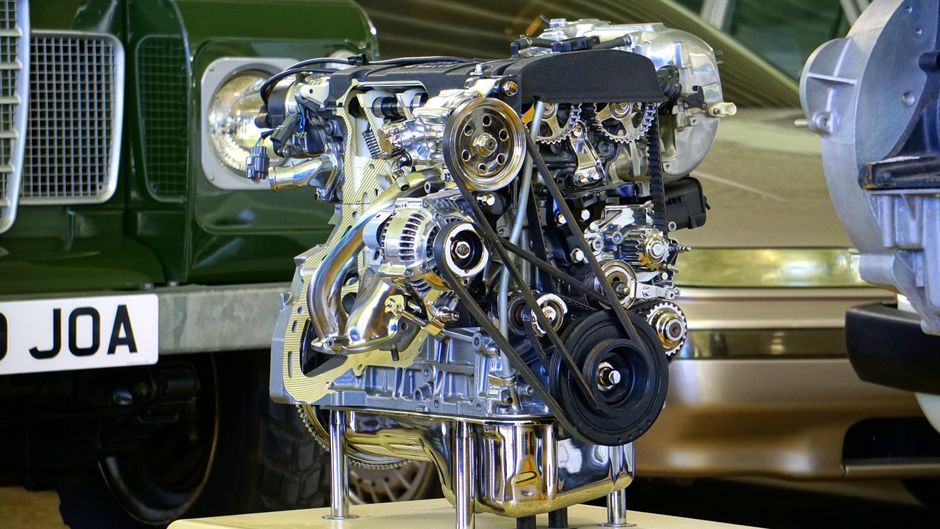
Horse is marketing a compact three-cylinder methanol engine designed specifically to run as a generator. It's quiet, it's small, and it's engineered to operate at a steady, efficient load rather than the variable demands of a conventional drive engine. The company has been pitching it to manufacturers as a modular solution: bolt it into an existing EV platform without major redesign.
The pitch makes a certain kind of sense. Automakers have spent billions developing EV platforms. Not every one of them wants to commit to pure battery-only lineups while charging infrastructure catches up with ambition. A methanol range extender gives them a way to offer genuine flexibility without a full U-turn.
No mainstream manufacturer has publicly committed to putting this specific tech into a production car yet. That's worth saying clearly. We're at the "interesting engineering demo" stage, not the "order yours from a dealer" stage.
What's the Realistic Irish Angle?
Ireland has a specific problem that this technology addresses with reasonable directness. We have a high proportion of older housing stock without off-street parking. We have a rural road network that stretches far beyond rapid charger coverage. We have drivers who are neither wealthy enough for a premium EV nor convinced enough to gamble their daily commute on public charging reliability.
Hybrids have been filling some of that gap, but they carry their own compromises. A plug-in hybrid with a small battery still needs a petrol engine doing real drivetrain work. A methanol range extender setup would keep the simplicity of a fully electric drivetrain while adding the refuelling flexibility Irish road conditions actually demand.
The tax question matters too. Irish VRT and motor tax bands favour low-emission vehicles. A methanol range extender car would need to prove its real-world emission credentials to qualify for the better bands, and that depends heavily on how green the methanol supply chain actually is. If it's biomethanol from certified sources, the numbers could look good. If it's methanol synthesised from coal in a jurisdiction with weak environmental standards, the case collapses fast.
The Honest Doubts
Methanol is toxic. More toxic than petrol, actually, and that creates genuine infrastructure questions around handling, storage, and spill response. Every forecourt that wants to sell it needs training, new equipment, and liability considerations.
The fuel supply chain in Ireland doesn't exist yet. This technology works only if someone builds the distribution network first, and that requires either government commitment or a manufacturer willing to fund infrastructure as part of a vehicle launch. Neither is happening right now.
There's also the question of consumer psychology. Irish buyers have been asked to get their heads around hybrid, mild hybrid, plug-in hybrid, and full electric in the space of about eight years. Asking them to now understand methanol range extenders is a significant communications challenge for any brand brave enough to try.
Should You Care Right Now?
Not urgently. No, not yet. But file this one in the back of your mind rather than the bin.
The broader powertrain landscape is genuinely less settled than the EV evangelists suggest. Hydrogen, synthetic fuels, and now methanol range extenders are all attracting serious engineering investment from serious companies. Horse Powertrain is not a shed operation. It has Stellantis and Renault DNA, Chinese manufacturing muscle, and a specific technical focus.
The Irish driver who's been waiting for something other than "go full electric or stay with petrol" deserves to know these options exist and are being developed by people who know what they're doing.
Your neighbour is still at that Portlaoise charger, metaphorically speaking. The answer to their problem might be a pump handle rather than a cable, just filled with something different. Whether that something is methanol, and whether Horse Powertrain is the company that makes it happen, is the question the next five years will answer.