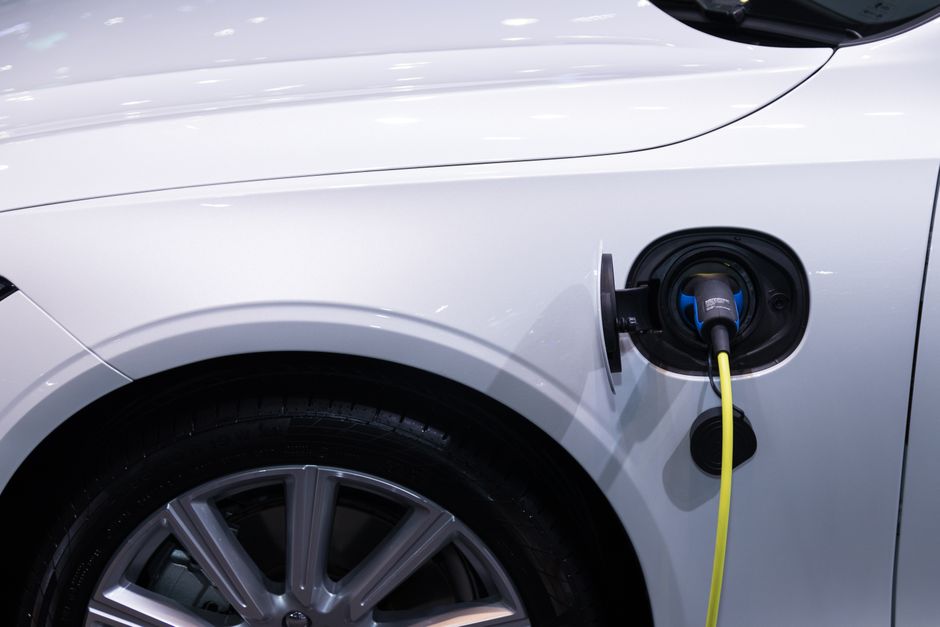
Your neighbour still can't charge at home. Your brother-in-law does 400km a week between Castlebar and Dublin. And the charging network, for all the promises, still has days where it feels like a suggestion rather than an infrastructure. Full electric isn't wrong. It's just not right for everyone yet.
That's the gap PHEVs were always supposed to fill. And for most of the last decade, they filled it badly. Short electric ranges. Heavy batteries. The kind of fuel economy that only worked if you plugged in religiously, which most people didn't. The joke wrote itself: a plug-in hybrid driven by someone who never plugged it in is just a heavy petrol car with a guilty conscience.
But something is shifting. Battery chemistry is catching up with the sales pitch, and the Irish market is about to feel it.
What Semi-Solid-State Batteries Actually Mean (Without the Jargon)
Conventional lithium-ion batteries use a liquid electrolyte. It works. It's also flammable, degrades over time, and doesn't pack energy as densely as engineers would like. Semi-solid-state tech replaces some or all of that liquid with a gel or solid material. Less fire risk, better energy density, longer cycle life.
MG is one of the manufacturers moving fastest here. Their next-generation PHEV platform, expected in production vehicles around 2027, is targeting electric-only ranges north of 100km on a single charge. Not the 50km that current PHEVs advertise (and rarely hit in Irish winter conditions). A genuine, usable 100-plus kilometres.
That number matters enormously on this island. The average Irish commute sits well under 50km per day. A PHEV with 100km of real-world electric range covers the daily commute in most Irish households without burning a drop of petrol, and still has a full tank waiting for the Cork to Galway run at the weekend.
Why Ireland Is the Perfect PHEV Market
Ireland has a problem that battery technology has been slow to acknowledge. We have an ageing housing stock with limited home charging options, rural roads that make range anxiety a genuine concern rather than an urban neurosis, and a public charging network that's improving but still has coverage gaps that matter.
Full BEV ownership works brilliantly if you have a driveway, a home charger, and a commute under 200km. A lot of Irish drivers tick all three boxes. A lot don't.
PHEVs with genuinely long electric ranges serve the second group without punishing them for living in a terrace in Drogheda or a farmhouse outside Ennis. You get electric for the daily grind. You get petrol for the days when life doesn't go to plan.
There's also the tax angle. The way Ireland's VRT and motor tax bands work still rewards low-emission vehicles, and PHEVs with longer electric ranges tend to hit lower CO2 figures. Better battery tech doesn't just improve usability. It improves the bill you get from Revenue.
The 2027 Tipping Point
MG isn't alone. Stellantis, Geely, BYD's supply chain partners, and several European OEMs are all targeting 2026 to 2028 for semi-solid-state PHEV deployment. The reason 2027 specifically keeps appearing in manufacturer roadmaps comes down to production scale. Early semi-solid-state cells are expensive to make. By 2027, most analysts expect volume production to bring costs to within touching distance of current lithium-ion.
That matters for the Irish market because price sensitivity here is fierce. We're not Germany. We're not Norway. The average buyer in Ireland is weighing up a 2021 Toyota Corolla hybrid against a new PHEV, and the monthly finance payment is doing a lot of the deciding. Cheaper battery production means lower sticker prices. Lower sticker prices mean the tech actually reaches the people who need it most.
There's also a generational shift coming in used stock. PHEVs registered in 2027 and 2028 will start filtering into the three and four year old used market around 2030 to 2031. That's when the technology genuinely democratises.
What to Watch (and What to Ignore)
Not every PHEV launching in the next two years will carry the new battery tech. Plenty will still use conventional lithium-ion with incremental improvements and call it "next generation." Read the spec sheet. The number to focus on is WLTP electric range under real-world conditions, ideally validated by independent tests in northern European climates, not Mediterranean ones.
Watch for thermal management too. Semi-solid-state cells handle cold weather better than their liquid counterparts, which is relevant when you're sitting in a November traffic queue on the M50 and the outside temperature is four degrees. Current PHEV electric ranges can drop by 30% or more in winter. Better chemistry closes that gap considerably.
Ignore the 0-100 figures for most family PHEV buyers. Yes, the instant torque is lovely. No, it doesn't matter if you're doing the school run in Portlaoise.
The Chinese Factor
It'd be wrong to talk about this without mentioning where most of the manufacturing innovation is actually coming from. Chinese manufacturers, MG included (owned by SAIC), are ahead of the European mainstream on battery development cycles. They're iterating faster, scaling faster, and bringing the tech to market faster.
The arrival of Chinese-built cars in the Irish market has already changed what buyers expect from a mid-range family SUV. The next wave brings the battery tech to go with it. European brands are catching up, but the early 2027 PHEV launches with semi-solid-state cells will almost certainly carry Chinese supply chain DNA, whether badged as MG, BYD, or something else entirely.
Is This the Final Compromise, or the Final Answer?
Honest answer: probably neither. Full electric will keep improving too. Charging networks will get better. Home charging will become more accessible as apartment buildings and older housing stock eventually get retrofitted.
But the PHEV with 100km of real electric range isn't a stepping stone for the hesitant. It's a genuinely sensible choice for a specific type of Irish driver, probably a significant majority of Irish drivers, who need flexibility more than they need ideological purity.
Your neighbour with no driveway. Your brother-in-law burning up the N5. The 2027 PHEV might not solve every problem. But it solves their problems, and that's a much harder thing to dismiss than it used to be.