The forecourt is still an unpleasant place to stop. Petrol sitting stubbornly above two euro a litre, diesel not much better, and your wallet quietly weeping into the cupholder. So you're looking at hybrids. Sensible of you.
The pitch is simple: you get a combustion engine for the long runs and rural roads where charging points are more rumour than reality, plus an electric motor that does the heavy lifting in stop-start commuter traffic. You don't plug in (mostly). You don't get range anxiety. You just get better fuel figures and a slightly cleaner conscience. The compromise sounds grand on paper. Whether it holds up on the Naas Road at half seven in the morning is a different story.
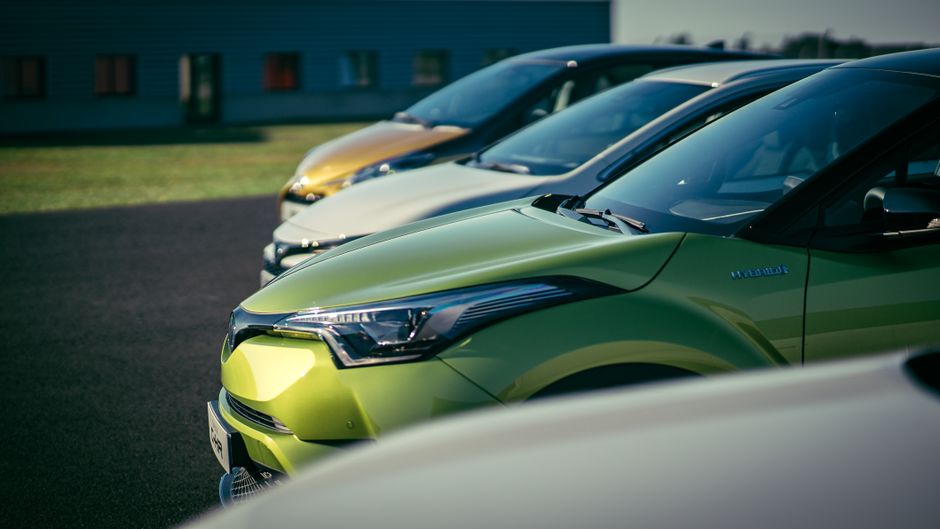
We spent time with two 2026 contenders targeting opposite ends of the market. The Toyota Aygo X Hybrid, a small crossover aimed squarely at city dwellers, and the BYD Sealion 5 PHEV, a proper family SUV from the Chinese manufacturer that's been quietly eating European market share. They share the hybrid badge and not much else.
The Toyota Aygo X Hybrid: Small Car, Surprising Sense
The Aygo X has always been the sensible haircut of the Toyota range. Practical, unfussy, easy to park on Camden Street without needing a spotter. The 2026 hybrid version takes the existing 1.5-litre self-charging setup and wraps it in a slightly more assertive body. Still compact. Still manageable. But now returning figures that actually justify the conversation.
In urban driving, we saw figures nudging 4.8 litres per 100km. On a mixed commute including the M50 and some dual carriageway, it settled around 5.4. Not earth-shattering, but real-world numbers rather than the lab fantasy printed on the brochure. The self-charging system means you just drive it. No plugs, no planning. The battery tops up under braking and coasting, and the electric motor covers speeds up to about 50km/h before the petrol engine wakes up. In town, that covers a surprising amount of ground.
The interior is honest about what it is. You're not getting soft-touch plastics or a floating widescreen at this price. You're getting clear visibility, logical controls, and enough boot for a weekly Lidl run. The driving position is comfortable for average builds. Taller drivers will find the headroom adequate but not generous.
Tax is where it genuinely wins. The low emissions figure (around 101g/km CO2) drops the Aygo X into a favourable band. If you haven't looked at how the motor tax bands work in Ireland, it's worth fifteen minutes of your time before you sign anything.
Pricing starts around €24,500 for the base hybrid trim. That's not pocket change, but it's real money for a car that costs almost nothing to run day-to-day.
The BYD Sealion 5 PHEV: The Bolder Bet
BYD arrived in Ireland with the kind of quiet confidence that unsettles established brands. The Sealion 5 is the plug-in hybrid version of their mid-size SUV and it's a proper step up in ambition. Longer, heavier, considerably more feature-rich. It's targeting the driver who wants an SUV, wants the running cost story, but isn't ready to go fully electric just yet.
The PHEV setup here gives you roughly 85km of electric-only range from a full charge. For a lot of Irish commuters, that covers the working week entirely on electricity, with the 1.5-litre petrol engine sitting dormant until the weekend run to the in-laws in Tipperary. That's the dream scenario and in practice, if you actually plug it in every night, it plays out more or less as advertised.
The issue is that "if you plug it in" caveat. PHEVs in Ireland have a bit of a reputation problem, earned fairly honestly. Fleet-registered cars that never see a charger return terrible real-world fuel figures because they're lugging a heavy battery around on petrol alone. The Sealion 5 weighs over 1,900kg. Running it flat on the motorway, you'll see figures closer to 7 or 8 litres per 100km. So the maths only work if your lifestyle supports regular charging.
The interior, though, is a genuinely nice place to be. Large touchscreen (rotating, which feels gimmicky until you use it properly), good quality materials, and a backseat that actually fits three adults without anyone sulking. The boot is 425 litres, which handles family life without the weekly negotiation about whose bag goes on the roof.
Starting at around €47,000, it sits in a different bracket entirely. But the VRT reliefs on PHEVs and the lower motor tax make the real-world cost of ownership more competitive than the sticker suggests.
What Irish Roads Actually Demand
Here's the honest bit. Ireland's commuter geography is specific. Short urban runs, a fair amount of rural two-lane roads, motorway stretches that are genuinely motorway rather than the dual-carriageway pretenders. Neither of these cars exists in a vacuum.
The Aygo X makes the most sense for single-car households in Dublin, Cork, or Galway. Compact enough to navigate city parking. Economical enough to keep fuel costs reasonable. Low enough emissions to avoid the worst of motor tax. It does one thing well: it makes the daily grind cheaper and less stressful. It's not exciting. It's not meant to be.
The Sealion 5 PHEV suits a different life. Two cars in the driveway, one of which is this. Regular access to a home charger. A commute under 80km each day. Driven correctly, it's a remarkable piece of value. Driven lazily, it's an expensive mistake.
Self-Charging vs Plug-In: The Question You Actually Have to Answer
Before you walk into a showroom, decide which camp you're in. Self-charging hybrids like the Aygo X ask nothing of you except to drive normally. You'll save fuel in traffic. You won't have the best economy on the motorway. Simple.
PHEVs like the Sealion 5 demand participation. You have to plug in. You have to think about charging. The reward is potentially massive. The penalty for ignoring it is a heavy car burning more petrol than a basic hatchback.
Neither answer is wrong. But picking the wrong one for your actual life is a fierce waste of money.
The Verdict
If you're driving 40km into the city and back five days a week, the Aygo X Hybrid is the quietly correct choice. Reliable, cheap to run, easy to live with. No drama.
If you've got the home charger, the garage, and the commute that suits it, the BYD Sealion 5 PHEV is one of the more interesting value propositions in the Irish market right now. Chinese build quality has caught up faster than most people want to admit.
The forecourt is still an unpleasant place to stop. Both of these cars, used properly, will mean you stop there a lot less often.