You pull up to the Cork side of the Healy Pass on a Tuesday morning and there is not a tour bus in sight. No queue of campervans. No man in a high-vis waving you into a field for a fiver. Just a road that climbs into the Caha Mountains like it has something to prove.
That absence of chaos is the whole point.
What the Healy Pass Actually Is
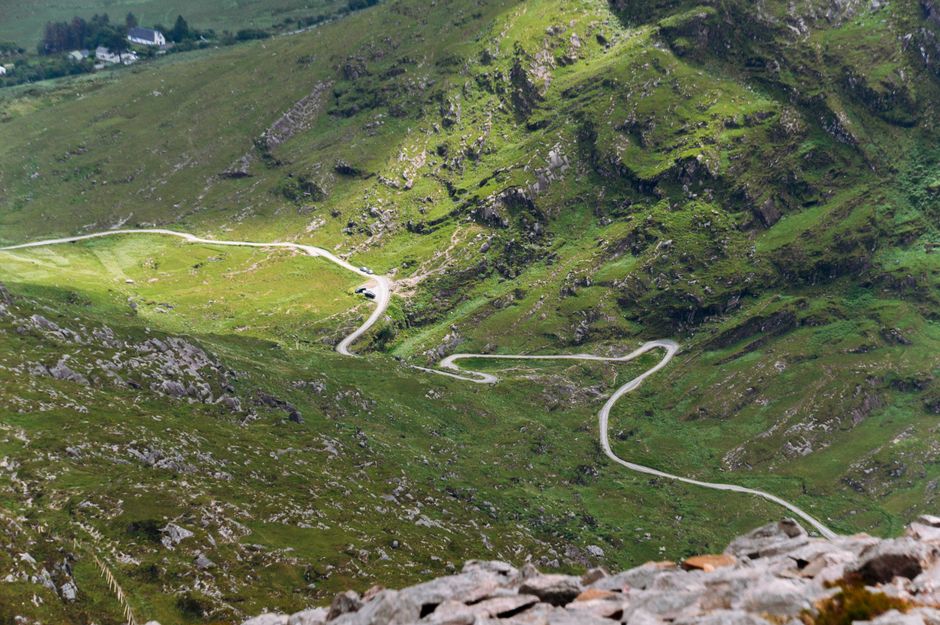
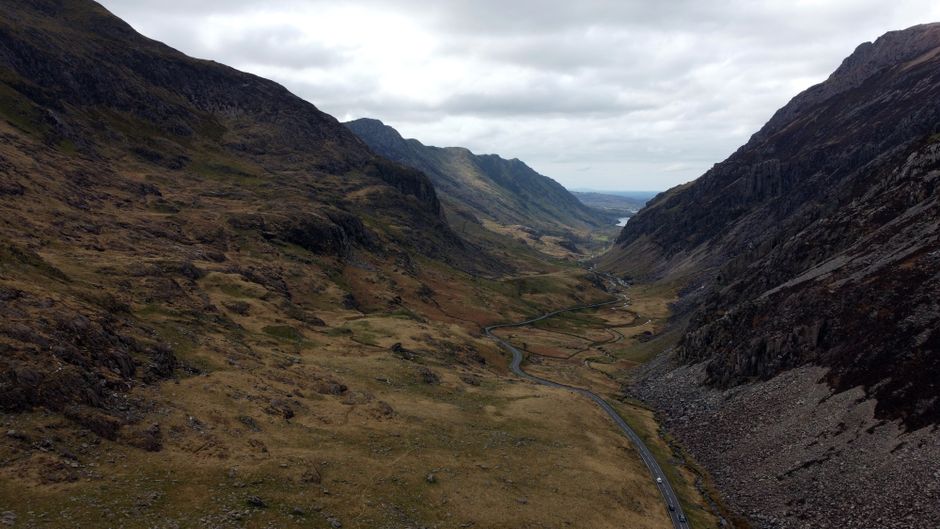
The R574 cuts across the Caha Mountains between Adrigole in Cork and Lauragh in Kerry. It rises to about 334 metres at its summit, which sounds modest until you see how it gets there. Tight hairpin bends stacked on top of each other. Sheer drops on one side. A view that opens up so suddenly on the Kerry descent that passengers tend to make involuntary sounds.
The pass was built during the Famine as a relief work project, which gives it an age and a weight that newer roads simply do not have. It was named after Tim Healy, the first Governor-General of the Irish Free State, whose family had roots in the area. The history sits quietly underneath the tarmac whether you know it or not.
The road is narrow. Not terrifyingly narrow, but you will be using your mirrors. You will also be using first and second gear on the climb, which is either annoying or brilliant depending on your relationship with driving.
Why the Beara Peninsula Wins the Quiet Argument
The Wild Atlantic Way runs through here, technically. In practice, most visitors to the southwest get funnelled onto the Ring of Kerry, which is fine, but not what it used to be. The Beara Peninsula sits just below it on the map and absorbs almost none of the traffic.
The result is a 137-kilometre loop that takes in two counties, a cable car to an island, a stone circle, and more sky than you have any right to expect. The roads between Kenmare and Castletownbere are genuinely good driving roads: long sight lines, smooth-ish surfaces, and the kind of elevation changes that make a naturally aspirated engine feel worth keeping.
Castletownbere itself is a working fishing port, not a heritage experience. The pubs smell like salt and diesel. You can get soup and bread that will ruin you for Dublin cafe lunch prices for about six months.
The Drive Itself: What to Expect
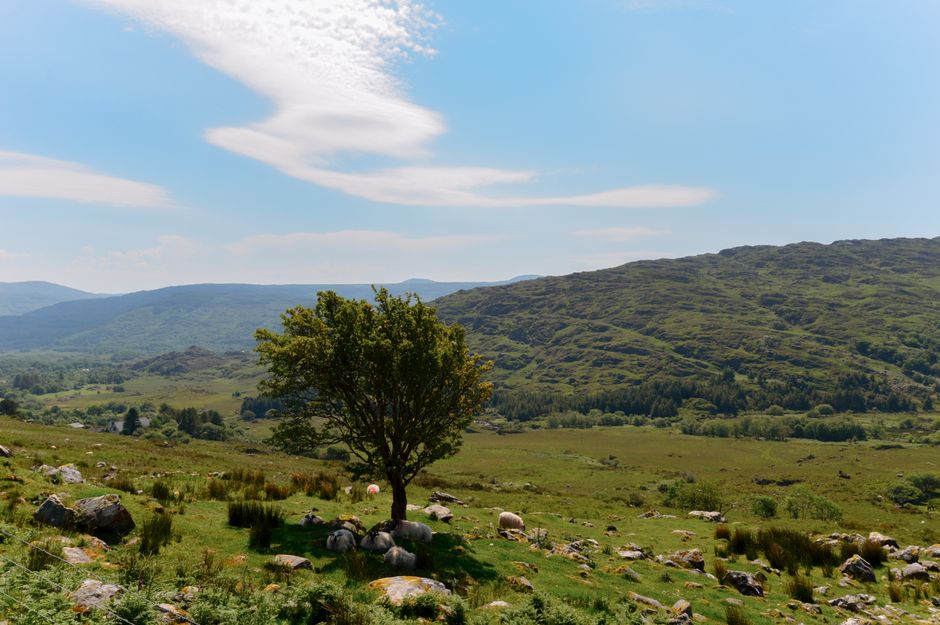
The Cork approach from Adrigole is the more gradual climb. Start here if you want to warm up slowly, or if you are driving something with a longer wheelbase and strong opinions about tight bends. The road winds up through heather and bog, with the Caha range ahead of you looking properly serious.
The summit gives you a small parking area, a crucifix, and a view south toward Bantry Bay that makes the whole country feel smaller and better than it usually does. Stop here. Take ten minutes. There is no mobile signal to ruin it.
The Kerry descent is where the hairpins stack up properly. Coming down toward Lauragh, the road drops away in a series of tight switchbacks with Glanmore Lake sitting below you in the valley. On a clear day this is as good a piece of road as Ireland offers. On a wet day it is still very good but considerably more focused.
The loop continuation from Lauragh takes you along the southern shore of the Beara, through Ardgroom and back toward Castletownbere. The road hugs the water for long stretches and the light in the afternoon hits the inlet in a way that photographers go mildly insane about. Budget three to four hours for the full loop if you plan to stop and eat. Budget five if you are honest about how many times you will pull over.
What to Drive It In
Almost anything will do it, which is part of the appeal. Unlike some mountain passes, the Healy does not demand a specific vehicle. A well-sorted diesel hatchback is fine. A small SUV is comfortable. You do not need a lifted truck and you do not need a sports car, though either will have its moment.
What you do not want is a vehicle wider than about 1.9 metres overall, or anything towing a trailer. The passing places are manageable but they are not generous, and meeting a farm vehicle near the summit while pulling a caravan is a situation nobody needs.
If you are considering doing the Beara on an EV, it is doable but worth planning. Bantry has charging, and Kenmare has options, but the peninsula itself has gaps. The regenerative braking on the descent will claw back a little range, but do not arrive in Castletownbere with 15 percent expecting to find a rapid charger on the pier.
Timing and Practicalities
Best months. May, June, and September. July and August are not overrun the way Kerry gets overrun, but accommodation books out and the roads are busier. April can be stunning if you hit a dry spell.
Worst conditions. Low cloud and mist can kill the views entirely, which on this particular route is a significant loss. The road also has no barriers in several sections, so if you are nervous about exposure in wet conditions, approach with appropriate respect.
Fuel. Fill up in Kenmare or Bantry before heading out. Castletownbere has a station but prices on peninsulas follow their own logic.
Food. The Beara Coast Bar in Adrigole is a solid stop before the climb. In Kenmare, you have actual options. In Castletownbere, you have honest options, which is better.
The Wider Context
Ireland has genuinely excellent driving roads and a collective habit of ignoring them in favour of routes that showed up in a magazine feature in 2009. The Healy Pass is not undiscovered, exactly, but it is consistently underweighted relative to how good it actually is.
The Ring of Kerry loop runs roughly 180 kilometres and is objectively better known. The Beara loop runs roughly 137 kilometres, has less traffic, comparable scenery, and a mountain pass that the Ring cannot match. The maths are not complicated.
One More Thing
At the summit, there is a small statue of the Virgin Mary looking out over the Cork side. She has been there since the 1950s. She has seen weather that would end a lesser road.
Come up the Cork side on a clear morning, take the hairpins down into Kerry, eat something in Castletownbere, and drive back along the water in the afternoon light.
The man who told you the Ring of Kerry was the best drive in the southwest never took a Tuesday off in his life.