You budgeted for a summer road trip. You did not budget for a €110 tank of petrol every two days and a diesel that's starting to sound like a bag of spanners on the N15.
Enter the Chinese EV. Specifically the Xpeng G6, a genuinely well-specced electric SUV that lands in Ireland for somewhere around €45,000, undercutting the equivalent Tesla Model Y by a meaningful margin. The question nobody in the showroom will answer plainly: can it actually handle an Irish summer road trip, charging network gaps and all?
We looked at the real numbers. Here's what you need to know before you point one north.
What the Xpeng G6 Actually Offers
The G6 is not a budget compromise dressed up in a bow. The Long Range rear-wheel-drive version claims 570km of WLTP range. Real-world Irish driving, factoring in Atlantic headwinds, the occasional bog road detour, and the heating you'll absolutely need even in July, lands you closer to 420 to 460km. That's still a serious number.
The cabin is good. Better than good. You get a 14.96-inch central screen, decent materials, and a driving position that doesn't make you feel like you've climbed into a prototype. Xpeng's XNGP driver assistance system won't do much for you on an unmarked Donegal lane, but on the M1 north of Dublin it works cleanly.
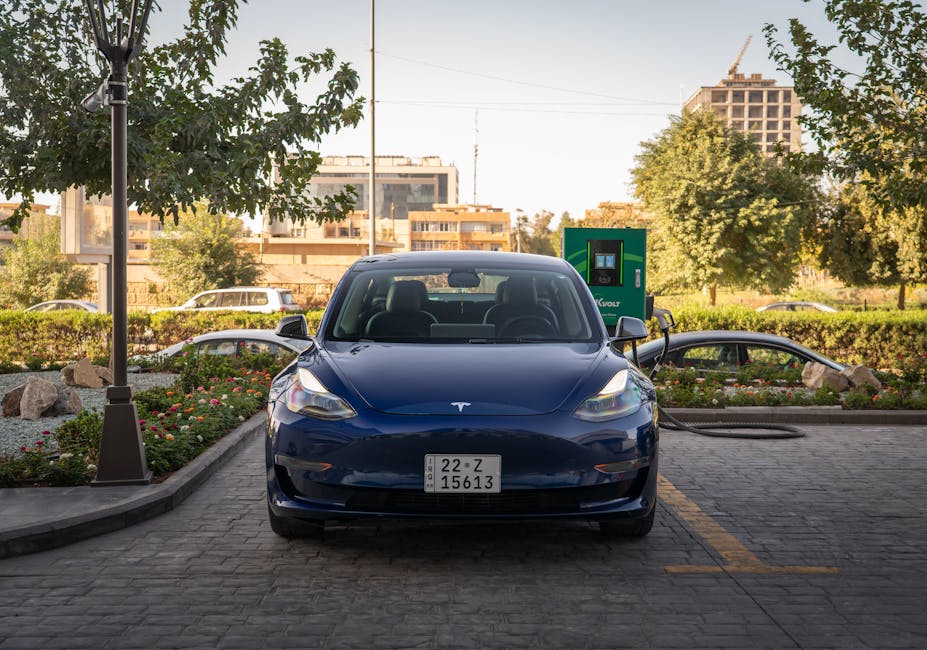
It supports 800V ultra-fast charging, which matters more than almost any other spec on this list. At a compatible DC rapid charger it can pull 270kW, meaning 10 to 80 percent in around 20 minutes when the infrastructure cooperates. That last bit is where things get complicated.
The Dublin to Donegal Problem
Dublin to Letterkenny is roughly 240km. The G6 handles that in a single charge with room to spare. That's not the issue.
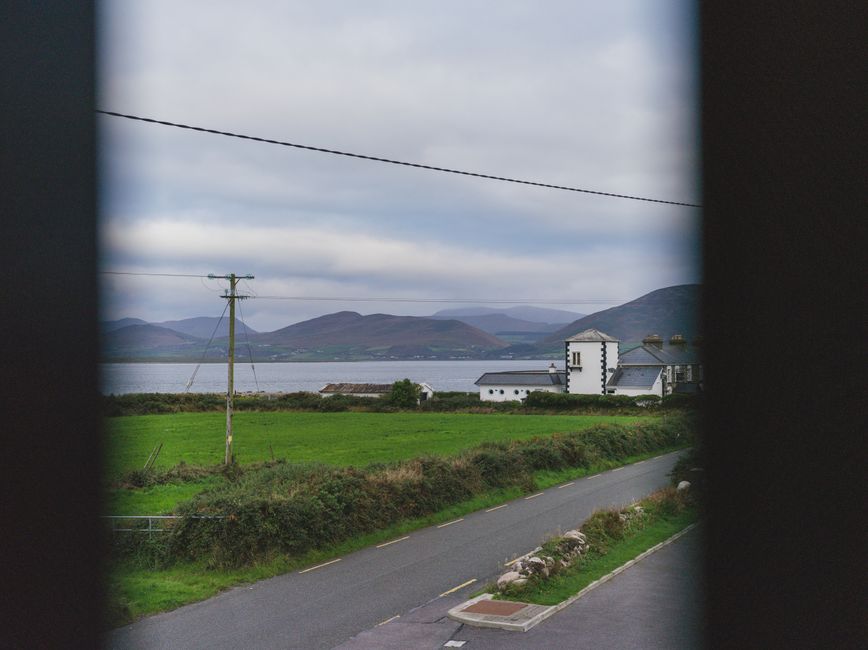
The issue is coming back via Slieve League, looping through Glencolmcille, stopping at Malin Head because you're already up there. Suddenly you're looking at 400 to 500km of driving across two days in an area where fast charging infrastructure is, to put it charitably, developing.
The ESB ecars network has improved significantly. There are now rapid chargers in Letterkenny, Donegal Town, and Sligo. But "rapid" in Irish infrastructure terms sometimes means 50kW, and a 270kW capable car at a 50kW charger is like watering a garden with a teaspoon. You'll get there. You'll just be at it for an hour.
Ireland's slow charge point rollout isn't a new story, but it matters more when you're driving hardware that can charge twice as fast as most of the network can deliver. The G6 is waiting on Ireland to catch up with it.
Planning the Route: What Actually Works
The practical solution is not complicated. It just requires ten minutes with PlugShare before you leave, rather than optimism.
Charging stops that work. The Ionity hub at Applegreen Castlebellingham on the M1 is your friend northbound. It regularly delivers close to its rated speed. Get there at 30 percent, leave at 80, and you've added 200 to 250km of real range in under 25 minutes. From there, Letterkenny is comfortable.
Overnight charging. Most hotels and B&Bs in the northwest will have a standard 3-pin socket if you ask nicely. A Type 2 portable cable gives you roughly 25 to 30km of range per hour on a 7kW home charger. Overnight is 6 to 8 hours. That's 150 to 200km added while you sleep, which is often all you need.
The coastal loop logic. Plan big mileage days around charging stops, not the other way around. Donegal Town to Bundoran to Sligo is easy because there are decent chargers at both ends. Glencolmcille to Ardara to Killybegs is beautiful and perfectly doable, but it's range-anxiety territory if you arrive on 15 percent.
Where the Chinese EV Pitch Gets Interesting
Xpeng is not alone in this space. BYD, SAIC's MG, Chery's Jaecoo and Omoda brands are all pushing into the Irish market with competitive pricing and specs that would have been flagship territory three years ago. The 2026 budget brand picture is shifting fast, and EVs from China are a big part of why.
The value calculation is straightforward. Lower entry price. Lower fuel cost per kilometre. Lower road tax (Band A1 means €120 a year). The sting comes in insurance, where some underwriters are still pricing Chinese EVs as unknowns, and in residual values that nobody can confidently predict yet.
For a road trip tool rather than a long-term investment, the maths is harder to argue with.
Honest Limitations
Range anxiety is a real thing, not a character flaw. And on a remote Irish coastal route, the margin for error is smaller than on a motorway network built around service stations every 30km.
The G6's app and navigation are genuinely good at routing around charge stops. But the app depends on charger data that is sometimes stale. A charger that shows as available can be out of service, occupied, or just in a mood. Carrying a backup plan, specifically knowing the next charger down the road, is not paranoia. It's good planning.
Also: the 800V charging advantage only matters when you find an 800V capable charger. There aren't many outside of Ionity locations yet. Most of your charging in rural Ireland will be 50kW DC or slower. The G6 handles this fine. It just takes longer than the spec sheet implies.
Is It Worth It for the Summer Trip
If your summer road trip involves the east coast, the midlands, or anywhere with reasonable motorway access, the Xpeng G6 is a genuinely capable and comfortable companion. Quiet, smooth, cheap to run, and far better equipped than its price suggests.
The northwest and far west require more planning, more patience, and a willingness to treat a 25-minute fast charge as part of the trip rather than an interruption to it. That's a fair trade for most people. It's not fair for someone who wants to leave Dublin at 6am and drive hard to Malin Head without thinking about it.
The charging network will catch up. The cars are already here.