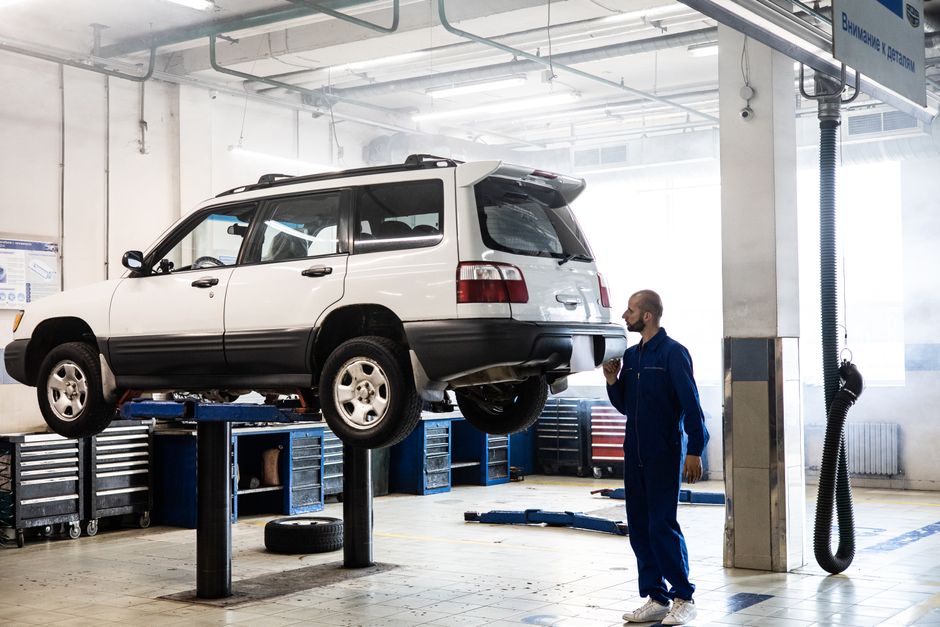
Your man traded in his 2008 Nissan Almera for a brand new crossover last spring. Adaptive cruise control, lane-keep assist, automatic emergency braking. Three months later, he nearly wrote it off because the car braked sharply on a dual carriageway and he panicked, overcorrected, and ended up half on the hard shoulder.
He's 71. He's been driving for over fifty years. And nobody showed him how any of it worked.
The Gap Nobody Wants to Talk About
Ireland's roads are measurably safer than they were twenty years ago. Better road design, mandatory seatbelt enforcement, and genuinely improved vehicle engineering have all played a part. But there's a quiet friction developing between the pace of in-car technology and the driving habits of older motorists who learned in a different era entirely.
The RSA's own figures show that drivers over 65 account for a growing share of licence holders in Ireland, reflecting an ageing population that's staying active and mobile for longer. That's mostly a good thing. Independence matters. A car isn't just transport for a lot of rural older people. It's their lifeline to the GP, the shops, the grandchildren.
The problem isn't that older drivers are dangerous. Most aren't. The problem is that a 2024 hatchback is a fundamentally different machine to a 2008 one, and nobody is formally required to acknowledge that gap, let alone bridge it.
What Modern Safety Systems Actually Do (And Why They Can Surprise You)
Lane-keep assist nudges your steering back toward the centre line if you drift without indicating. Sounds great. Except if you're used to sitting slightly left of centre on a narrow country road, which many experienced Irish drivers do quite naturally, it can feel like the car is fighting you.
Automatic emergency braking can trigger at low speeds in car parks or on approach to junctions. It's designed to prevent shunts. But if you've never experienced it before, that sudden, firm brake application from a car you thought you were controlling is alarming.
Forward collision warning systems beep, flash, and sometimes vibrate the seat. If a driver doesn't know what the warning means, the natural reaction is confusion, not correction.
None of these features are bad. Some of them are genuinely changing how safe Irish roads can be. The issue is the assumption baked into every new car sale: that the person buying it will either figure it out or read a 400-page manual. Most won't do either.
Where the Current System Falls Short
There's no requirement in Ireland for any driver to demonstrate competency with new vehicle technology after they pass their test. You can pass your driving test at 17, never sit another assessment, and be handed the keys to a car in your 70s that can brake, steer, and accelerate with a degree of autonomy that would have seemed like science fiction when you first got your licence.
Dealerships vary wildly. Some spend forty-five minutes walking buyers through every system. Others hand over the keys, point at the manual in the glovebox, and wave goodbye.
The RSA does offer a voluntary refresher scheme for older drivers. It's worth knowing about, genuinely useful for those who seek it out, and consistently underused. Voluntary anything tends to be.
What Can Actually Be Done
Mandatory handover briefings at point of sale. Not a legal suggestion buried in a brochure. An actual, structured walkthrough of active safety systems before a buyer drives off the forecourt. Some manufacturers are starting to require this. It should be standard.
Refresher assessments framed as empowering, not punitive. The moment you suggest older drivers should be retested, the conversation collapses into arguments about age discrimination. Fair enough. But a voluntary, free refresher drive with a qualified instructor, focused specifically on modern vehicle tech, is a different proposition. Frame it right and uptake goes up.
Dealer and manufacturer responsibility. If insurers are already watching how AI-powered car features affect risk, it follows that the people selling those cars should be accountable for basic user competency. A test drive around a business park doesn't cut it.
Plain-language guides to ADAS systems. ADAS is Advanced Driver Assistance Systems, which is already too many syllables. A two-page, jargon-free guide to what each system does and how to turn it off if needed would help enormously. Age Action Ireland has pushed for this. It still hasn't become standard practice.
The "Just Turn It Off" Argument
Some people suggest older drivers who find these systems confusing should simply disable them. Most modern cars let you switch off lane-keep assist or reduce the sensitivity of forward collision warnings.
That's a reasonable short-term answer for a specific source of stress. It's not a solution. These systems prevent accidents. The goal should be familiarity and confidence, not avoidance. A driver who understands why their car braked suddenly is safer than one who has turned off the feature that caused the surprise.
What Families Can Do Right Now
If you have an older parent or relative who has recently bought or is about to buy a new car, treat the handover like it matters. Because it does.
Sit in the car with them. Go through each active system. Find out which ones are on by default. Do a short drive together where you can talk through what the car is doing and why. It takes an hour. It could prevent a lot more than an awkward conversation.
If they're buying second-hand, the dealer briefing rarely happens at all. A test drive with a qualified instructor who specialises in refresher tuition is money very well spent.
The Road Ahead
The cars arriving in Irish showrooms right now are only going to get more complex. Autonomous features are coming. More sensors, more interventions, more systems running in the background while your man from Leitrim just wants to get to Mass on Sunday without the car beeping at him like a microwave.
Experienced drivers deserve better than being quietly outpaced by the technology they're paying for. And Irish roads deserve better than a safety system that works brilliantly in theory and nobody fully understands in practice.
The Almera driver from the opening? He went back to the dealer, asked for a proper walkthrough, and now swears by the adaptive cruise on the M6. Took about ninety minutes and a patient salesperson. That's all it needed.