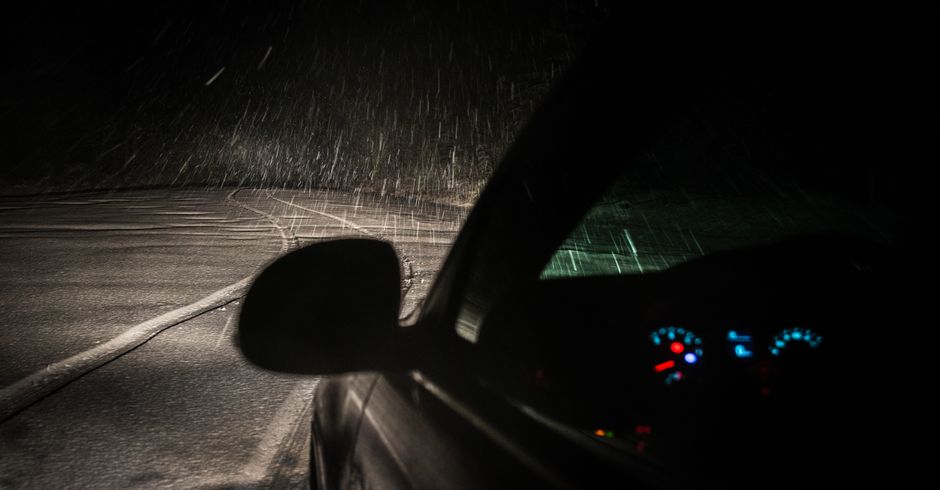
You're driving a familiar road at night, nothing complicated, and then a car comes the other way and you're essentially staring into two small suns. You blink, squint, and spend the next four seconds navigating by memory. This is not in your head.
Glare from headlights at night is a genuine, growing problem on Irish roads. It's not that drivers are getting softer. The lights themselves have changed, and the physics behind that change is worth understanding before we get into what you can do about it.
Why Modern Headlights Are Actually Worse for Glare
Older halogen bulbs, the warm yellowish ones that have been standard for decades, produce a relatively diffuse, lower-intensity light. Fine for the job. Annoying if misaligned, but manageable.
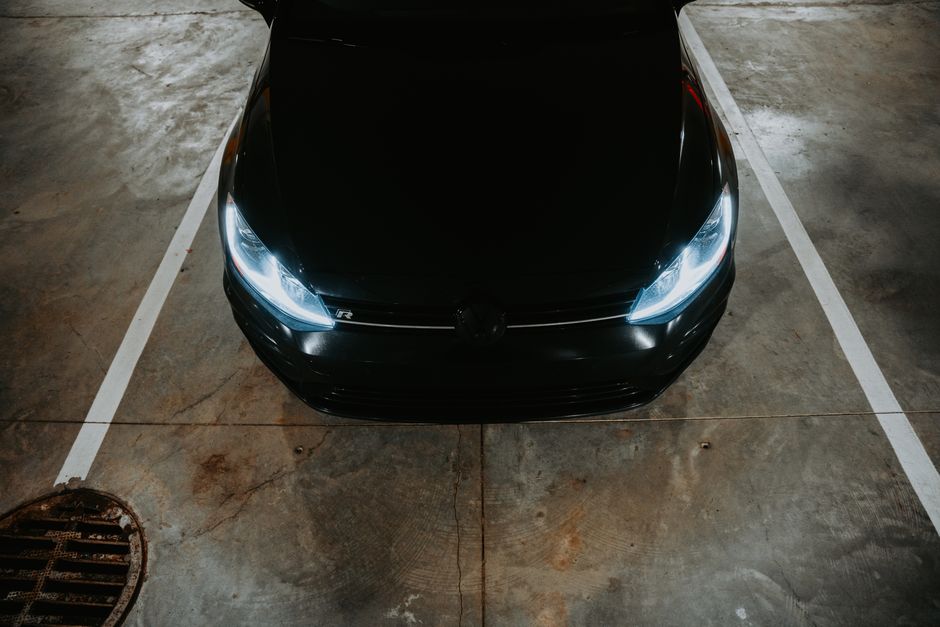
LED headlights are a different animal. They produce a much higher colour temperature, pushing into the blue-white end of the spectrum, typically 5,000 to 6,500 Kelvin compared to around 3,200 Kelvin for a halogen. The human eye scatters blue light more than warm light inside the eye itself, a process called chromatic aberration. The result is more perceived glare, even from a beam that's technically aimed correctly.
Then there's the intensity. LED units are more efficient, which means manufacturers can pack more lumens into the same housing. Adaptive matrix LED systems, the ones that can selectively dim sections of the beam, are genuinely impressive technology. But when the system doesn't work perfectly, or when a cheaper LED retrofit is fitted to an older housing designed for halogens, the result is a scattergun of high-intensity light going exactly where it shouldn't.
The rise of SUVs adds another layer. A 2024 SUV with LED headlights sits noticeably higher than a 2005 saloon car. The beam, even when aimed correctly for another SUV, hits a lower car's driver directly at eye level. For more on tips for driving in the dark in general, we've covered the full picture elsewhere. Here, we're focused on the specific problem of oncoming glare.
What Actually Helps
Clean Your Windscreen. Properly.
This is the most boring advice and also the most effective. A windscreen that looks fine in daylight can turn into a diffusion panel at night. Road film, smeared insects, and cleaning streaks catch light from every direction and scatter it across your field of vision. One oncoming LED becomes a full windscreen bloom.
Clean the inside of the screen, not just the outside. Most people skip this entirely. A folded microfibre cloth and a proper glass cleaner will shift the greasy haze that builds up from outgassing plastics and air conditioning systems. Do it once and the improvement at night is immediate.
Check your wiper blades too. Old rubber that smears rather than sweeps leaves exactly the kind of horizontal streaks that turn headlights into lightshows.
Get Your Eyes Checked
This one gets ignored constantly. The eye's lens stiffens and clouds slightly with age, and cataracts, even early-stage ones, dramatically increase glare sensitivity. If you're over 45 and nighttime glare has gotten noticeably worse over the last year or two, that's not the roads. That's your eyes. An optician can check for this. It's straightforward and often fixable.
Dry eyes also scatter light more than healthy, well-lubricated eyes. If you drive long distances with the heating on, eyes can dry out enough to make glare significantly worse by the end of a journey.
Where to Look
The single most practical habit you can build costs nothing. When an oncoming vehicle's headlights are hitting you, look toward the left edge of your lane, not at the lights. Your peripheral vision picks up the lane just fine. Your car's natural position tells you where the centre is. But staring at the lights triggers the full glare effect and takes longer to recover from.
This isn't instinctive. The eyes want to look at the bright thing. Training yourself to look away takes conscious effort at first, then becomes automatic.
Use the painted line on the left as your reference point. On country roads without markings, the grass verge gives you the same anchor. Stay on it until the oncoming car passes.
Adjust Your Mirrors for Night
Most cars have a night setting on the rear-view mirror, the little tab underneath. Flip it. It tilts the mirror to show a dimmer reflection, protecting you from the glare of headlights behind you while still giving enough visibility to check for traffic.
Your door mirrors are a different matter. On the motorway, if someone behind you has high-intensity LEDs aimed poorly, angling your door mirrors slightly downward can reduce the direct blast into your eyes without killing your rearward view entirely.
Keep Your Headlights Aimed Correctly
Poorly aimed headlights on your own car don't just dazzle other drivers. They reduce how much road you actually see, because the beam is going into the sky or off to the side rather than along the tarmac. This is worth having checked at your next service, or when the NCT checklist flags it. A misaligned beam is a fixable problem that most drivers tolerate for years.
What Doesn't Help: Night Driving Glasses
Yellow-tinted glasses, sold as "night driving glasses" or "anti-glare driving glasses," are everywhere online. They look the part. They do not work the way the packaging implies.
The yellow tint does reduce some blue-light scatter, which sounds useful given what we said about LED colour temperature. The problem is that it also reduces overall light transmission. At night, when your eyes are already starved of light, cutting the total amount of light reaching your retina makes your overall vision worse, not better. You see glare slightly less, but you also see the road, pedestrians, and hazards less.
Optometry research has found no consistent evidence that yellow-tinted lenses improve nighttime driving performance. Several studies have found the opposite. The RSA's guidance doesn't endorse them for nighttime use. Save the money.
If you want genuine glare protection, anti-reflective coatings on prescription lenses are a different story. They work by reducing internal reflections in the lens itself, which is the actual source of halation around lights. Ask your optician, not Amazon.
A Note on Reporting Dangerous Headlights
If you regularly encounter a specific vehicle with lights that appear dangerously misaligned or illegally bright, it can be reported to An Garda Síochána. In practice, enforcement is inconsistent. But the option exists.
What doesn't exist yet is a straightforward mechanism for flagging problematic LED retrofit kits, the ones where someone has stuck a high-intensity LED bulb into a housing designed for halogen, creating a genuinely dangerous scatter pattern. These are illegal under Irish law but common. The NCT will catch some. Many slip through.
The roads haven't changed. The lights have. Until standards catch up, looking left and cleaning your windscreen is the most honest advice anyone can give you.