Your phone slides off the windscreen on the Naas Road doing 100km/h. You grab for it. The car ahead brakes. You already know how this story ends.
Navigation apps have quietly become as standard as a seatbelt for Irish drivers. Google Maps, Waze, Apple Maps. We use them for motorways we've driven a hundred times, for country roads that aren't on any printed map, for towns with three streets where every second one is currently dug up by Irish Water. The phone on the dash is just part of driving now. The problem is that most people are doing it wrong, and the consequences are showing up in collision reports.
The RSA's own figures consistently show driver distraction as a factor in a significant proportion of serious collisions. "Distraction" is the polite word. What it usually means is someone glancing down at a screen, or reaching across the cabin, or fumbling with a mount that was never fit for purpose. The technology isn't the villain here. The setup is.
Why Irish Roads Make This Worse
Ireland has a specific problem with sat-nav dependency. Roads change constantly. Diversions appear overnight. An N road becomes an R road and then becomes a building site. New motorway links open without fanfare. If you're driving somewhere unfamiliar, even somewhere you've been before, the app is essentially mandatory.
Then add in the tourists. Visitors from the US, the UK, mainland Europe, all navigating left-hand traffic on roads that can shrink to one lane without warning. The phone is their lifeline. And it's usually propped against a coffee cup or balanced in a cupholder, pointing at the ceiling.
Distracted driving in this context isn't just about texting. It's about a device that demands small but constant visual check-ins, mounted in a spot that pulls your eyes off the road, on roads that genuinely require your full attention.
The Wrong Ways People Mount Phones
The cupholder lean. The phone sits at 45 degrees in the cupholder, visible only if you look straight down. Every glance is a full head dip. On a motorway this is relatively low stakes. On a rural road at dusk, it's a different matter entirely.
The windscreen suction cup that doesn't hold. You buy one for €4.99. It works fine for a week. Then it lets go on a warm day because heat softens the suction seal. The phone drops. You react. That's the moment.
Passenger side dash, far right. The logic is "out of eyeline so less distracting." What actually happens is every glance requires a significant head turn, which means your eyes leave the road for longer, not shorter.
In hand. Still happening. Still illegal. Under Irish law, holding a mobile phone while driving carries penalty points and a fine. It doesn't matter if you're "just checking the route." It matters if you get stopped, and it matters a lot more if you're involved in a collision.
Dashboard friction mat, no arm. The phone lies flat. You tilt your whole torso to read it. Grand at traffic lights. A bad habit that gets locked in.
What Actually Works
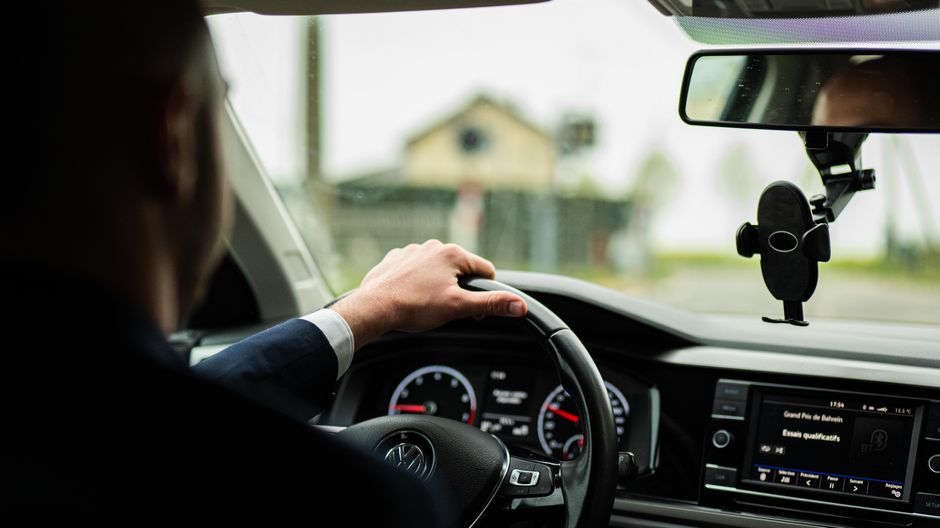
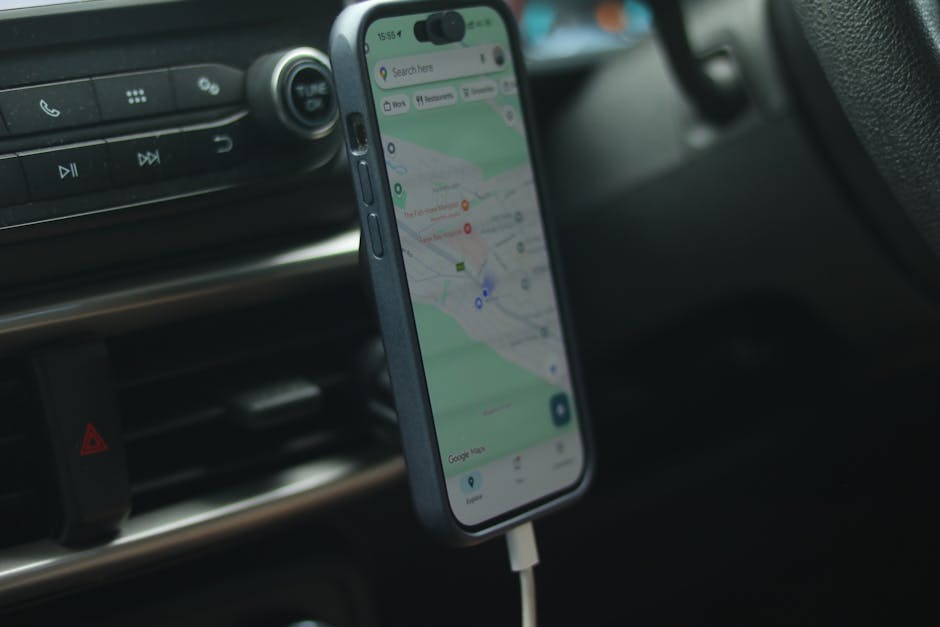
Proper windscreen or vent mount, driver's side sightline. The phone should sit close enough to your natural line of sight that checking it is closer to a glance at a mirror than a look at a map. This means mounted on the windscreen, left of centre, at a height where the screen sits roughly in your peripheral vision zone when looking at the road ahead.
Vent mounts with a solid grip. The cheap clip style can loosen over time. The better vent mounts clamp around the vent blade itself and use a ball joint for angle adjustment. A 2023 phone in a proper vent mount will stay put on a potholed regional road. A phone on a €4.99 suction cup will not.
Audio only, for familiar enough routes. If you know the road reasonably well and just need turn reminders, lock the screen and use the voice guidance only. Your ears work fine. Your eyes are needed elsewhere.
Pre-check before you move. Set the destination before you start. Check the route. Know the first few moves. Then drive. If something changes mid-route, pull in to a safe spot before adjusting. This is the advice everyone knows and almost nobody follows consistently.
Phone holders integrated into newer vehicles. If you're in a car from 2019 onwards, there's a reasonable chance you have wireless charging built into a recessed phone tray. Use it for charging, not navigation. The angle is almost always wrong for glancing at.
The Legal Bit (Briefly)
Using a handheld mobile phone while driving is an offence under the Road Traffic Act. Three penalty points. A fine currently sitting at €120, rising to €1,000 if you go to court. If you're involved in a collision while using a handheld device, your insurance position becomes considerably more complicated. And Ireland's roads are not getting any more forgiving in terms of traffic volume, especially around urban centres.
A hands-free setup is legal. But "hands-free" doesn't mean "attention-free." The cognitive load of following navigation is real. Researchers call it inattention blindness: you're looking at the road but your brain is partially elsewhere, processing the next instruction. The mount gets you legal. It doesn't automatically get you safe.
One Thing Worth Spending Money On
A quality phone mount costs between €20 and €50. A Brodit, a Quad Lock, a Rokform for the vent or windscreen. These hold. They adjust. They don't let go when the sun comes out. It is the cheapest road safety upgrade available to any driver, and most people are using something they got in a petrol station forecourt.
If you're setting up a young driver or a recently qualified driver with their first car, the mount is worth the conversation. The habits around phone use in the car get established early. Ireland's Essential Driver Training covers distraction as a topic, but the physical setup of the car, where the phone lives, how the route gets set, that's something drivers figure out themselves, usually through trial and error.
Sort the mount before you sort the map. Because if the phone hits the floor on the Naas Road at 100km/h, it doesn't matter how good your route was.