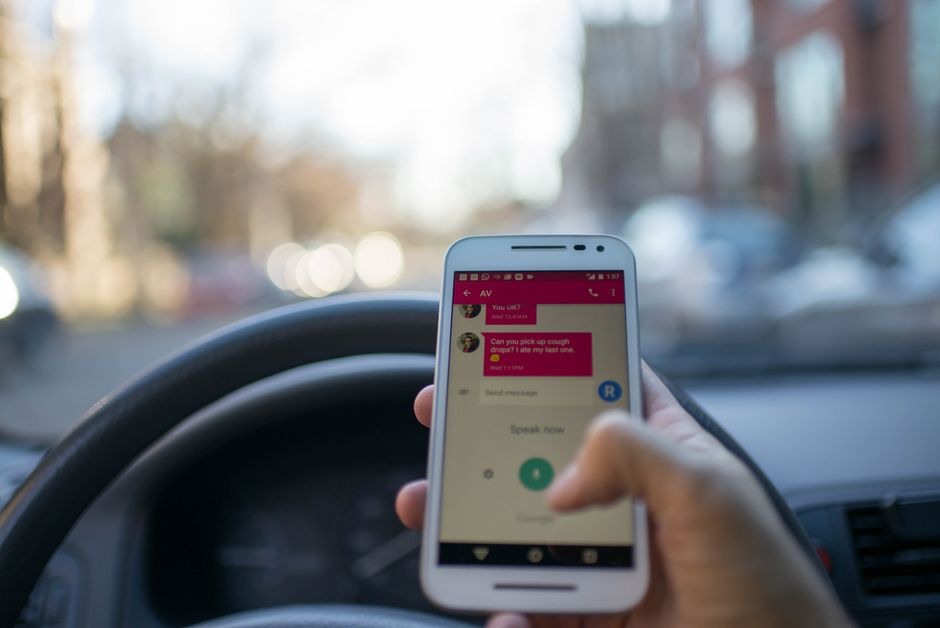
You glance down for two seconds. The camera above you sees it before you've even looked back up.
That's not a future scenario. It's Tuesday morning on the E40 motorway in Belgium. AI-powered phone detection cameras are already catching drivers mid-scroll, mid-text, mid-whatever-they-thought-nobody-would-notice. Austria has rolled them out too. The technology works. The fines follow. And Ireland, which has a long and painful history of borrowing enforcement ideas from the Continent about five years after they should have, is watching closely.
If you think 2028 is far away, remember that's what people said about average speed cameras on the M7.
What These Cameras Actually Do
Forget the old fixed-point speed camera that you'd slow down for and then immediately accelerate past. These are different.
The AI detection systems being deployed in Belgium and Austria use a combination of overhead cameras and machine learning to spot handheld phone use in real time. Day or night. Rain or shine. Through a windscreen. The system flags the image, a human reviewer typically confirms it, and a fine lands in the post.
Belgium's system, operated in partnership with automated enforcement company Campine, processes thousands of vehicles per hour on busy stretches. The cameras don't need to stop you. They don't need a garda to be present. They just need you to pick up your phone.
The fine structures vary by country, but in both Belgium and Austria, distracted driving on Irish roads and elsewhere carries consequences that go well beyond a slap on the wrist. In Belgium, handheld phone use while driving carries fines upwards of €174. Points follow. Insurance premiums react. The whole thing becomes expensive very quickly.
Why Ireland Is a Logical Next Step
The RSA's own figures show that driver distraction is a factor in a significant proportion of serious collisions here. Handheld phone use sits near the top of that list. We've had the legislation banning it since 2006. We've had penalty point increases. We've had campaigns. And still, pull up behind any car at a red light in Dublin and count how many drivers have a phone in their hand.
The enforcement gap is the problem. Gardaí have to physically observe the offence to issue a fixed charge notice. There aren't enough of them, and they're not going to be stationed at every junction in Athlone. Technology fills that gap. It's cheaper per detection than human patrols once infrastructure is in place, and it doesn't take a day off.
The Irish Government's Road Safety Strategy 2021-2030 specifically references technology-led enforcement as a priority. Average speed cameras were the first visible step. Phone detection cameras are the obvious next one. The question is when, not if.
What the Fine and Penalty Point System Looks Like Now
Currently in Ireland, being caught using a handheld mobile phone while driving carries a fixed charge of €60 and three penalty points. If it goes to court, that rises to a maximum fine of €2,000 and up to four penalty points.
Three penalty points doesn't sound catastrophic until you factor in that new drivers on N-plates lose their licence at seven points rather than twelve. And that insurance companies treat penalty points as an invitation to adjust your premium upward at renewal.
When automated detection arrives, the volume of enforcement will increase. That means the current penalty structure may tighten further, or at minimum, far more people will actually face consequences rather than simply hoping no garda spotted them.
What You Need to Change Now (Before the Cameras Arrive)
None of this requires waiting until cameras appear on Irish gantries. Here's what actually needs to shift.
Mount your phone or leave it in your pocket. A phone mounted in a holder and operated via voice or a single touch is legal. A phone in your hand is not. The distinction matters. If you're using Google Maps, mount it before you move. If your car doesn't have Bluetooth, get a hands-free kit. They cost less than one fine.
Understand that "just a second" is the problem. Reaction time at 100km/h covers about 28 metres per second. A two-second glance at your phone is 56 metres of effectively uncontrolled vehicle. The cameras aren't wrong to flag this.
Sort your in-car setup before journeys. Playlist chosen. Sat-nav running. Volume set. Calls diverted to Bluetooth. All of this before you put the car in gear. The urge to fiddle with your phone at speed usually comes from not having prepared properly before moving.
If you manage a fleet, take this seriously. Company liability in distracted driving cases is a growing area of litigation. If your drivers are on calls for work purposes using handheld phones and cause a collision, the conversation about who bears responsibility gets uncomfortable very fast.
Don't assume a hands-free call is consequence-free either. It's legal, yes. But the cognitive distraction of a phone conversation while driving is well-documented. The camera won't catch it. Your reaction time still suffers.
What the Camera Systems Can and Can't See
Current AI detection systems are trained specifically on handheld phone use. They look for the characteristic posture: arm raised, head slightly angled down, device visible in frame. They're not currently detecting passengers making calls, they're not flagging every driver who sneezes into their hand, and they're not catching you eating a sandwich (though that's its own problem).
What they are very good at is detecting phones held at lap level, phones held to ears, and phones held in the driver's eyeline. The idea that you can hide a phone below the window line doesn't hold up to a camera mounted on an overhead gantry looking down into your car.
The Bigger Picture
Ireland's road safety progress over the past two decades has been real. Fatality figures in the 1970s and 1980s were brutal compared to today. But the RSA's own data shows progress has stalled in recent years, and distraction is one of the reasons cited consistently.
Phone detection cameras won't solve everything. But they close the enforcement gap in a specific, measurable way. Belgium and Austria didn't deploy them because they had nothing better to do. They deployed them because voluntary compliance wasn't working well enough.
The cameras are coming. Your two-second habit isn't worth the fine, the points, or what happens in those 56 metres when you're not watching the road.
Put the phone down. Not because someone might catch you. Because the road is actually out there.