The deer doesn't care that you're running late. It steps out of the treeline on the N72 outside Killarney at 6:47pm on a Tuesday in October, and you have about half a second to make a decision that matters.
That's not a hypothetical. It's the kind of collision that kills people, writes off cars, and gets filed under "single vehicle accident" with no further explanation. Animal strikes on Irish roads are genuinely dangerous, genuinely seasonal, and almost completely ignored by the official communications that are supposed to keep us safe.
The Numbers Nobody Is Talking About
UK road casualty data reveals that nearly 2,000 injury collisions involving animals in the road happen during darkness every single year. That's not near-misses. That's collisions serious enough to result in a recorded injury. The peak months cluster hard around October and November, when the clocks go back, commuting hours slide into darkness, and several species are doing things that put them directly in the path of traffic.
Ireland doesn't publish a clean equivalent stat. The RSA's annual road collision reports track fatalities and serious injuries by cause, but animal strikes don't get their own dedicated line. They're in the data somewhere. You're just not meant to notice them.
That gap matters. Because driving at night in autumn is a fundamentally different task to driving in summer, and most Irish drivers make no adjustment whatsoever.
What's Actually Out There on the Road
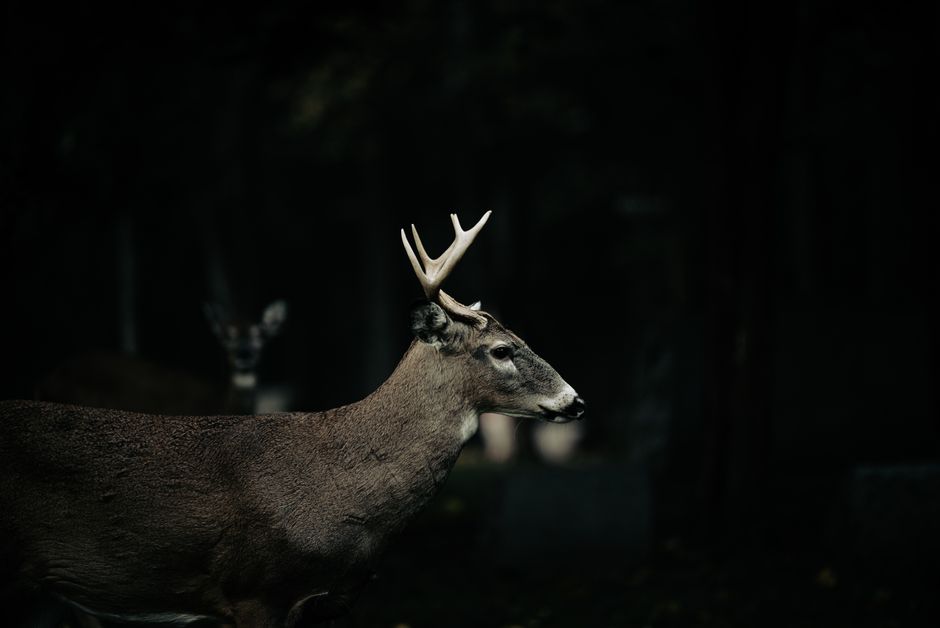
Deer. The fallow deer population across Wicklow, Kerry, Killarney National Park, Tipperary and parts of the midlands has grown significantly over the past two decades. October to December is the rut. Stags are moving, often in daylight margins at dawn and dusk, often crossing roads at speed. A fallow stag can weigh 90kg. A collision at 80km/h is catastrophic for the car and likely fatal for the deer. The stag does not check for traffic.
Badgers and foxes. Lower speed, higher frequency. Rural roads through Cork, Galway and Donegal are covered in badger setts. Badgers move at night, move low to the ground, and their colouring makes them nearly invisible on a dark road until you're directly on top of them. Foxes are faster but no more predictable. Neither of these causes the dramatic high-speed writeoffs that deer do, but a badger strike at 80km/h on a wet road can still send a car into a ditch.
Livestock. Escaped cattle and sheep on rural roads are an Irish-specific hazard that British stats don't fully capture. A Charolais bullock standing in the middle of the R568 at 11pm is not a deer. It is roughly 700kg of stationary object. Collisions with livestock are rare but the outcomes are severe. These incidents peak in autumn when stock are moved for housing.
Domestic animals. Dogs cause more recorded injury incidents than any other single species in some jurisdictions. A dog darting across the road causes panic braking and swerving. The secondary crash is often worse than hitting the animal would have been.
The Routes Where It Gets Concentrated
You won't find an official Irish wildlife-collision heatmap because one doesn't exist publicly. What we do have is a combination of deer census data, Coillte forestry boundaries, and collision records that suggest certain corridors are significantly higher risk.
The N11 through Wicklow. The N72 in Kerry. The N52 and R-roads through the midlands, particularly around Laois and Offaly. The N56 in Donegal. Any road that borders state forestry, particularly where forestry meets agricultural land, is a transition zone where animals cross regularly.
The Wicklow Military Road through Sally Gap carries almost no traffic at night, which lulls drivers into a false sense of ease. The deer population in the Wicklow Mountains is dense and mobile. That combination of speed, isolation and wildlife density is not a comfortable one.
What You Should Actually Do Between Now and February
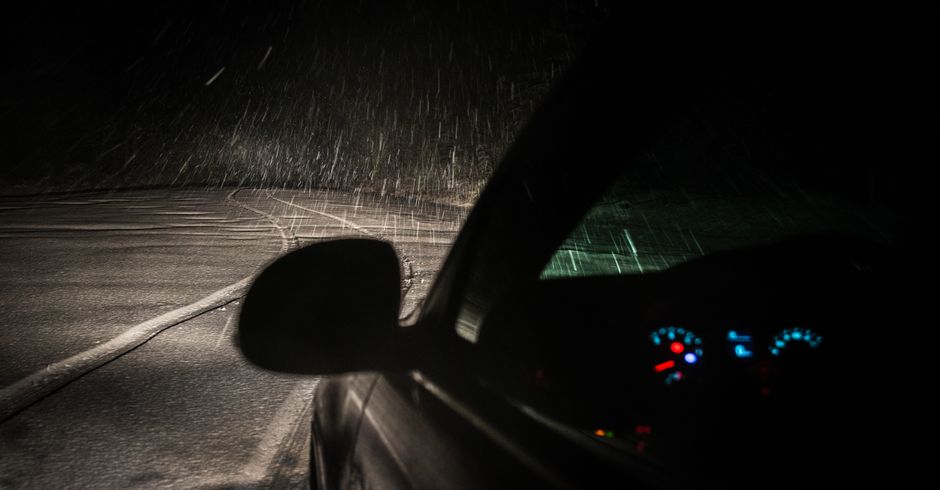
Adjust your speed at night on rural roads. This sounds obvious until you realise that your headlights, even on full beam, give you roughly 70 to 80 metres of visibility. At 100km/h, your stopping distance on a dry road is around 65 metres. You are driving faster than your lights allow you to see. Drop to 80 on unlit rural roads at night and you buy yourself actual stopping time.
Use full beam properly. Most Irish drivers use full beam too little, not too much. On an unlit road with no oncoming traffic, full beam should be on. The excuses about forgetting to dip it are real, so make it a deliberate habit. Full beam gives you a genuine extra 40 metres of warning time on an animal strike.
Watch for eye shine. Deer eyes reflect headlights with a distinctive orange or green glow. If you see two small lights low to the ground at the roadside, assume deer and cover the brake immediately. Don't wait to confirm.
Don't swerve if you can help it. The instinct is to swerve around the animal. The physics are against you. A straight-line emergency stop, even if it means hitting the animal, is almost always safer than a swerve that takes you off the road or into oncoming traffic. This is not a pleasant calculation. It is the correct one.
After a collision, stay in the car and call for help. An injured deer or bullock near a dark road is dangerous to you and to other drivers. Put on hazard lights, stay inside, and call the Garda non-emergency line (1800 666 111) or your breakdown service. Do not attempt to move injured livestock yourself.
The Warning That Isn't Coming
Road Safety Week campaigns, RSA social media, TII signage updates: none of these currently include a targeted seasonal warning about animal collision risk calibrated to Irish species and Irish routes. The UK's Department for Transport has at least published the casualty data broken down by animal type and lighting condition. Ireland's equivalent data is buried in aggregate reports that the average driver will never read.
Are Ireland's roads actually getting safer? The long-term trend is broadly yes, but that trend is built on active interventions and specific warnings, not on drivers magically developing better instincts. The animal-collision gap in Irish road safety communications is real, and the cost of filling it is about four social media posts and a press release.
Until that happens, the deer on the N72 will keep stepping out. The only thing that changes is whether you're ready for it.