You found a 2019 Nissan Leaf with 65,000km on the clock for €14,500. Seems grand. But there's something the seller probably hasn't told you about what's happening to battery supply right now.
The used EV market in Ireland has been quietly booming. Prices have dropped from the stratospheric levels of 2021 and 2022, more stock is coming through from fleet disposals and lease returns, and buyers who've been sitting on the fence have started moving. It looks, on the surface, like a buyer's market. The surface is lying to you.
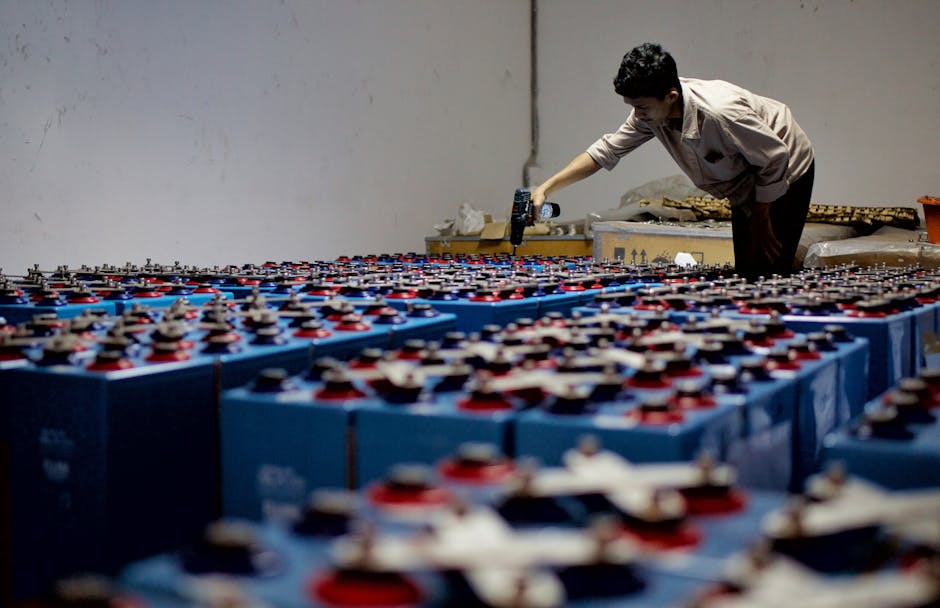
Across Europe, battery manufacturers are in serious trouble. Northvolt, the Swedish gigafactory that was supposed to anchor European battery independence, filed for bankruptcy in late 2024. Other suppliers have scaled back production, delayed expansion plans, or quietly shelved projects that were supposed to bring replacement battery costs down. The ripple effect on the secondhand electric car market won't be immediate. It rarely is. But it's coming, and Irish buyers who don't understand what's at stake are walking into it with their eyes closed.
Why a Battery Shortage Changes Everything for Used EV Buyers
Here's the thing about used EVs that differs from used petrol cars. A 2015 Ford Focus with 140,000km might need a clutch or a water pump. Annoying. Fixable for a few hundred quid. A 2019 Leaf with 65,000km might need a new battery pack. That's not a few hundred quid. That's anywhere from €5,000 to €12,000 depending on the model, and that's when supply is relatively stable.
When supply tightens, costs go up. Simple economics. If fewer replacement packs are being manufactured and demand stays constant or grows, the price of getting a degraded battery fixed or replaced climbs with it. For buyers looking at older EVs already past their warranty period, this transforms what looks like a bargain into a potential money pit.
Battery degradation is normal and expected. It happens to every electric car. The question is always: how much capacity has this specific battery lost, and what will it cost to deal with when the time comes? Right now, that second part of the question has no reliable answer.
How to Check Battery Health Before You Buy
This is not optional. Any used EV purchase without a battery health check is like buying a house without a survey. You might get away with it. You might not.
Most main dealers can run a battery diagnostic. Independent EV specialists are increasingly available too, particularly around Dublin and Cork. What you want is the state of health (SOH) figure expressed as a percentage. A 2018 Renault Zoe should ideally be sitting above 80% SOH. Below that and you're looking at meaningfully reduced range, which affects daily usability and future resale.
For Nissan Leafs specifically, the battery health indicator on the dashboard uses a bar system rather than a percentage. Twelve bars is full health. Anything below nine bars on a car under 100,000km warrants serious questions. Get those questions answered before money changes hands, not after. Our used car buying in Ireland checklist covers the broader inspection process, and it applies to EVs with extra urgency.
The Models Most at Risk
Not all used EVs carry equal battery risk. Some carry more than others right now.
Nissan Leaf (2013-2017): The older 24kWh and 30kWh packs are well past warranty and replacement stock is thinning. Leaf batteries from this era also lack active thermal management, which means they degrade faster in variable climates. Ireland's damp, moderate weather is actually less brutal than hot climates, but it's not a free pass.
Renault Zoe (pre-2020): Older Zoes used a battery rental model, which complicates ownership considerably. Many have since been converted to outright ownership, but always verify this. A Zoe where you don't own the battery is a very different proposition to one where you do.
First-generation BMW i3: Beloved by a certain type of Dublin driver. The cells are proprietary and replacement options were already limited. They've gotten more limited since.
Newer models (2021 onwards): Generally less exposed right now. Warranties often still apply. Replacement packs are more available. The risk curve gets steeper the older the car.
What the Shortage Actually Means for Prices
Here's the counterintuitive part. You might expect a battery supply problem to push used EV prices down, because buyers get spooked. That might happen in the short term for older, high-mileage examples. But for newer, lower-mileage used EVs with healthy batteries, prices could actually firm up or rise.
Why? Because new electric cars launching in Ireland are getting more expensive as manufacturers absorb higher input costs. If new EV prices rise and supply of genuinely good used EVs is limited, competition for the best secondhand stock intensifies. The rubbish end of the market gets cheaper. The decent end gets pricier. The gap between the two gets wider and harder to navigate without knowing what you're looking at.
What You Should Actually Do
If you're set on a used EV, don't panic and don't walk away from the market entirely. Just be more deliberate than you would have been eighteen months ago.
Get the battery health check done, in writing, before you commit. Budget for replacement as a worst-case scenario and ask yourself whether the car still makes financial sense with that cost factored in. Prioritise models still within manufacturer warranty where possible. Check whether the seller is a dealer covered by consumer protection legislation or a private seller where your rights are considerably thinner.
Consider also whether your use case genuinely suits a used EV with reduced range. A 2018 Leaf with a degraded battery might still cover 130km on a charge. If your daily commute is 40km and you have a home charger, that's fine. If you're doing runs to Galway twice a week, it isn't.
The used EV market in Ireland isn't broken. But it's about to become considerably less forgiving of buyers who treat it like a simple used car transaction. That 2019 Leaf with 65,000km might still be the right call. Just make sure you know what you're actually buying before you find out the hard way.