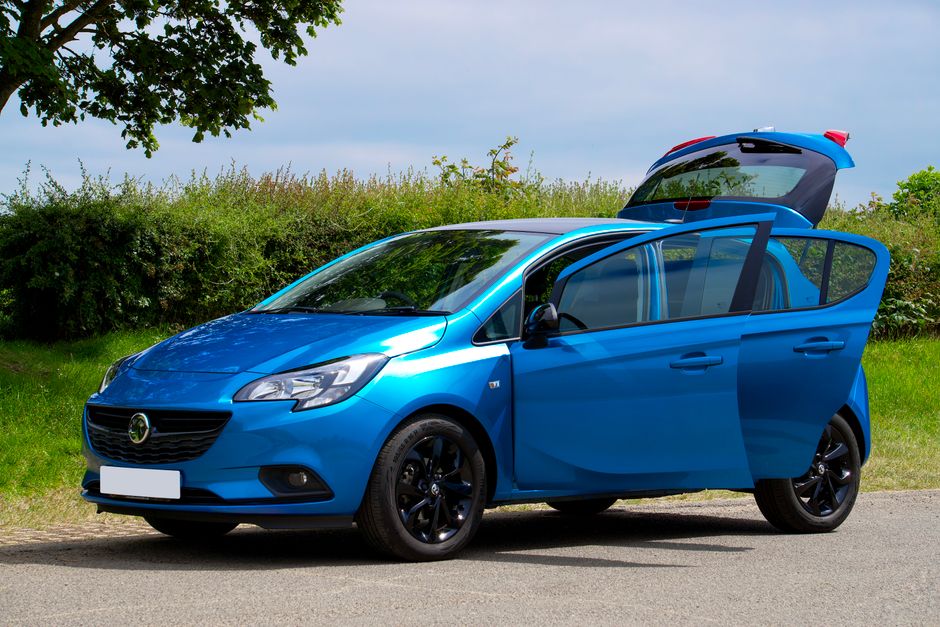
Your neighbour just got a shiny new budget EV. Your insurance renewal arrived and made you want to lie down on the floor. And there's a three-year-old Seat Ibiza on the forecourt for €14,500 giving you serious eyes. You know the feeling.
The EV conversation in Ireland has been dominated by one direction of travel: petrol is dying, electric is arriving, get on board or get left behind. Except the numbers tell a more complicated story. New EV registrations grew again in 2024, sure. But the RSA's own figures show that petrol and diesel cars still account for the overwhelming majority of cars on Irish roads. People are not abandoning the pump en masse. And for a specific type of buyer, a well-specced petrol hatchback like the Ibiza isn't a compromise. It's the sensible call.
So let's actually do the comparison. Not the theoretical one where you charge at home every night with your own driveway and a favourable electricity tariff. The real one, for real Irish lives.
What "Budget EV" Actually Means Right Now
The phrase "affordable electric car" has been doing a lot of heavy lifting lately. When people say budget EV, they're generally pointing at something in the €25,000 to €32,000 range after the SEAI grant. The new generation of affordable EVs has genuinely improved things. But €28,000 is still €28,000. For a first car, a second family car, or anyone who just needs something reliable to get from Portlaoise to a job in Dublin without drama, that's a serious stretch.
Charging infrastructure outside the cities is still patchy. If you rent, or live in an apartment, or don't have off-street parking, the home charging equation collapses entirely. Public charging has its own complications, including cost, availability, and the particular joy of arriving at a rapid charger to find it occupied or out of order.
None of this means EVs are bad. It means they're not the right answer for every Irish buyer in 2024.
The Seat Ibiza's Actual Case
A 2021 Seat Ibiza FR in 1.0 TSI with around 30,000km on the clock sits at roughly €17,000 to €19,000 on the used market. A 2020 model with 60,000km can be had from €14,000. These are not old bangers. They're modern, safety-equipped, well-built cars with current infotainment systems and decent fuel economy. The 1.0-litre three-cylinder TSI engine returns around 5.5 to 6.5 litres per 100km in real-world Irish driving. That's grand.
Road tax on a low-emissions petrol Ibiza sits in Band A or Band B, which means somewhere between €120 and €190 a year. Worth checking the Irish car tax bands to see exactly where your spec lands. Servicing is cheap, parts are plentiful, and any mechanic in the country can work on it without specialist equipment.
Insurance on a three-year-old Ibiza for a driver in their late twenties or thirties? Painful, because everything is painful now, but significantly less painful than insuring a new EV with a higher declared value.
The Honest Running Cost Comparison
Take a 15,000km-per-year driver covering a mix of town and motorway, which is about average for an Irish commuter.
In the Ibiza at 6L/100km, that's roughly 900 litres of petrol annually. At current prices (fluctuating between €1.65 and €1.85 per litre through 2024), you're looking at €1,485 to €1,665 a year in fuel. Not trivial. But also not a surprise.
A budget EV doing the same distance, charged mostly on public fast chargers rather than home overnight tariffs, can cost considerably more than people expect. Rapid charging at commercial rates is around €0.50 to €0.70 per kWh in Ireland. An EV consuming 18kWh/100km (realistic in Irish conditions, particularly in winter) burns through about 2,700kWh over 15,000km. At €0.60/kWh, that's €1,620. Before you factor in subscription fees, occasional range-anxiety-driven motorway stops, and the odd tow home.
The gap between petrol and electric running costs, outside of a favourable home charging setup, is far smaller than the marketing suggests.
Where the Ibiza Falls Short
Let's be straight about this. The petrol case isn't a slam dunk in every scenario.
Depreciation is a genuine concern. Petrol car values will face more pressure as 2030 conversations intensify, even if the Irish market moves more slowly than the headlines suggest. Resale value for the Ibiza in five years is harder to predict than it was five years ago.
Long-term fuel costs are a gamble. If prices spike again the way they did in 2022, the maths shifts. Quickly.
And if you do have a driveway, a home charger, and a predictable daily commute under 100km, the EV case strengthens considerably. Overnight charging on a night rate can bring your cost per kilometre well below what petrol offers.
So Who Should Actually Buy the Ibiza?
Anyone without guaranteed off-street parking. Anyone buying used on a tight budget who can't absorb a €28,000 to €32,000 purchase. Anyone covering irregular distances or long rural runs where charging logistics add genuine friction. Anyone who just wants a car that's simple, proven, and easy to live with.
The Seat Ibiza isn't a compromise for those buyers. It's the right tool. It does the job. And in a market where the EV hype hasn't yet sorted out the infrastructure reality, "does the job without drama" counts for a lot.
Your neighbour's shiny new EV looks great on the driveway. But if you don't have a driveway, there's a three-year-old Ibiza on the forecourt still giving you serious eyes. And it might be right.