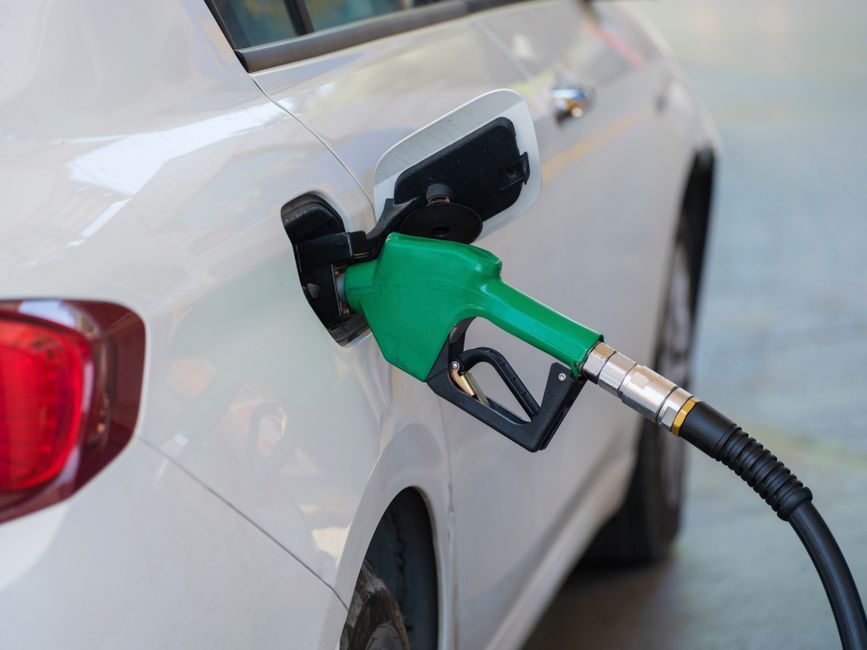
You're standing in a forecourt in Athlone, staring at a price board that's gone up twice since Christmas, and you're wondering if you bought the wrong car.
It's a question worth asking properly. Not with vibes, not with what your neighbour said about his Yaris, but with actual numbers. So here's what five years of ownership looks like across petrol, diesel and self-charging hybrid, based on a driver covering around 20,000km per year. That's roughly the Irish average for a commuter with a bit of weekend mileage thrown in.
The numbers below use a 2024 Toyota Corolla-class family hatchback as a reference point, since it's available in all three flavours and gives us a clean comparison. We're including fuel, motor tax, servicing, insurance and estimated resale. All figures are approximate, but they're honest. And if you want to see how the sums change across different models, the best-selling cars ranked by real running costs guide is worth reading alongside this.
The Starting Price Gap
Before you fill a tank, you've already paid more or less depending on which badge sits under the bonnet.
A petrol Corolla Sedan starts around €30,000. The diesel equivalent (where it still exists in this segment) adds roughly €1,500 to €2,000. A self-charging hybrid adds €2,000 to €3,000 over petrol. A plug-in hybrid (PHEV) bumps it further, often by €5,000 to €7,000.
That upfront difference matters enormously over five years. You need every other cost to tilt in your favour to recover it.
Fuel: Where the Sums Actually Happen
At 20,000km per year, you're covering 100,000km over five years. Here's what that costs at the pump.
Petrol: A modern 1.5-litre petrol hatchback averages around 6.5 litres per 100km in real Irish conditions. At roughly €1.70 per litre, that's €11,050 in fuel over five years.
Diesel: A comparable diesel averages around 5.0 litres per 100km. At €1.65 per litre, that works out to €8,250 over five years. A saving of about €2,800 on fuel alone.
Self-charging hybrid: This is where it gets interesting. A hybrid Corolla averages closer to 4.8 litres per 100km in mixed driving, and significantly better in town. Call it €8,160 over five years at current petrol prices. Roughly the same as diesel, sometimes better.
Diesel wins on fuel cost per kilometre for high-mileage motorway drivers. Hybrid wins in stop-start traffic, school runs and anything involving a lot of crawling. At 20,000km with a typical mixed commute, they're neck and neck.
Motor Tax: The Band Tells the Story
Motor tax in Ireland is calculated on CO2 emissions for cars registered from 2021 onwards. Petrol hatchbacks typically land in Band B or C (€199 to €330 per year). Diesels often fall in similar or slightly higher bands due to NOx considerations under newer testing. Hybrids, with lower CO2 figures, frequently qualify for Band A (€120 per year) or thereabouts.
Over five years, a hybrid paying Band A saves roughly €500 to €1,000 versus a petrol or diesel in Band C. It's not headline money, but it adds up. For a full breakdown of how the motor tax bands work in Ireland, the RSA's own documentation gives clear figures by emissions range.
Servicing: Where Diesel Stings You
This is the cost most buyers ignore. Diesel cars require more frequent filter changes, particularly the diesel particulate filter (DPF). That filter can cost €800 to €1,500 to replace or clean if you're doing lots of short journeys. It doesn't cope well with Irish suburban driving patterns.
A rough five-year servicing budget:
- Petrol: €1,800 to €2,500 (four or five standard services, one set of brakes)
- Diesel: €2,200 to €3,500 (add DPF maintenance risk, slightly pricier oil and filters)
- Hybrid: €1,500 to €2,200 (regenerative braking means brake pads last longer, fewer consumables)
The hybrid wins here, sometimes by a significant margin if the diesel owner runs into DPF trouble.
Insurance: The Wild Card
Here's the uncomfortable truth. Insurance in Ireland is expensive regardless of what you drive, and Irish car insurance quotes have been climbing steadily. The powertrain type has less effect on your premium than your age, address, claims history and the car's value.
That said, hybrids and diesels often carry slightly higher repair costs due to complexity, which can nudge premiums up. Petrol hatchbacks frequently attract the lowest quotes in this segment.
Budget approximately €4,000 to €7,500 over five years per driver for a standard hatchback, varying wildly by profile. This line item is roughly equal across all three powertrains for most drivers.
Resale: The One Diesel Drivers Dread
Diesel depreciation has accelerated. The uncertainty around low-emission zones, the DPF issue's reputation and simple market sentiment have all dragged resale values down. A 2024 diesel hatchback may be worth 10 to 15 percent less than an equivalent hybrid after five years.
On a €32,000 car, that's a €3,000 to €5,000 difference in what you get back.
Hybrids are holding value well right now. Petrol is solid but not exceptional. Diesel is the weakest of the three in resale, and that gap is likely to widen as emissions regulations tighten.
The Five-Year Total
Here's a rough summary for a 20,000km-per-year driver on a mid-spec family hatchback:
| Cost Area | Petrol | Diesel | Hybrid |
|---|---|---|---|
| Fuel (5 years) | €11,050 | €8,250 | €8,160 |
| Motor tax | €1,650 | €1,750 | €600 |
| Servicing | €2,200 | €2,900 | €1,850 |
| Insurance | €5,500 | €5,600 | €5,700 |
| Depreciation loss | €13,000 | €15,500 | €12,000 |
| Total | €33,400 | €34,000 | €28,310 |
These are estimates, not guarantees. Your mileage, postcode and driving habits will shift every line. But the shape of the story is clear.
So Who Wins?
The hybrid wins. Comfortably, at typical Irish mileage. The fuel savings over diesel have mostly evaporated due to the DPF risk, depreciation gap and higher servicing exposure.
Diesel still makes sense for one type of driver: someone covering 35,000km or more per year, mostly on motorways, changing the car every three years before resale sentiment bites. If that's you, the fuel economy maths still works. If that's not you, the case for diesel gets thinner by the year.
Petrol sits in the middle. Lower upfront cost than hybrid, decent resale, manageable servicing. If you do genuinely low mileage (under 12,000km per year), petrol often edges ahead.
You were standing in that Athlone forecourt wondering if you bought the wrong car. If you bought a diesel for a school-run commute in Clondalkin, the answer is probably yes.