You're sitting in a Porsche Cayenne on the M50, and the car is talking to you. Not the old "turn left in 300 metres" routine. Something more like a conversation. That's what Porsche's updated PCM (Porsche Communication Management) system with AI integration actually does. The question worth asking: does any of that make you a safer driver, or just a more distracted one?
What Porsche PCM With AI Actually Does
The updated PCM platform uses a large language model approach to natural language voice control. You don't have to remember specific commands. You say something close to what you want, and the system figures it out. Ask it about the nearest charging point, adjust climate settings, pull up a contact, change your route: it handles the conversation rather than demanding you memorise a syntax.
Porsche has also layered in predictive features. The system can read navigation data alongside your driving style and suggest when to lift off ahead of corners or junctions. On a long run, it adjusts range estimates in real time based on elevation, traffic, and how you've been driving the last 20 kilometres. For Porsche's electric Macan, that kind of predictive efficiency management matters quite a lot.
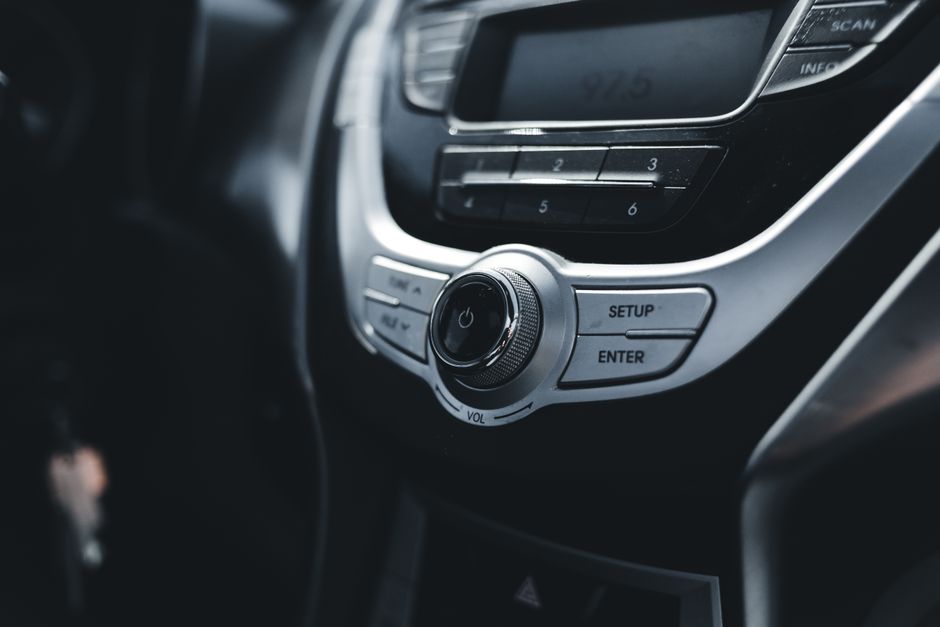
The hardware itself is built around a 12.6-inch curved display. Physical shortcut buttons sit below it. That's actually a concession to usability, and a smart one. Plenty of drivers have already pushed back hard against touchscreen-only dashboards, and Porsche seems to have listened.
The Case For: Tech That Keeps Your Eyes Forward
The honest argument for AI infotainment is that the alternative is worse. Drivers already fiddle. They look down at phones, stab at touchscreens, squint at maps. If a natural language system means you can change a destination or answer a call with a short sentence instead of three taps on a moving screen, that is a real win.
There's also the passive assistance angle. Porsche's driver assistance suite, integrated into the PCM ecosystem, includes features like adaptive cruise with lane centring, predictive speed assist for speed zones, and fatigue detection that actually monitors steering inputs over time. These aren't gimmicks. Research from the European Transport Safety Council consistently shows that lane departure and fatigue systems reduce serious collision rates when drivers leave them enabled and trust them.
The RSA's own figures show distraction is a contributing factor in a significant proportion of Irish road collisions. If the cabin tech reduces the time your eyes leave the road, the safety maths is fairly straightforward.
The Case Against: AI as a New Kind of Distraction
Here's where it gets complicated. The same voice recognition that stops you poking at a screen can still pull your attention inward. Having a nuanced back-and-forth with a cabin AI about restaurant options on a wet motorway is not categorically safer than glancing at a screen. Cognitive distraction, where your mental focus shifts away from the driving task, is real and documented. The hands staying on the wheel is only part of the story.
There's also the engagement trap. Porsche's system is genuinely impressive. It responds well, it anticipates, and it's satisfying to use. That satisfaction is not automatically safe. Features that are fun to demonstrate are features you interact with more than you need to.
And then there's the dependency question. Drivers who lean heavily on predictive lane guidance and AI route coaching can gradually lose the sharp situational awareness that good driving actually requires. That's not a Porsche-specific problem. It's the central tension in every step toward assisted driving. The car gets smarter, the driver gets softer.
What This Means for Irish Roads Specifically
Ireland's driving environment tests any car's AI fairly hard. Narrow rural roads, unmarked lanes, inconsistent signage, roundabouts treated as optional. The N17 near Tuam is not the A9 outside Stuttgart. AI systems trained on dense European and American urban data can get confused by the controlled chaos of a Connaught country road on a Tuesday morning.
That doesn't mean the technology fails here. Lane centring on a clear motorway stretch works as well in Kildare as anywhere. But the RSA's road safety data consistently shows that rural roads account for a disproportionate share of serious collisions in Ireland, and those are exactly the conditions where AI infotainment offers the least and demands the most of the driver.
Porsche owners in Ireland are also, by definition, paying for a performance car. The temptation to explore what the tech can do tends to be highest when the road opens up. Worth keeping in mind.
Does Price Change the Safety Equation?
Porsche starts around €90,000 for most Irish buyers. The buyers accessing this technology are not the same demographic as someone in a 2018 Volkswagen Polo with a cracked phone holder. That matters, but not in the way you might think.
Wealthier buyers tend to do more motorway kilometres, more mixed driving, and more long business runs. That's precisely the use case where fatigue detection and adaptive cruise earn their keep. It also means these cars are being trusted with extended high-speed journeys where the assistance features have the most opportunity to do genuine work. Irish insurance companies are already watching AI-equipped vehicles closely. What they find over the next three to four years will shape how this technology is priced and perhaps eventually regulated.
The Honest Verdict
Porsche's PCM system with AI integration is the best version of cabin technology available in Ireland right now. It reduces certain kinds of distraction. It adds useful passive safety layers. The voice interface genuinely works better than most rivals.
It is not, however, a substitute for a driver who is paying attention. No system is. The cabin is smarter than ever, but the person behind the wheel is still the main variable on a wet Wednesday outside Athlone.
The car is talking to you. The job is to listen to the road instead.