Porsche has filed a patent for a modular powertrain system that doesn't pick a side. Petrol, hybrid, full electric: the same platform can run on any of them, swapped out depending on market, regulation, or what the buyer actually wants.
That's not just an engineering curiosity. For Irish buyers who've spent the last three years trapped between EV anxiety and the monthly sting of filling a petrol tank, it's the first sign that a major manufacturer might finally be building around how people actually live.
What the Patent Actually Does
Strip away the engineering language and the concept is straightforward. Porsche's filing describes a powertrain architecture where the core structure of the vehicle stays constant but the drive system itself is modular. The same car shell could leave Stuttgart as a plug-in hybrid or a pure electric, depending on the spec. Think of it less like choosing a colour and more like choosing an engine family, except the choice has much bigger consequences for running costs, tax, and range.
This matters because most car manufacturers have been playing a binary game. You either get an EV with all its charging compromises, or you get a petrol or diesel with all its fuel costs and, increasingly, its tax disadvantages. How those tax bands affect what you actually pay is something Irish buyers are waking up to fast. A modular system could let the platform sit in multiple bands depending on configuration, which opens up real flexibility for buyers and dealers alike.
Why Irish Buyers Should Pay Attention
Ireland is a particularly awkward market for pure EVs right now. Charging infrastructure outside the main cities remains patchy. A lot of buyers are commuting from towns where a home charger isn't guaranteed, and where a dead battery on a Tuesday evening isn't a minor inconvenience but a genuine problem. At the same time, petrol is expensive, diesel is increasingly politically toxic, and the used EV market is complicated by battery concerns.
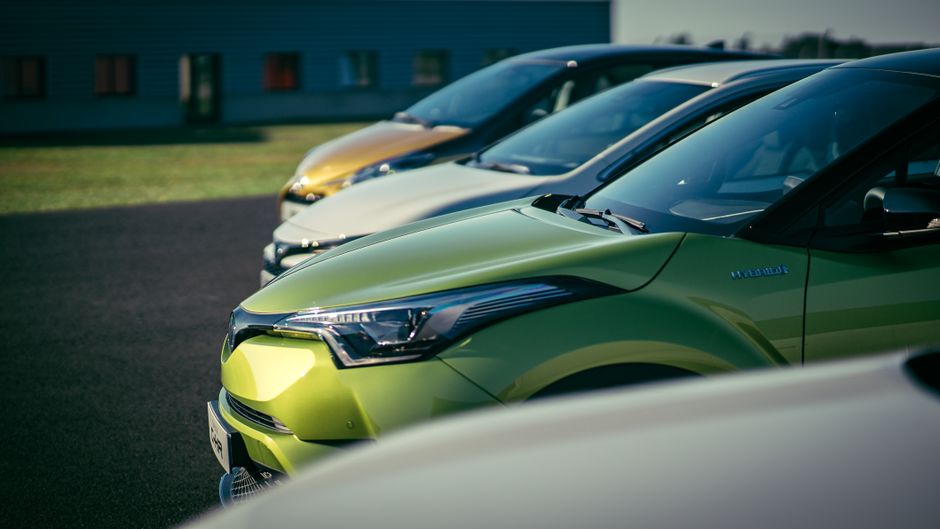
The hybrid middle ground is where a huge chunk of Irish buyers are already sitting. The Toyota Aygo X and BYD Sealion 5 tested for Irish commutes showed that for the right buyer, a hybrid genuinely bridges the gap. But most hybrids are still fixed designs built to a fixed spec. What Porsche is patenting is something more adaptable: a car that could theoretically be updated or reconfigured as the infrastructure around it improves.
That last part is speculative, to be fair. Patents are not product announcements. Plenty of patents never make it past a filing cabinet. But Porsche doesn't file patents for the laugh. They have a track record of turning engineering concepts into production vehicles, and the Macan's full electric pivot showed they're serious about rethinking their lineup from the ground up.
What "Flexible" Actually Means for Pricing and Tax
Here's where it gets practical. If Porsche builds cars on this platform with genuine plug-in hybrid specs, the Irish tax picture shifts considerably. PHEV models have historically attracted lower Vehicle Registration Tax rates than full petrol equivalents, and better BIK treatment for company car drivers. Whether that holds as the government continues to tighten emissions thresholds is another question.
There's also the resale angle. One of the biggest fears about buying an EV in 2024 or 2025 was depreciation uncertainty. Nobody quite knew what a three-year-old pure electric would be worth once the next generation of batteries arrived. A flexible platform car, theoretically capable of being updated, could hold value better. Or at least make the depreciation conversation less terrifying.
When Could These Vehicles Actually Reach Irish Showrooms?
This is where patience is required. The patent was filed recently and patents typically precede production vehicles by three to five years, minimum. If Porsche moves this into a development programme now, Irish buyers are probably looking at 2028 at the earliest for anything resembling a production model. More realistically, 2029 or 2030.
That timeline matters because a lot will change between now and then. The Irish charging network should be considerably denser by late decade. Battery costs will have fallen further. And whatever government incentives exist in 2030 will almost certainly look different from today's.
The broader point is that this patent signals a direction. Other manufacturers are watching. If Porsche makes modular powertrains work at scale, expect BMW, Mercedes, and eventually the volume brands to follow. That trickle-down effect is how new technology always reaches the buyers who aren't spending €90,000 on a Cayenne.
What This Means for How You Buy Right Now
Nothing about this patent changes what you should do today. If you need a car in the next six months, this is background noise. Buy what makes sense for your actual mileage, your actual charging situation, and your actual budget.
But if you're the kind of buyer who holds a car for seven or eight years, the Porsche patent is worth tracking. It suggests the industry is moving toward platforms that don't force a single powertrain choice on buyers. That's good news for anyone who finds the current EV-or-nothing framing exhausting.
The Irish market has always been slow to receive new technology compared to Germany or Norway. That's not changing anytime soon. But the gap is narrowing, and a Porsche with a powertrain that meets you where you are rather than where the marketing department wants you to be would be a welcome arrival, whenever it eventually shows up in a Dublin showroom.
For now, the wait continues. Just like the queue at the NCT centre, except marginally less painful.