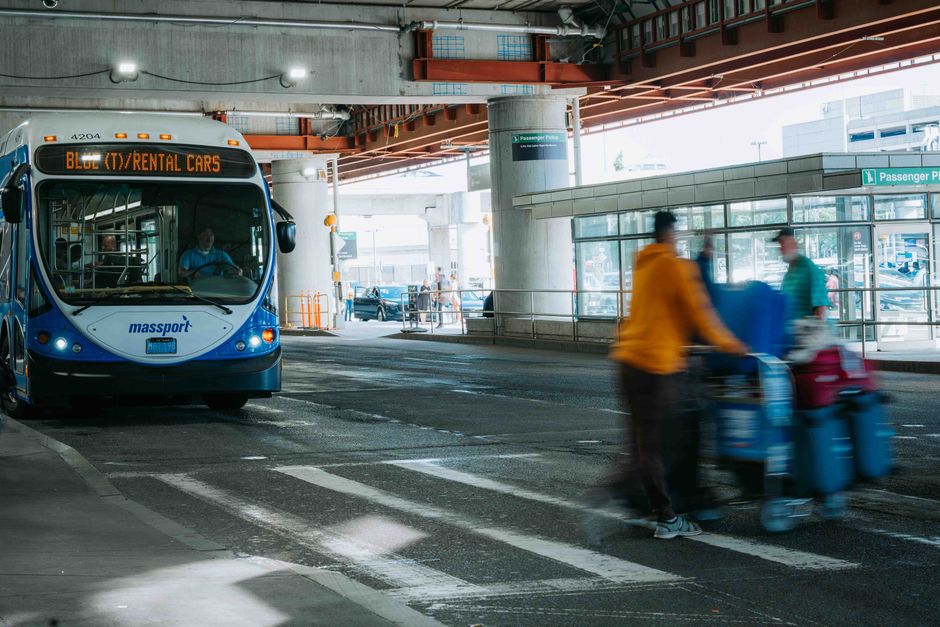
You've just landed at Dublin Airport after a six-hour delay, your bag is the last one off the belt, and the car rental queue stretches back to somewhere around Gate 14. Sound familiar? That queue might not exist in five years.
Autonomous shuttle trials are already running at Amsterdam Schiphol, Paris CDG, and Helsinki Airport. Small, electric, driverless pods ferrying passengers between terminals, car parks, and transit hubs. No driver. No tip. No one who has clearly given up on life behind the wheel. The technology isn't coming. It's already there. The question for Irish passengers is: when does it get here, and what does it actually look like when it does?
What's Already Happening in Europe
The trials worth watching are happening right now. At Schiphol, Navya Arma shuttles have been running on fixed campus routes since 2016, and the newer iterations are smarter, faster, and handle Dutch weather without complaint. At Helsinki, the Gacha shuttle completed multi-year urban tests before expanding to controlled airport zones. At Paris, EasyMile EZ10 pods operate airside transfer routes that used to require a bus and a driver.
These aren't prototypes in the science fiction sense. They're Level 4 autonomous vehicles, meaning they drive themselves on defined routes with no human override needed. They're geo-fenced, which keeps them on mapped paths. They top out around 25 km/h. They're not going to win any drag races, but neither is the shuttle bus at Terminal 2 that leaves when it feels like it.
The bigger development is how airports are actually integrating these vehicles into ground transport strategy rather than just parking them near a press photographer. That shift matters, because it's the difference between a novelty and an actual transport layer.
What Dublin and Cork Are Working With
Dublin Airport handled over 32 million passengers in 2023. Cork is smaller but growing, particularly with the expansion of transatlantic routes. Both face the same landside chaos that every busy European airport does: traffic stacking on the M50 spur, kerb congestion at set-down zones, car parks that fill before you've even cleared customs.
Dublin Airport has already invested in pantograph charging infrastructure for its electric bus fleet, which tells you something about the direction daa is heading. The groundwork for electrified, automated ground transport is being laid now. The autonomous layer comes next.
Cork Airport's compact footprint actually makes it better suited to early autonomous shuttle deployment. Short, predictable routes. Controlled environment. Less scope for the kind of chaotic pedestrian behaviour that trips up autonomous systems in city centres. If one Irish airport runs a serious autonomous shuttle pilot before 2030, Cork is the better bet.
What "Airport Transfer" Actually Means in This Context
It helps to think in categories, because "autonomous airport transfer" could mean several different things.
Airside shuttles. Passenger transfer between terminals or remote stands. This is where the tech is most mature, because the environment is closed, mapped, and controlled. Pedestrians are largely predictable. No cyclists. No school runs. These could realistically operate at Dublin within three to four years.
Car park to terminal links. Fixed route, low speed, high frequency. This is the replacement for the current shuttle bus that runs every eight minutes and always seems to leave just as you reach the stop. Fully autonomous versions of this are operating at several European airports already.
Kerb to hotel or rental village. This is harder. It involves public roads, pedestrians who are tired and distracted, drop-off zones with no logic, and Irish weather. Realistically, this is a 2030 proposition at the earliest for Irish airports, possibly later depending on how the RSA and NTA approach regulatory frameworks for autonomous vehicles on public roads.
City centre transfers. A driverless shuttle running between Dublin Airport and Connolly or Heuston? Possible in theory. But Irish roads, mixed traffic, and the regulatory gap between what's permitted on a closed campus and what's permitted on the N1 make this the furthest out. Think decade, not five years.
The Rental Car Question
Here's the thing about the rental car queue. Part of why it exists is because there's no compelling alternative for anyone who needs flexibility at the other end. Taxis are expensive. Buses don't always go where you're going. Trains are improving but patchy.
Autonomous shuttles don't immediately fix that, because they operate on fixed routes. They won't drop you outside your cousin's house in Tipperary. But they do change the landside equation enough to reduce car rental demand for certain trip types, particularly for business travellers staying within the airport cluster or tourists based in Dublin city who don't need a car at all.
The autonomous vehicle industry has also been watching the insurance implications closely, and Irish insurers are going to be central to how quickly any autonomous passenger service can scale. Liability frameworks are still being written across Europe. Ireland will need its own clear answers before any public-road autonomous shuttle gets a commercial green light.
The Honest Five-Year Picture
By 2030, a realistic Irish airport autonomous vehicle landscape looks something like this.
Airside terminal transfers at Dublin: probable, if daa pursues it. Car park shuttles: very likely, possibly at both Dublin and Cork. Public road autonomous transfers from airport to city: unlikely to be commercial. Rental cars still existing: absolutely, yes.
The five-year horizon is about replacing specific, low-complexity links in the ground transport chain. The chauffeur-to-your-door fantasy is further off than the hype suggests, and anyone selling you otherwise is working in marketing. But the difference between a controlled campus shuttle and nothing is still significant. Thirty-two million passengers a year means even a modest shift in how people move within an airport campus has a real impact on congestion, emissions, and the queue that currently starts somewhere near Gate 14.
That queue might not disappear by 2030. But it might just get shorter.