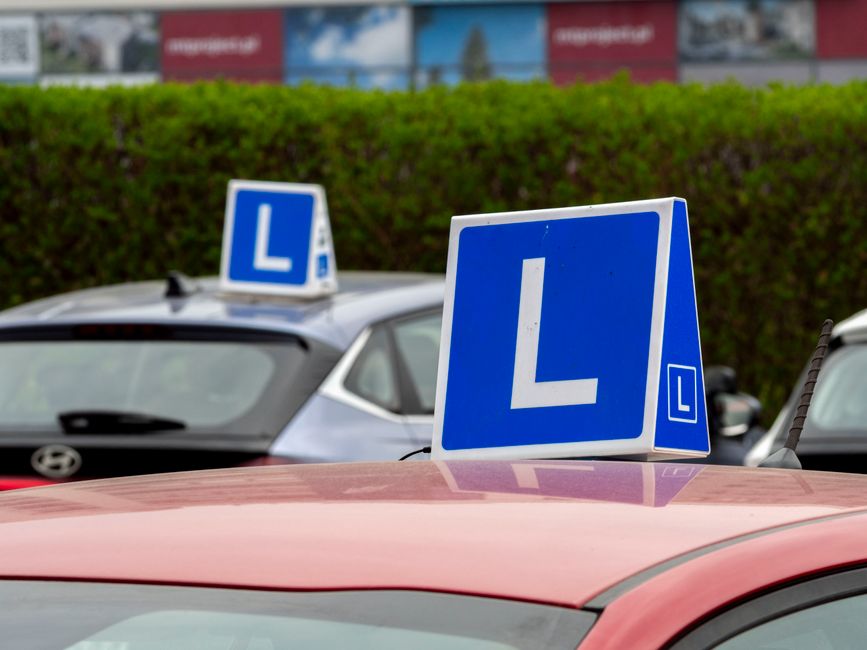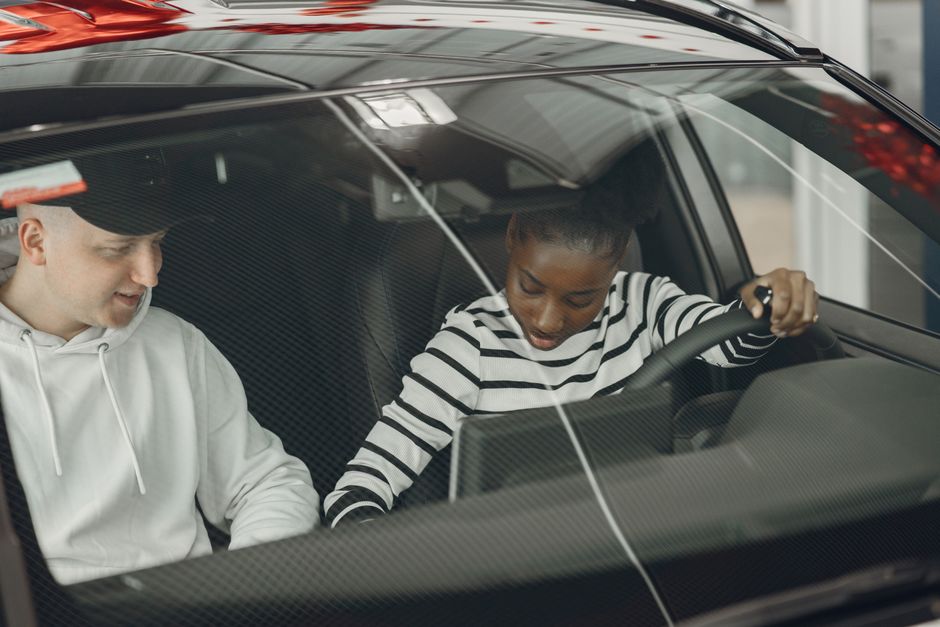
Your first lesson is on a 2009 Volkswagen Polo with a biting point somewhere around the knee of God. You stall it twice at the test centre entrance. The examiner makes a note. Welcome to learning to drive in Ireland.
That experience has been the default for decades. Manual car, clutch pedal, the whole drama. But the cars Irish people actually buy in 2025 tell a different story. New car registrations show that automatics, hybrids, and full EVs now account for the majority of vehicles rolling off forecourts. None of them have a clutch pedal. So why are so many learners still grinding gears on vehicles that represent a shrinking slice of what they'll actually drive for the rest of their lives?
It's a fair question. And the answer is more complicated than the driving school brochure lets on.
What the Test Actually Measures
Here's something the Irish driving test does that surprises a lot of people. If you pass in an automatic, your licence is restricted to automatics. Pass in a manual, you can drive either. That rule shapes almost everything about how learners and instructors approach the transmission question.
The RSA's own position is effectively neutral on which you learn in. Pass the test, demonstrate the competencies, job done. But the licence restriction is the practical hand on the scale. Most learners choose manual because it keeps options open. Instructors tend to recommend it for the same reason. And so the 2009 Polo with its brutal clutch stays in rotation.
What examiners actually care about is control, observation, and decision-making. Not whether you can heel-and-toe on a downhill. The transmission is background noise to them, not the performance.
The Cognitive Load Argument
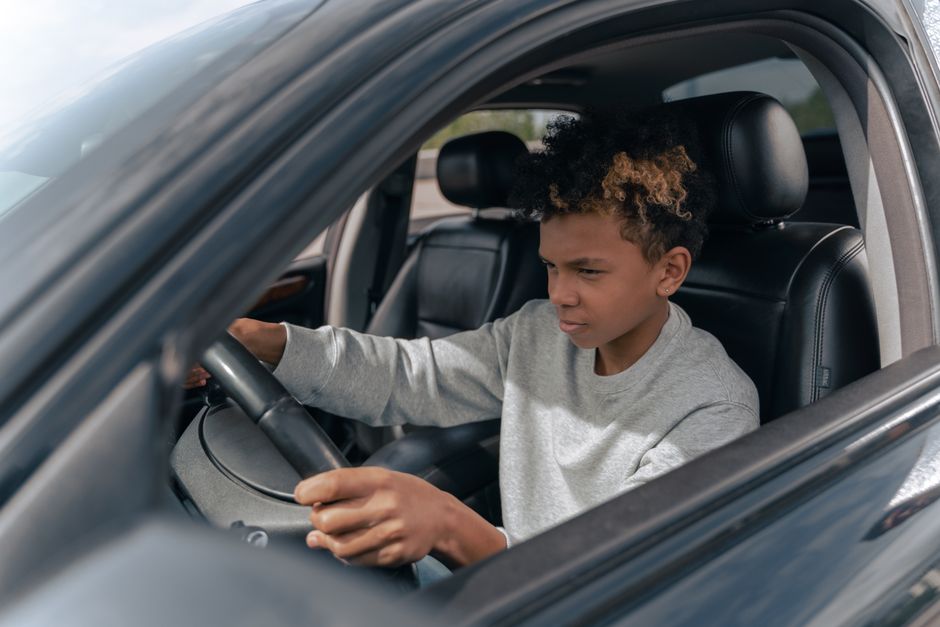
This is where it gets interesting. Learning to drive asks your brain to do several things at once that it has never done before. Spatial awareness. Observation. Road positioning. Speed management. Traffic anticipation. Throw in manual gear changes and clutch management and you've added a full sub-routine to an already overloaded system.
Learning to drive in an automatic car removes that sub-routine entirely. Which means attention goes where it arguably matters more: reading the road, managing junctions, not treating a roundabout as optional. Several driving instructors have made this point in recent years, and the logic holds. A learner who isn't panicking about stalling at traffic lights is a learner who can actually think about the junction.
The counter-argument is that manual driving builds deeper mechanical awareness. That understanding the relationship between engine revs and vehicle speed makes you a more complete driver. There's some truth in that. But it assumes the learner gets enough practice to reach the point where gear changes become automatic themselves, which many don't before their test date.
What the Market Is Actually Doing
New car sales in Ireland have shifted decisively. Fully electric vehicles and hybrids are not niche anymore. They are the product most mainstream manufacturers are pushing hardest. A 2024 Hyundai Tucson. A Toyota Corolla. A Skoda Enyaq. All automatic. All the kind of cars a new driver in their twenties might realistically end up owning or financing within five years of passing their test.
The new electric cars launching in Ireland this year include essentially nothing with a traditional manual gearbox. The used car market still has plenty of manuals, no question. But the trend line is clear and it only goes one direction.
This matters for learners because the practical case for manual is eroding. "Keep your options open" is sensible advice when manual cars are everywhere. It's less compelling when someone who passes in a manual still spends their first five years of driving in an automatic company car or a hybrid they leased.
So Who Should Actually Learn in an Automatic?
Be honest about your situation. Here's a rough breakdown.
Learn in an automatic if: You find the clutch genuinely overwhelming and it's eating into lesson time that could be spent on road skills. You know your first car will be electric or hybrid. You have a specific timeline and need to pass efficiently. You're an older learner returning after a gap, and the physical coordination is adding stress you don't need.
Learn in a manual if: You want maximum licence flexibility and you're prepared to put in the extra practice hours. You'll be driving older vehicles regularly, whether for work, borrowed cars, or a used car budget under €10,000. You have the time and the right instructor.
Neither answer is wrong. The honest issue is that the Irish driving school ecosystem still defaults to manual without having this conversation explicitly with every learner. A lot of people are learning on a transmission they'll never use again, and stalling their way through junctions they'd have handled fine in an automatic.
The Examiner's Actual View
Anecdotally, experienced examiners are pragmatic about this. They're not testing your relationship with a gearbox. They're testing whether you can control a vehicle safely in traffic. An automatic learner who handles a busy Cork roundabout cleanly and checks mirrors at every opportunity will pass. A manual learner who stalls twice on the hill start because they were thinking about the clutch instead of the road will not.
The test criteria haven't changed to reflect the transmission shift in the market. But the humans running the test understand that a well-prepared automatic driver is a safer candidate than an underprepared manual one.
What Needs to Change
The licence restriction on automatic-only passes is the policy lever that nobody talks about enough. In the UK, the debate has been running for years. The argument for dropping the restriction, or at least softening it, is that it would allow learners to choose the most appropriate transmission for their actual learning needs without a career-long penalty on their licence.
The RSA hasn't moved on this. The restriction stays. Which means the manual default in Irish driving schools will persist, because instructors are doing right by their students in keeping options open.
But the conversation is worth having. Every year, more learners are sitting in manual cars learning a skill that is, slowly and undeniably, being engineered out of the vehicles they'll spend their lives in.
That 2009 Polo with its knee-of-God biting point. It's a fine car for learning patience. Whether it's still the right classroom is a different question entirely.