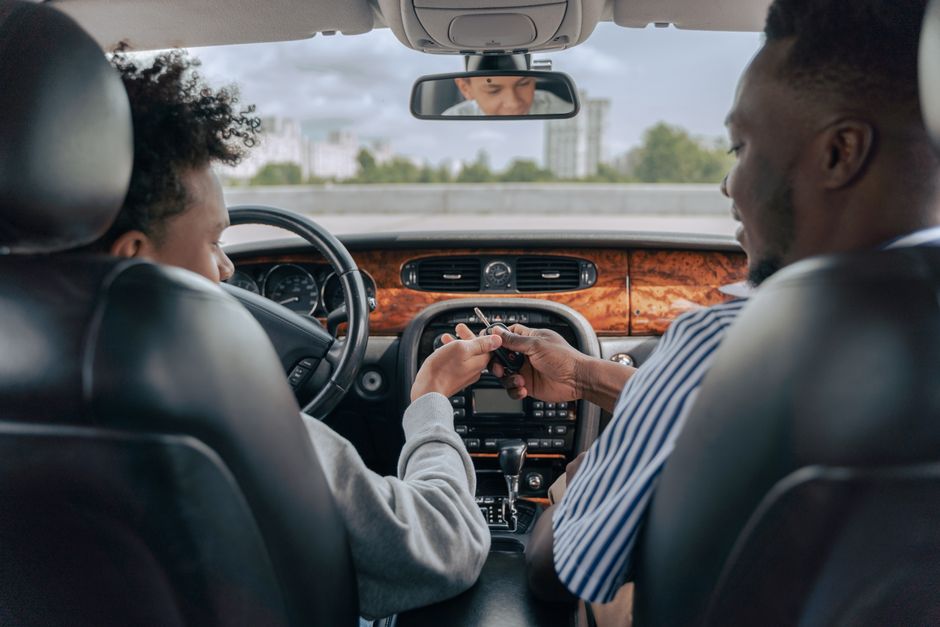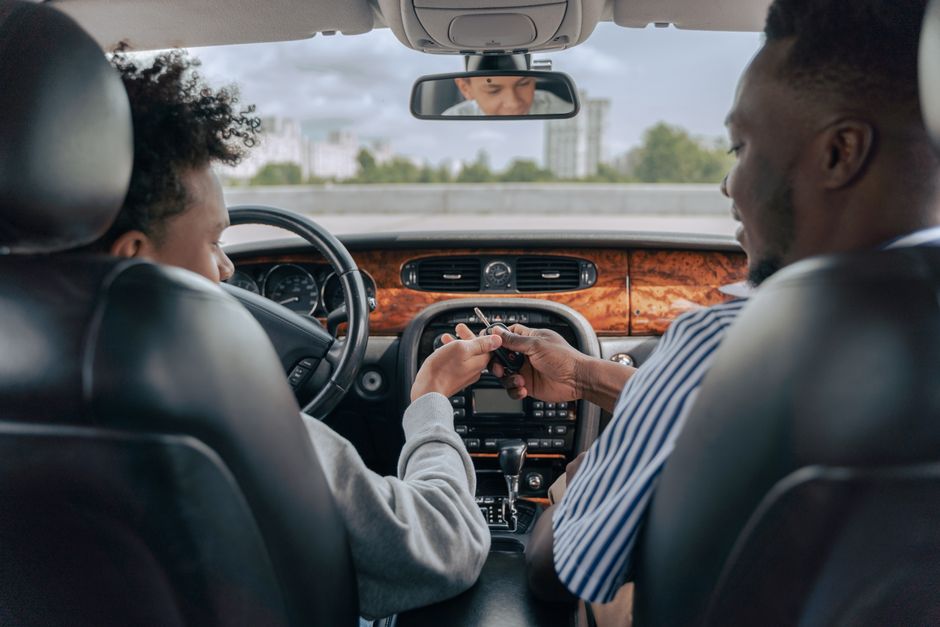
Your driving instructor learned their trade on a 2009 Volkswagen Polo with a dodgy heater and a biting point somewhere around Narnia. The car you're sitting your test in today might have autonomous emergency braking, lane assist, and a throttle response that would make that old Polo weep. Nobody has updated the lesson plan.
This isn't a dig at instructors. Most of them are skilled, patient, and deeply committed to what they do. But the gap between how driving is taught and what modern cars actually do is widening fast. Learners are walking into test centres having trained on one kind of machine and sitting the test in another. That mismatch costs pass marks. Sometimes it costs more than that.
The Car Has Changed. The Lesson Hasn't.
The standard lesson format in Ireland was built around manual transmission, analog feedback, and the assumption that if you don't brake, nothing brakes for you. That was fine in 2005. It's increasingly fiction now.
Modern test cars, even budget ones, come loaded. Autonomous emergency braking kicks in before you've processed the hazard. Lane departure warnings beep at you mid-manoeuvre. Reversing cameras give you a view your mirrors never could. And electric or hybrid vehicles have regenerative braking that slows the car when you lift off the accelerator, something that feels utterly wrong to a learner who was taught to coast before braking.
Learning to drive in 2026: how EV training should change what learners are actually taught is a question most instructors haven't been formally asked to answer. The RSA's curriculum still centres on skills that assume a purely mechanical relationship between driver and car. When the car starts making decisions, the curriculum goes quiet.
What Modern Features Actually Do to Your Test Performance
Here's where it gets practical. These are the specific ways that modern car tech catches learners off guard during their test.
Regenerative braking. In a hybrid or electric vehicle, lifting your foot off the accelerator slows the car noticeably. Learners trained on traditional cars coast into junctions or parking spots. In a modern car, that lift feels like a brake application. The car slows unevenly, the head bobs, and the examiner notes it.
Lane assist fighting your steering. Attempting a turn or a lane change in a car with active lane assist can feel like the wheel is resisting you. If your instructor never turned this feature on during lessons, you've never learned to work with it or override it cleanly. On test day, the wheel wobbles. You look uncertain. You are uncertain.
Autonomous emergency braking. AEB is brilliant at keeping people alive. It is less brilliant during a driving test when you've approached a junction at the speed your instructor drilled into you, and the car decides to intervene anyway, because the system's threshold is different from yours. That can read as a loss of control.
Throttle mapping. Electric vehicles in particular have instant torque delivery. The first time you pull out of a junction expecting gradual acceleration and get a surge instead, you understand why this needs to be practiced. Repeatedly.
Reversing cameras and parking sensors. Paradoxically, these can make learners worse. If you've trained using a camera, your mirror-check habit weakens. Examiners still want to see you check your mirrors. The camera is not a substitute in the examiner's eyes.
What Your Instructor Should Be Doing Differently
A good instructor teaches you the car you're in, not a theoretical car from the past. If yours isn't doing the following, it's worth raising.
Technology orientation at the start of every session. What safety features are active today? What will the car do without your input? A ten-minute walkthrough of the specific vehicle's active systems is not wasted lesson time. It is lesson time.
Driving with and without assist features. Practice both. Understand what the car does when lane assist is on. Know how to turn it off when you need to. Know how the braking feels with regeneration versus without. This is not advanced driving theory. It's basic familiarity with your test vehicle.
Braking in hybrids and EVs. Regenerative braking needs to be explained properly and practiced until it's instinct. If your instructor is using a hybrid or EV as a lesson car and hasn't addressed this, ask them directly. It's a fair question.
Mirror discipline in cars with parking aids. The camera is there. Use it. But the examiner wants to see your eyes go to the mirrors too. Train both habits simultaneously, not one instead of the other.
Should You Ask Your Instructor About This?
Yes. Directly and without apology. Autonomous features vs. actual driving: what learners need to know about modern car safety systems is a conversation you're entitled to have before your test, not after you've failed for wobbling through a lane change.
Ask your instructor what test car you'll be using. Ask what active safety systems are fitted. Ask if they've specifically trained on that vehicle. If they look at you blankly, that's information.
It doesn't mean you change instructor immediately. It means you supplement. YouTube walkthroughs of your specific test car's safety systems. Time sitting in the car with everything switched on before you drive anywhere. Asking the driving school if you can sit in the car for fifteen minutes at the end of a lesson without the meter running, just familiarising yourself with what the dashboard is doing.
The Instructor Side of This
This is worth saying plainly. The RSA does require approved driving instructors to maintain continuing professional development. But the specifics of what that CPD covers, and whether it keeps pace with how rapidly vehicle technology is changing, is a reasonable question to ask. Instructor training in Ireland is thorough in many respects. Whether it's moving fast enough to stay current with modern car systems is a different matter.
If you're thinking about becoming a driving instructor, this is worth factoring in. The instructors who will serve learners best over the next decade are the ones who can explain a regenerative braking curve as comfortably as they can explain a hill start.
The Bigger Picture
The driving test in Ireland was designed to assess whether you can control a vehicle safely in real traffic conditions. The vehicle in question has changed significantly. The assessment, and the training that feeds into it, is catching up slowly.
Your instructor learned to drive in a different era. That's not a flaw. But if their lessons haven't evolved to account for cars that actively intervene in your driving, you're being prepared for a test that no longer entirely matches the machine you're sitting in.
The old Polo with the dodgy heater asked nothing of you except to drive it. The car in today's test centre has opinions. Make sure you've met before the examiner gets in.