Your neighbour just sold the Nissan Leaf. Bought a plug-in hybrid instead. You thought they'd gone backwards. They haven't.
The idea that full electrification is the only sensible destination has taken a knock lately, and not from petrolheads or luddites. It's coming from practical Irish drivers who've done the sums, checked the charging map for their part of the country, and quietly concluded that a PHEV with serious electric range fits their life better than a pure EV right now. With new models like Volvo's extended-range plug-in hybrid offering close to 200km of zero-emission driving, the conversation has shifted. This isn't about going backwards. It's about finding what actually works.
The Weather Argument Is Real, Not an Excuse
Irish winters don't care about your battery chemistry. Cold temperatures cut EV range, and that's not scaremongering. It's physics. Electric vehicles and winter driving is a topic that catches new EV owners off guard, particularly those who bought on the basis of a summer test drive and then faced a January commute across the midlands with the heating on full.
A pure EV rated at 400km of range might realistically deliver 280km on a cold, wet February morning. That's still fine for most urban commuters. But for someone driving from Roscommon to Galway and back, or pulling a rural school run across bad roads in the dark, that margin shrinks fast. A PHEV with 200km of electric range operates on a different logic. You cover your daily electric miles. When the range runs out, the petrol engine takes over. No drama. No recalculating. No detour to a broken rapid charger in a retail park.
The Charging Infrastructure Gap
Dublin is not Ireland. This sounds obvious until you look at where fast chargers actually are. The ESB and other networks have improved things considerably, but coverage in rural counties remains uneven, and reliability is still a legitimate concern. A driver in Leitrim or West Clare doesn't have the same access to a dependable charging network as someone in Sandyford. Expecting them to commit fully to a pure EV right now is asking a lot.
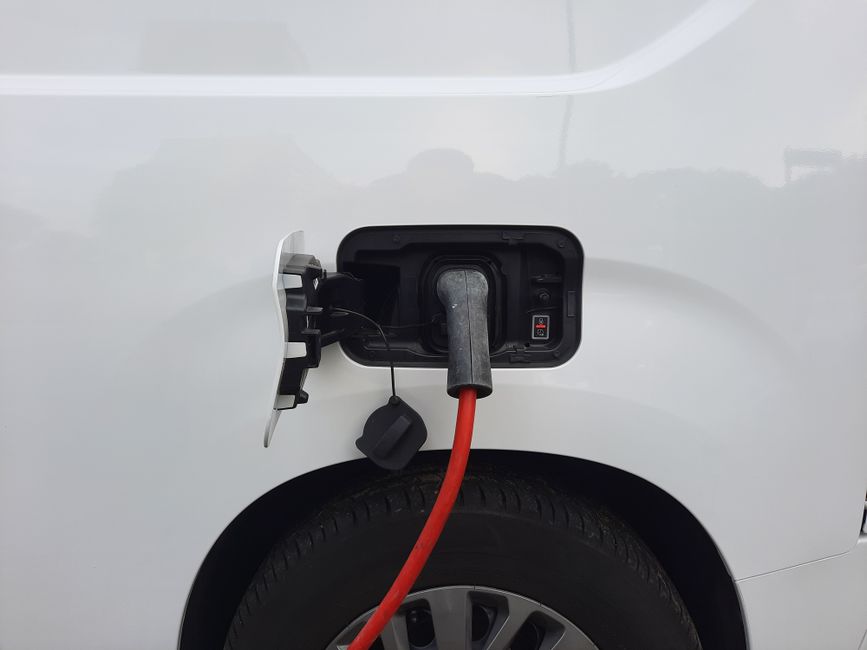
PHEVs sidestep this entirely. You charge at home overnight on a standard socket or a home wallbox. You drive electrically. If the grid fails you, the petrol tank is right there. It's not an elegant solution. It's a sensible one.
What 200km of Electric Range Actually Changes
Earlier PHEVs were easy to dismiss. A 2018 Mitsubishi Outlander PHEV gave you roughly 45km of electric range, which meant the petrol engine was running more often than not for most commutes. The tax benefits were real, but the environmental and running cost benefits were modest if you weren't religious about charging.
200km changes the calculus completely. The average Irish commute, according to CSO data, is around 26km each way. Even allowing for detours, the school run, a stop at the shop in Dunnes, most Irish commuters would run almost entirely on electricity with a 200km PHEV. The petrol engine becomes the emergency option, not the default. That's a fundamentally different vehicle from the short-range hybrids that gave PHEVs a complicated reputation.
The Tax and VRT Angle
Irish buyers are rightly obsessed with the real cost of ownership, not just the sticker price. PHEVs with low CO2 emissions sit in favourable motor tax bands, and the VRT relief available on lower-emission vehicles can take a meaningful chunk off the purchase price. Long-range PHEVs increasingly hit the same low-emission thresholds as pure EVs, while still carrying a lower retail price in many cases.
The SEAI grant structure is another factor. Full EVs get the maximum grant. PHEVs get less. But if the purchase price of a well-specified PHEV after grant is still a few thousand below a comparable EV, the total cost of ownership starts looking interesting, especially when you factor in lower servicing complexity compared to some pure electric platforms.
Who the PHEV Sweet Spot Actually Fits
Be honest about your situation. The 200km PHEV makes most sense if you tick most of these boxes.
Your daily commute is under 100km. You have somewhere to charge at home, a driveway, a garage, even a standard socket you can run a cable to overnight. You make occasional longer trips, more than once a month, where range unpredictability would cause genuine stress. You live somewhere that fast charger access is limited or unreliable. You're not ready to commit fully to an EV but want to cut your fuel costs and emissions substantially right now.
If you tick four or five of those, a long-range PHEV is worth serious consideration. If you live in a city, charge easily at work or home, and rarely leave urban areas, a pure EV probably still wins. The point is that neither answer fits everyone.
The Models Worth Watching
Volvo's extended-range PHEV technology represents the current high watermark for electric-only range in a plug-in hybrid. Close to 200km on a charge, in a package that still has a petrol engine for when you need it. BMW's X5 and 3 Series plug-in variants have long offered strong electric range in the 80 to 100km bracket. Stellantis group cars across the Peugeot, Citroën, and Vauxhall ranges offer more affordable PHEV entry points. And Jeep's 4xe technology has shown that even off-road-leaning vehicles can deliver compelling PHEV credentials, as tested on the Irish west coast.
The gap between PHEVs and pure EVs, in terms of real-world usability for Irish drivers, is narrowing from both sides. EVs are getting cheaper and the charging network is getting better, slowly. PHEVs are getting longer electric ranges and smarter energy management. For a specific chunk of Irish drivers, the PHEV has crossed a threshold where it's no longer a compromise. It's the right tool.
Your neighbour who sold the Leaf? They're not going backwards. They're just being honest about where the charging map ends and the bog road begins.