You reach for the fan speed. You get a sub-menu. You reach for the sub-menu. The car drifts. Sound familiar?
That is not a minor inconvenience. That is a design failure dressed up as innovation. And after years of glossy touchscreens eating dashboards whole, drivers are finally saying it out loud, and carmakers are finally flinching.
The Numbers Are In and They're Not Pretty
A survey by Thatcham Research found that two-thirds of UK motorists prefer physical controls over touchscreens for common functions. Volume. Temperature. Wipers. The things you need without looking down. That figure tracks with what Irish buyers have been grumbling about on forecourts for the best part of a decade, often quietly, because the cars still looked good on the brochure.
The frustration is not with screens themselves. Screens are fine for navigation, media, and settings you adjust once and forget. The problem is when carmakers use a single touchscreen to swallow every function in the cabin, including the ones you need at 100km/h on the M50 in the lashing rain. That is when "minimalist interior" becomes a road safety issue.
Why Carmakers Went Screen-First in the First Place
It was not purely aesthetic, though that played a part. Screens are cheaper to produce at scale than a bank of physical switches. One large display costs less to manufacture and install than twenty individual buttons with their wiring, backlighting, and mechanical tolerances. It also made interiors look futuristic at a time when EV brands were trying to signal that cars had become something new entirely.
Tesla set the template. One screen, almost nothing else. It worked for Tesla because the brand sold the interface as a feature. Then every other brand copied the principle without necessarily having the software to back it up. Laggy touchscreens. Menus buried four taps deep. Haptic feedback that tells you nothing. Some systems require you to navigate away from your maps to adjust the heated seat. That is not progress. That is theatre.
What Irish Buyers Are Actually Saying
Talk to any dealer doing test drives and you will hear the same pattern. Buyers in their 30s and 40s clock the touchscreen layout and ask immediately where the volume knob is. Buyers older than that sometimes walk. Younger buyers, raised on smartphones, adapt faster but still complain about distraction.
The issue cuts across budgets too. It is not just a premium car problem. Budget family SUVs now routinely drop physical climate controls in favour of touch-sensitive panels that require you to look directly at them to use. The hidden costs of buying an SUV in Ireland rarely mention the cognitive tax of an interface that works against you on a wet Tuesday in Naas, but maybe they should.
The Safety Argument That's Hard to Dismiss
The Road Safety Authority has consistently flagged distracted driving as a key factor in Irish road collisions. Most of that conversation centres on phones. But a confusing in-car interface creates the same problem: your eyes off the road, your attention split, your reaction time compromised.
Swedish researchers at Chalmers University tested drivers across a range of car infotainment systems and found that some touchscreen-heavy setups took drivers up to 40 seconds to complete basic tasks. At 110km/h, 40 seconds covers over a kilometre. That is not a software update fix. That is a fundamental design problem.
Physical controls have muscle memory. You reach for the same knob in the same spot every time, without looking. It takes roughly a week to learn a car's physical layout. Touchscreens require active attention every single time, regardless of how long you have owned the car.
Who's Actually Listening
Some brands have started rowing back, and it is worth naming them.
Volkswagen took a kicking over the touch-sensitive climate controls in the Golf 8. The Golf 8.5 update brought back physical buttons. Not because VW suddenly developed a conscience about ergonomics, but because the feedback from owners was relentless.
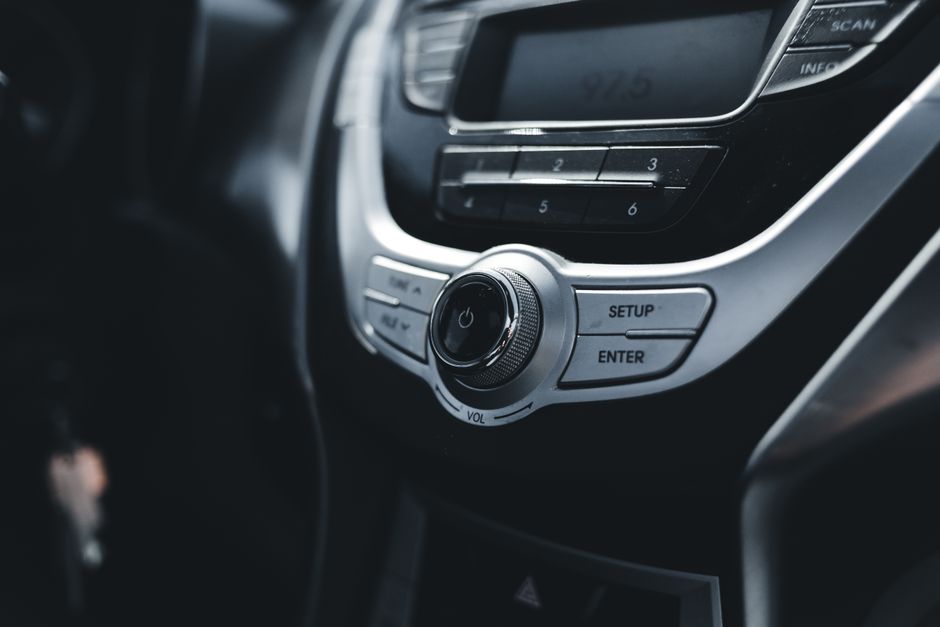
Hyundai and Kia have held a physical volume knob and kept climate controls tactile across most of their range. They have gained credit for it, and their interiors routinely outscore rivals in owner satisfaction surveys precisely because of that choice.
Mazda went the other way entirely. Their rotary controller and minimal screen approach drew scepticism at launch, then widespread praise from anyone who actually lived with the car.
Even some newer EV entrants are taking note. The received wisdom that EV interiors must ape Tesla's blank-slate aesthetic is losing its grip, partly because buyers have had time to experience what it actually means day to day.
What to Actually Look For When Buying
If you are in the market right now, this is worth spending five minutes on during your test drive.
Adjust the temperature without looking at the screen. Turn the volume up from the steering wheel or a physical knob. Activate the rear demister. If any of those tasks require you to navigate a menu, or to take your eyes off a fictional road while sitting stationary in a showroom, they will require the same on a real road in real conditions.
Also check for physical shortcut buttons to climate and audio functions. Some manufacturers split the difference well: a large screen for navigation and media, with a row of physical buttons below for the functions you touch every day. That is a reasonable compromise. A single slab of glass that does everything is not.
The Trend Is Shifting. Slowly.
Carmakers move in cycles of about five to seven years from design decision to production model. The backlash against screens has been building for three or four years now, which means the correction is arriving in showrooms roughly now and over the next two years. Expect more physical volume knobs. More dedicated climate buttons. More tactile feedback where screens have been.
It will be dressed up as a feature. "Driver-focused cockpit." "Intuitive tactile interface." Some press release will call it a bold new direction. It is not. It is the industry admitting that a knob you can find without looking is, in fact, superior to a menu you cannot.
The drivers sitting in those showrooms, reaching for a fan speed button that used to be right there, already knew that.