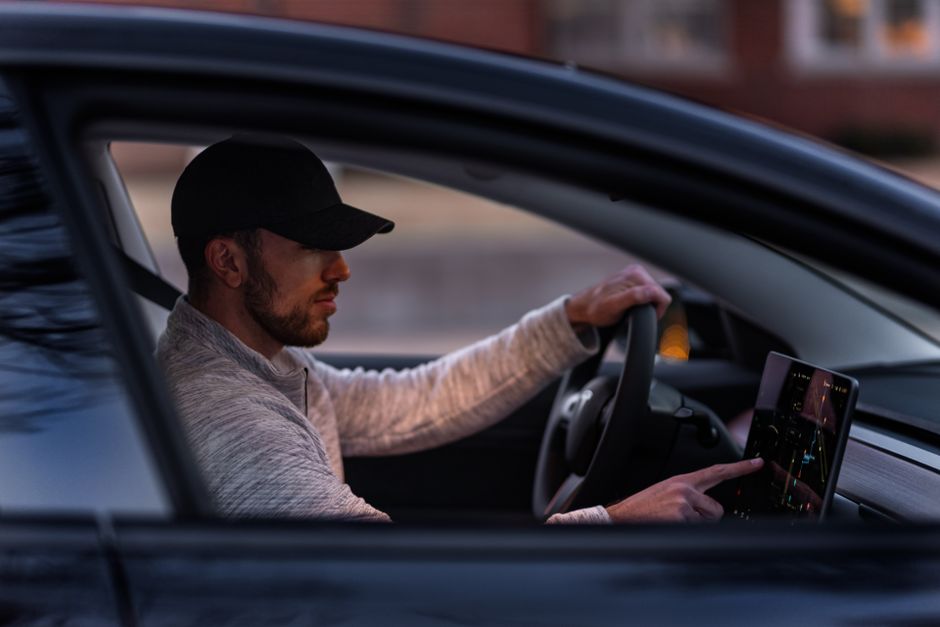
Your man pulls up in his Model Y at a petrol station in Portlaoise, hands off the wheel, and tells you the car drives itself. It doesn't. It never did. And now Tesla has finally admitted as much, at least on paper.
Tesla stopped using the "Full Self-Driving" label in Europe after regulators made clear the name was doing real damage. Not reputational damage to Tesla. Actual, on-road damage to the gap between what drivers believed the system could do and what it actually could do. The name change is recent, the confusion is not. And in Ireland, where the roads narrow fast and roundabouts appear without ceremony, that confusion matters more than most places.
What Changed and What Didn't
The rebrand is straightforward. What was sold in Europe as "Full Self-Driving" or FSD is now called "Tesla Assisted Driving." Same software. Same capability limits. Different label. Tesla made the switch under pressure from European regulators, including the EU, who have been tightening rules around how automated driving features are marketed to consumers.
The system itself combines features like Autopilot lane-keeping, automatic lane changes, traffic-aware cruise control, and a Navigate function that can handle motorway on-ramps and exits. What it cannot do is replace a driver. It cannot read an unmarked junction in Leitrim. It cannot negotiate a ford on a Clare back road. It is not, by any stretch, full autonomy. The Society of Automotive Engineers rates driving automation from Level 0 to Level 5. Tesla's current system sits at Level 2. That means the driver must remain attentive and in control at all times.
Level 2. The same level as your parking sensors. The name used to suggest Level 5. That is the entire problem.
Why the Name Mattered So Much
Language shapes behaviour behind the wheel. If a system is called "Full Self-Driving," a reasonable person might assume it fully drives itself. Studies and incident investigations across the US and Europe have found that some Tesla owners treated the system as though it did. They looked at their phones. They napped. One investigation in the US linked dozens of crashes to Autopilot-related disengagement failures.
Europe's regulators decided that the word "full" in "Full Self-Driving" was not just aspirational marketing. It was misleading in a way that created real risk. The UK's Advertising Standards Authority has already cracked down on Tesla ads that overstated Autopilot capability. The EU's incoming vehicle regulation framework includes strict rules on how Level 2 systems must be described to consumers.
For Irish drivers, this matters because Irish insurance companies are already watching how AI-powered car features affect liability. If you are involved in a collision while Assisted Driving is active and you were not paying full attention, the name on the box will not protect you. Your insurer will want to know who was in control of the vehicle.
What "Assisted Driving" Actually Means Day to Day
Here is what Tesla Assisted Driving will and will not do on an average Irish journey.
It will maintain your lane on a motorway. It will adjust speed based on the car ahead. On some roads, it will suggest lane changes and execute them if you confirm. It will brake if it detects a hazard. It will, in decent conditions on well-marked roads, feel impressively capable.
It will not handle contraflow roadworks on the M50 without you. It will not read a temporary stop sign held by a lollipop person in Athlone. It will not deal well with a sheep on the N59. It will disengage when it reaches its limits, sometimes without great warning, handing control back to you at exactly the moment you need to already have it.
The handover problem is not new. It is baked into every Level 2 system on the market. The difference with Tesla was always the name, which encouraged a level of trust the technology had not earned.
What Irish Drivers Should Actually Know
A few practical points worth having clear before you drive a Tesla on Irish roads.
You are the driver. Full stop. Assisted Driving is a tool, like cruise control or lane assist, not a replacement for attention. The RSA's guidance on driver distraction applies regardless of which features your car has active. If the car does something unexpected and you are not ready to take over, that is a problem the rebrand does not solve.
The system learns from mapped roads. Tesla uses a combination of cameras, neural processing, and mapping data. Irish roads, particularly rural ones, are not always well-represented. Country roads with faded markings, unsigned junctions, and sudden surface changes are exactly where the system will struggle and where the consequences of driver inattention are most severe.
Your insurance policy has not changed. Check your policy wording. Many standard policies in Ireland do not distinguish between human-controlled and driver-assistance-controlled events in a way that benefits the insured driver. If Assisted Driving is active during an incident, you should assume liability sits with you unless your insurer explicitly states otherwise.
The name change is not a capability upgrade. Some coverage of the rebrand has implied Tesla improved the system when it renamed it. It did not. The name changed because regulators pushed for honesty, not because the software suddenly got better.
Where Regulation Is Heading
The EU's Vehicle General Safety Regulation, which applies to new cars sold in Europe, includes requirements around driver monitoring for Level 2 systems. Manufacturers must include systems that detect when a driver is not paying attention and prompt them to re-engage. Tesla has driver monitoring via its interior camera, though owners have found ways around it and the system has been criticised for inconsistency.
The broader trajectory is toward much tighter oversight of how these systems are described, sold, and monitored. Autonomous driving technology is developing fast elsewhere, with China in particular running far ahead of Europe on real-world deployment, but Irish roads will not see anything resembling true autonomy for a long time. What we will see is more Level 2 and Level 3 systems on more cars, sold with better-regulated names and, hopefully, better-informed drivers.
The Bit That Still Needs Fixing
The name is cleaner now. "Assisted Driving" is honest in a way "Full Self-Driving" never was. But a name change without a corresponding shift in how buyers understand and use the technology is just rebranding.
The driver sitting in that Model Y outside Portlaoise still needs to know what the system can and cannot do. The sales process, the in-car onboarding, the owner's manual, all of it needs to close the gap between the marketing and the reality. Until that happens, changing the label on the tin is a start. It is not a solution.
Your man at the petrol station in Portlaoise still has his hands off the wheel. The name above the button changed. The responsibility behind the wheel didn't.