The sat-nav wants to send you straight through New Ross and on to somewhere more important. Ignore it. The Hook Peninsula is one of those places that rewards the driver who takes the turn that doesn't look like much.
It doesn't announce itself. No big brown heritage signs at the motorway. No queues of coaches. Just a narrowing road, a flattening landscape, and gradually, the sea filling up your passenger window. That's the whole pitch. And it's enough.
The Shape of the Drive
The loop is simple. You come down the R733 from Wellington Bridge or Duncannon, swing around the tip of the peninsula past the lighthouse, and work your way back up the western side. The full circuit, including stops, runs to about 45km of actual driving. Add the three main stops and a coffee and you're looking at a comfortable four hours. Push it and you can do it in three. Stretch it with a ferry crossing and it becomes something else entirely.
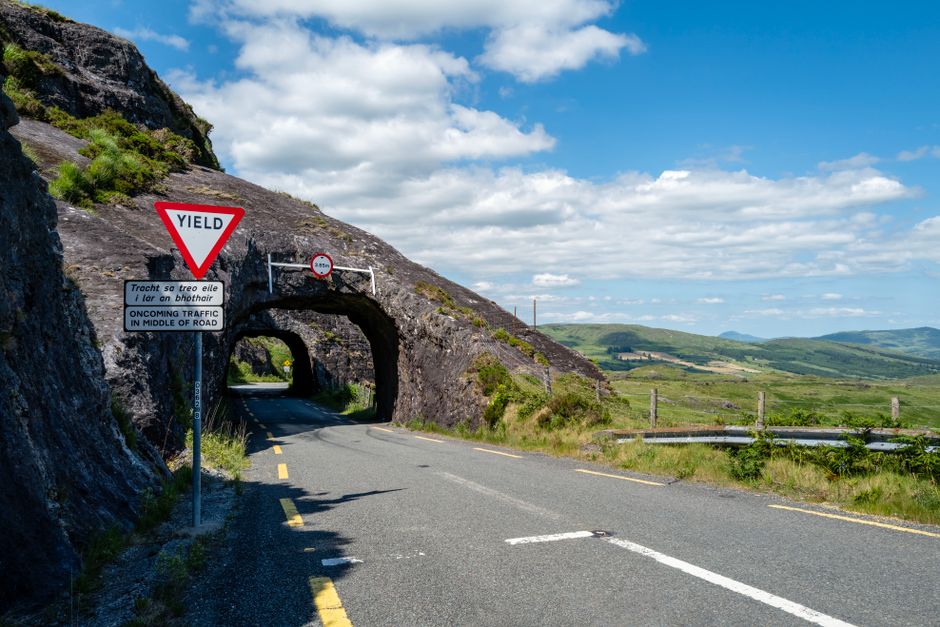
The roads are mostly fine. Narrow in places, with the occasional agricultural surprise around a bend, but nothing a standard hatchback can't handle. You don't need an SUV. A tidy 2016 Volkswagen Golf or similar will do the job without drama.
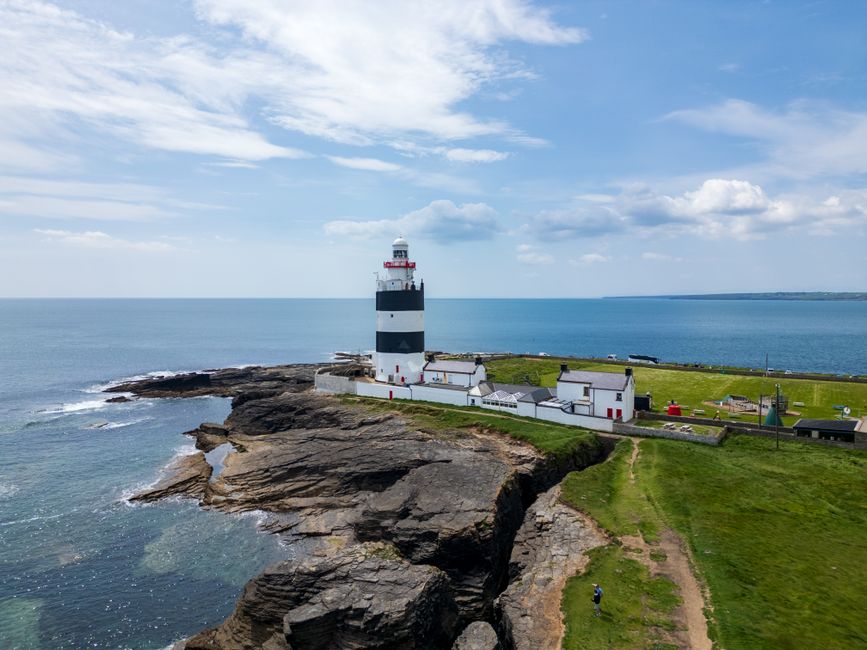
Hook Lighthouse: The Real Starting Point
Built around 1172 by William Marshal, 1st Earl of Pembroke, Hook Lighthouse is one of the oldest operational lighthouses in the world. That's not marketing copy. The tower that stands at the tip of the peninsula has been guiding ships for the better part of nine centuries, and you can climb it.
The guided tours run regularly during the day and they're worth your time. The views from the top put the whole peninsula in context. You can see back up the estuary toward Waterford, across to the Wexford coast, and out to open water. On a clear day it's genuinely stunning. On a miserable one, it's dramatic in a different way.
Park in the designated car park. Don't try to squeeze onto the access road. It doesn't go anywhere useful and you'll only have to reverse past a family from Carlow who made the same mistake ten minutes before you.
Loftus Hall: Ireland's Haunted House, Done Seriously
A few kilometres back up the eastern side of the peninsula sits Loftus Hall, and the story attached to it is exactly as strange as the building looks. A stranger arrives during a storm. Cards are played. Someone drops a card beneath the table and notices the visitor has a cloven hoof. Things deteriorate from there.
The house itself dates in its current form to the 1870s, though there's been a building on the site much longer. It's been a convent, a hotel, and now a heritage attraction and event venue. The guided ghost tours lean into the legend without embarrassing themselves about it. It's well-pitched: atmospheric without being tacky.
It suits families with older children and anyone who likes their history with a bit of theatre. Book ahead in summer. Walk-ins are possible off-season but confirm before you drive out.
Duncannon Fort: The One That Actually Earned Its Keep
Duncannon has been a fortification of one sort or another since at least the 16th century, positioned to command the entrance to Waterford Harbour. Spanish Armada survivors came ashore nearby. Cromwell's forces attacked it. It saw action during the 1798 rebellion. The fort earned its keep in a way that most heritage sites can only describe from a distance.
The star-shaped fortifications are well-preserved and the setting is quietly spectacular. The village below has a good beach and a handful of places to eat. This is where you stop for lunch, not because you planned it that way, but because by the time you've walked the fort walls you'll be ready for it.
Park in the village and walk up. The hill is short. The views from the walls over the estuary are worth the mild effort.
The Waterford Ferry: Turn the Loop Into Something More
If you've timed it right, or you're the type who likes to leave the route open, the Passage East Car Ferry crosses from Passage East in Waterford back across the estuary to Ballyhack, which sits about 6km from Duncannon on the western side of the peninsula.
The crossing takes around ten minutes. It runs year-round, more or less on demand during the day. The fare is modest and it saves you a 55km drive around through New Ross if you're heading for Waterford city or beyond.
It also just feels like a good way to end a drive. Put the car on a boat. Watch the estuary from the water. It reframes the whole landscape you've just driven through. If you're planning to continue west into Waterford, it's the obvious move. If you're looping back, it adds a detour but a worthwhile one.
For more Waterford driving inspiration, the Copper Coast Circuit picks up roughly where the ferry drops you off and takes you along the coast toward Dungarvan.
A Few Practical Notes
The peninsula has limited fuel stops. Fill up in Wexford town or Waterford before you come. There's a service station in Fethard-on-Sea but don't rely on it being open if you're out on a Sunday evening.
Food options cluster in Duncannon village and around the lighthouse. Both have cafés. Neither will win awards but both will sort you out. If you want something better, Wellington Bridge has a few options at the top of the peninsula.
Mobile signal is patchy toward the tip. Download your maps before you leave. If you're the type who needs constant connectivity, the Hook Peninsula is not going to agree with you, and that's arguably part of the appeal.
Go in spring or early autumn if you want light without crowds. July and August are fine but Loftus Hall in particular gets busy at weekends. A Tuesday in October has the whole thing almost to yourself.
Verdict
The Hook Peninsula does exactly what it promises. No wilderness drama, no white-knuckle roads, no sense that you're ticking off a bucket list. Just a compact loop of proper Irish history, a lighthouse that's been there longer than the country has had a name, and the quiet satisfaction of a drive that required actual navigating rather than motorway arithmetic.
The sat-nav still doesn't think it's worth your time. The sat-nav is wrong.