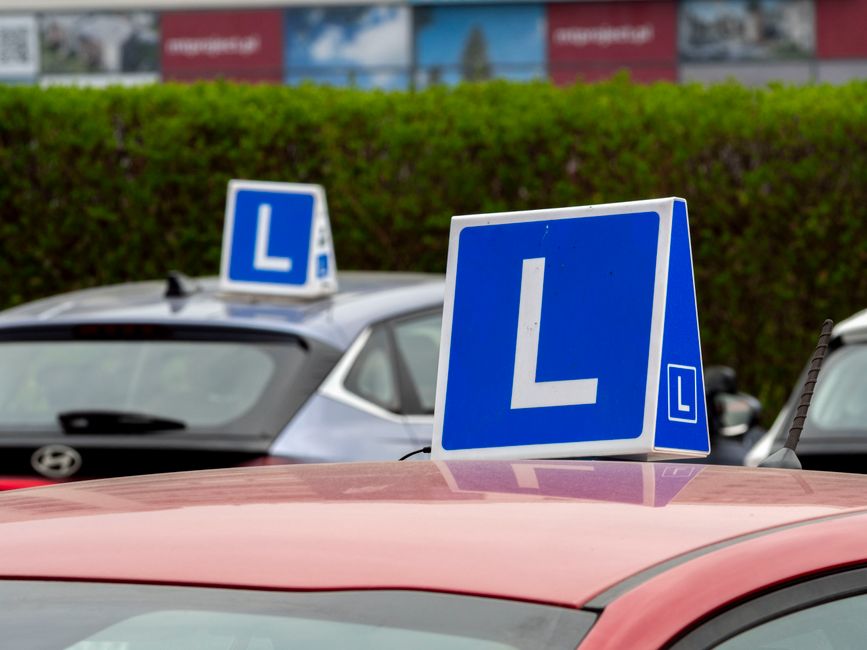
You passed your driving test. Brilliant. Now open your first insurance quote and watch the colour drain from your face.
For young drivers in Ireland, the post-test policy is where the real shock hits. Not the lessons. Not the theory test fee. The insurance. The RSA's own figures consistently show drivers under 25 are involved in a disproportionate share of serious collisions, and insurers know it. They price accordingly, and they are not subtle about it. First-year quotes of €2,500 to €4,000 for a 19-year-old on a modest car are not outliers. They are Tuesday.
But here's the thing. A lot of that cost is self-inflicted. Not because young drivers are reckless with cars, but because they are reckless with paperwork. The mistakes happen before the policy is even signed. And they compound every year you let them sit.
Mistake One: Treating Your Learner Policy as a Head Start
A lot of new drivers assume their time insured as a learner counts for something when they go full licence. It does not. Not automatically. If you were named on a parent's policy as a learner driver, that time builds no named driver experience in your own right. It evaporates the moment you need your own policy.
What you should do instead: check whether your time as a named driver on a policy (not a learner addition) was recorded properly. Some insurers will recognise named driver experience when quoting. It is not guaranteed, but it is worth asking every single broker you speak to.
Mistake Two: Going Straight to a Comparison Site and Stopping There
Comparison sites are fine as a starting point. They are a terrible ending point. They do not carry every insurer. They do not reflect your specific circumstances. And they are built to get you clicking, not to get you the best deal.
Young drivers who actually beat the premium spike tend to do the same thing: they ring brokers directly, they ask about schemes that do not appear online, and they ask the awkward questions. Things like whether a telematics-based policy would be cheaper. Whether adding an experienced named driver drops the premium. Whether paying monthly is costing them 15 percent more than annual. These conversations happen on the phone, not in a comparison widget.
Mistake Three: Picking the Wrong Car First
This one stings because people fall in love with the car before they think about the insurance group. A 2015 Ford Focus 1.6 diesel with 140,000km on it can look like a bargain at €4,500. Then the insurance quote comes in at €3,800 and the maths falls apart.
Engine size matters enormously for young driver premiums. A 1.0 litre or 1.2 litre petrol engine will almost always attract a lower premium than a 1.6 or 2.0. Security features matter. Modification history matters. Insurers check, and anything that makes the car a higher theft risk or a higher repair cost pushes the premium up.
Before you buy anything, ring your insurer with the registration number and ask for an indicative quote. Takes five minutes. Saves hundreds.
Mistake Four: Ignoring Telematics Policies
Black box insurance, or telematics, gets dismissed by a lot of young drivers as invasive or restrictive. That reaction is understandable and also expensive. For a careful driver, a telematics policy can cut annual premiums by 20 to 40 percent compared with a standard policy. Some providers reduce your premium mid-term if your score is strong.
The trade-off is real. Your speed, braking, acceleration, and the times you drive are monitored. Late-night driving typically scores poorly. If you are doing motorway runs at 2am regularly, it will cost you. If you are doing school runs and commutes in daylight, it may be the single most effective financial decision you make in your first year.
Mistake Five: Not Declaring Everything (Correctly)
Non-disclosure is not a shortcut. It is a policy that pays out nothing when you actually need it.
Points on your licence. Penalty points on a parent's licence, if they are named on the policy. Previous claims. Previous refusals from other insurers. All of it gets declared. All of it. Insurers share data. They check Motor Insurers Bureau records. Getting caught out at claims stage means the policy is voided, which means you are personally liable for every euro of damage. That is not a fine. That is potentially life-altering debt.
Declare everything. Then find the insurer who prices it most fairly.
The Policies That Actually Offer Value Right Now
A few specific structures consistently outperform the standard market for young Irish drivers.
Telematics products from insurers like AXA and Aviva. Both offer black-box products in the Irish market. AXA's YouDrive product has been around long enough to have a track record. Worth a direct call.
Adding a parent as a named driver. If a parent with 20 years of no-claims adds themselves to your policy as a named driver (not the main driver, which is fronting and illegal), it reduces the insurer's risk profile. The premium drops. Sometimes significantly. This is legal. Fronting, where the parent pretends to be the main driver, is fraud. Know the difference.
Annual payment over monthly instalments. Monthly payment plans carry interest rates that can add 10 to 20 percent to your total annual cost. If you can borrow the lump sum from a family member and pay it back monthly yourself, you cut out the insurer's finance charge entirely.
Third party fire and theft on older, lower-value cars. Comprehensive cover on a car worth €3,000 rarely makes financial sense. If the car is written off, the payout is capped at market value anyway. Third party fire and theft is significantly cheaper and covers the main catastrophic risks.
One Thing Worth Doing Before You Even Sit the Test
If you have not passed yet, understanding what you are walking into on the insurance side before you get your full licence gives you a real advantage. Most learners do not think about it until they are standing in a car dealership with a policy quote that kills the deal.
The drivers who pay the least in year one are rarely the luckiest. They are the ones who treated insurance like something worth researching before they needed it, not after the test centre handed them a result slip and wished them luck.
The quote that lands in your inbox on day one does not have to be the one you pay. It is an opening position. Negotiate accordingly.