Derek Tohill just won his third British Rallycross Championship. You almost certainly heard nothing about it.
Not a line in the sports pages. Not a clip on the six o'clock news. Not even a cursory mention wedged between the GAA results and a Leinster rugby preview. Ireland produced a three-time British motorsport champion and the national media looked the other way completely.
What Derek Tohill Actually Does
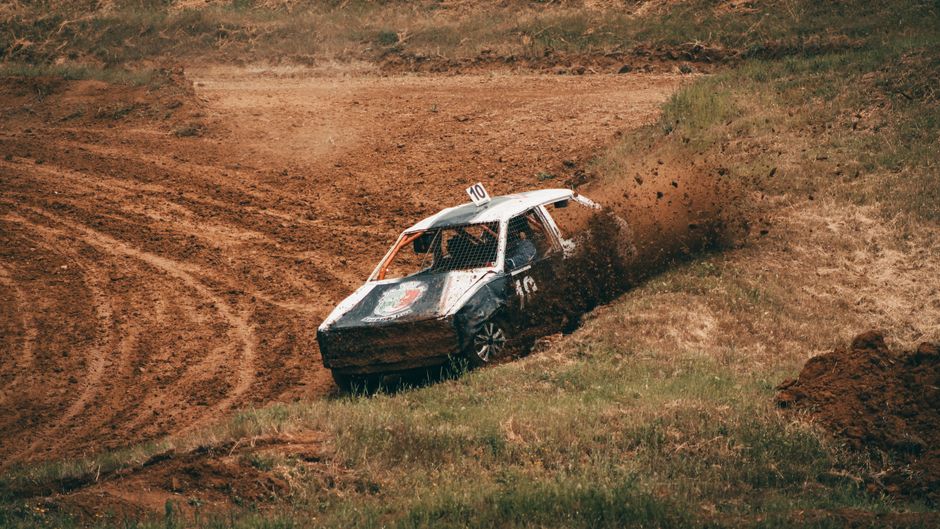
Rallycross is not for the faint-hearted. You take a circuit track, rip chunks of it up, replace sections with loose gravel and dirt, then send modified cars around it wheel-to-wheel from a standing start. First corner contact is not the exception. It is basically the entry fee.
Tohill competes in the Supercar class, the top tier of British Rallycross. These cars produce somewhere north of 600 horsepower. They hit 100km/h in under two seconds. They are not road cars with a bit extra done to them. They are purpose-built monsters, and your man from County Antrim drives one better than almost anyone else in Britain.
Three titles. Not one, not two. Three. In a championship where the grid includes professional drivers with factory backing and teams that have been doing this for decades.
Why Irish Media Is Missing This
Here is a theory. Irish sports media covers what Irish sports fans already know about. GAA has its own gravitational pull, hurling and football taking up most of the available oxygen. Soccer and rugby get the scraps. Motorsport, unless it involves a name already in the mainstream, simply does not exist.
The result is a feedback loop. No coverage means no public awareness. No public awareness means no audience for coverage. No audience means no coverage. Repeat until the driver in question has retired and someone writes a retrospective about how we never appreciated them.
Tohill is not a fringe figure trying to break through. He is already through. He already won. Three times over. The gap is not in his results, it is in the column inches.
It is not as if Irish motorsport lacks compelling stories either. Leah McManus won the UK Rallycross title at 18, which generated some coverage, briefly. Nicole Drought has been chasing championship glory in the Iberian Supercars series. The Billy Coleman Award has been producing serious young rally talent for years. These stories exist. The will to tell them, consistently, is what does not.
What Rallycross Actually Demands
People who have never watched rallycross assume it is a lesser version of proper rally. It is not. It is a completely different discipline.
Road rally is about you against the clock, against a stage, against the conditions. Rallycross is you against seven other drivers in real time, all of them launching off the same grid, all of them wanting the same piece of tarmac at the first corner. The tactical element is fierce. When to take your joker lap (a mandatory detour that slows you down but can be used strategically), when to defend position, when to take risk on the dirt sections. It is chess at 200km/h with the occasional body panel exchange thrown in.
Tohill has mastered all of it. Three titles is not luck. It is consistency across seasons, across different car setups, across changing grids and changing regulations.
The Broader Problem With Irish Motorsport Recognition
Ireland has a long, genuine relationship with motorsport. The Mondello Park circuit has been running since 1968. The Galway International Rally draws serious entries. The Donegal International Rally is one of the most iconic events on the Irish tarmac calendar. The talent pipeline exists, it always has.
What does not exist is a coherent national conversation about that talent once it goes abroad and succeeds.
Part of this is structural. British motorsport championships, by their nature, do not generate much coverage in Irish media even when Irish drivers are starring in them. The sport sits in a gap between Irish domestic coverage (which follows Irish venues and Irish championships) and the kind of international coverage reserved for Formula 1 or Le Mans. Rallycross falls into neither category and so falls through entirely.
Part of it is also resources. Sports desks are thin. Motorsport correspondents are almost nonexistent at the major outlets. The stories that do get told tend to be the ones that land in editors' inboxes from established PR operations. Independent rallycross teams operating in Britain are not typically running polished media operations aimed at the Irish press.
Why This Should Annoy You
If a Tipperary hurler won three All-Britain titles in his sport, whatever that sport happened to be, there would be a homecoming. There would be a documentary proposal somewhere. The county board would put out a statement.
A man wins three British Rallycross titles, one of the most demanding disciplines in motorsport, and crickets.
The frustrating part is that rallycross is exactly the kind of sport that plays well on camera. Short races. Close contact. Dirt and sparks and actual drama. It is far more accessible to a casual viewer than a rally stage where you are watching a car disappear into a forest for three minutes. Yet Irish television has never, to any meaningful extent, tried to tell these stories to a domestic audience that might genuinely respond to them.
Meanwhile, Nicole Drought's championship fight in Spain was generating real drama abroad with minimal attention at home. The pattern holds. Win internationally, stay invisible nationally.
What Would Actually Help
More than anything, consistency would help. Not a one-off profile when someone wins a third title, but regular coverage that builds an audience over time. Tell the story at the start of a season. Check in mid-season. Report the results. Build familiarity with the name so that when the title comes, readers already care.
Irish motorsport organisations can do more too. The sport needs advocates making noise domestically, not just at race weekends. Social media has lowered the barrier to entry for that kind of storytelling enormously, and some drivers are using it well. But a clip on Instagram is not a substitute for the legitimacy that mainstream coverage still confers.
Tohill has done the hard part. Repeatedly. He went to Britain, competed at the top level of a serious championship, and won. Three times. That is the whole job.
The least the rest of us can do is notice.