Your car sailed through summer. The NCT is current. You swapped the tyres last October and you're feeling fairly smug about the whole thing. Then November arrives, the temperature drops to three degrees on the M7 at half seven in the morning, and you're on the hard shoulder wondering why nobody told you about the battery.
Somebody is telling you now.
Irish garages report a consistent spike in breakdown callouts through November, and the pattern is remarkably predictable. It's rarely the tyres. Those get the press, the roadside banners, the radio ads. What actually catches people out is the stuff they haven't thought about since the previous winter, or ever.
The Battery: First on Every Mechanic's List
A car battery has a typical lifespan of four to five years. After that, it's on borrowed time. Cold mornings are when weakened batteries finally give up, because a battery loses roughly 35% of its starting power at zero degrees compared to a warm day. That 2018 Skoda Octavia with the original battery is a ticking clock.
The fix is simple. Any garage can load-test a battery in ten minutes. If it's struggling to hold charge, replace it before November, not after a Monday morning incident in a Lidl car park. A replacement battery runs between €80 and €150 fitted, depending on the car. Cheaper than a callout and a missed morning.
Coolant and Antifreeze: The One People Forget
Coolant doesn't just stop your engine overheating in July. It also stops your cooling system freezing in January. Over time, the antifreeze concentration degrades and the mixture stops protecting at the temperatures it should. Most mechanics recommend checking and topping up the antifreeze ratio every two years at minimum.
A refractometer test at a garage takes about two minutes. The result tells you exactly what temperature your current mix is good to. If your answer is "four degrees," you have a problem.
Lights: The Easy One Nobody Does
Shorter days mean your lights are working harder. Bulbs that were marginal in August become failures in October. Walk around your car with a friend and check every light: headlights on full and dipped, brake lights, indicators, reverse lights, fog lights. Take ten minutes on a weekend. It costs nothing.
If you're driving at night with a dodgy headlight, you're not just risking a fine. Driving at night with reduced visibility is one of the more common factors in winter collisions, and a blown headlight makes an already tricky situation worse.
Brakes: Don't Wait for the Squeal
Brake pads have wear indicators that make a grinding noise when pads are low. By the time you hear that noise, you've left it very late. Wet, leaf-covered Irish roads in November require more stopping distance than dry summer tarmac. Thin pads on slick roads is a combination that gets people into trouble.
Ask your mechanic to check brake pad depth and disc condition at your next visit. If the pads are under 3mm, replace them before winter. Discs with heavy scoring or corrosion on the edges are a warning sign too.
Wipers and Washer Fluid: Underrated, Every Year
Wiper blades are a consumable. They crack, they smear, they leave streaks across your windscreen at exactly the moment a lorry kicks up a wave of dirty spray on the N11. Replace them annually, ideally in October. They cost between €15 and €40 a pair and fitting takes five minutes.
Washer fluid is not water. Plain water freezes in the reservoir and in the jets. Use a proper winter screen wash concentrate rated to at least minus 15 degrees. The stuff that costs €2.99 in a petrol station is not adequate. Buy a proper winter formula and fill it properly.
Tyres: Yes, We're Still Talking About Them
The tyre conversation gets had every year, and still people arrive at garages in November with 1.6mm tread on tyres that have been cooking on Irish roads since 2021. The legal minimum is 1.6mm. The recommended safe minimum for wet conditions, particularly at motorway speeds, is 3mm.
Check tread depth at multiple points across the tyre, not just the centre. Irish roads wear tyres unevenly. And check the sidewalls for cracking, which is a sign of age and UV degradation even if the tread looks okay.
If you're considering a winter tyre budget vs premium tyre decision, the short version is: on a wet Irish winter road, the difference between a budget and a quality tyre shows up most in emergency braking. It's worth knowing before you buy.
Engine Oil: The Basic That Gets Ignored
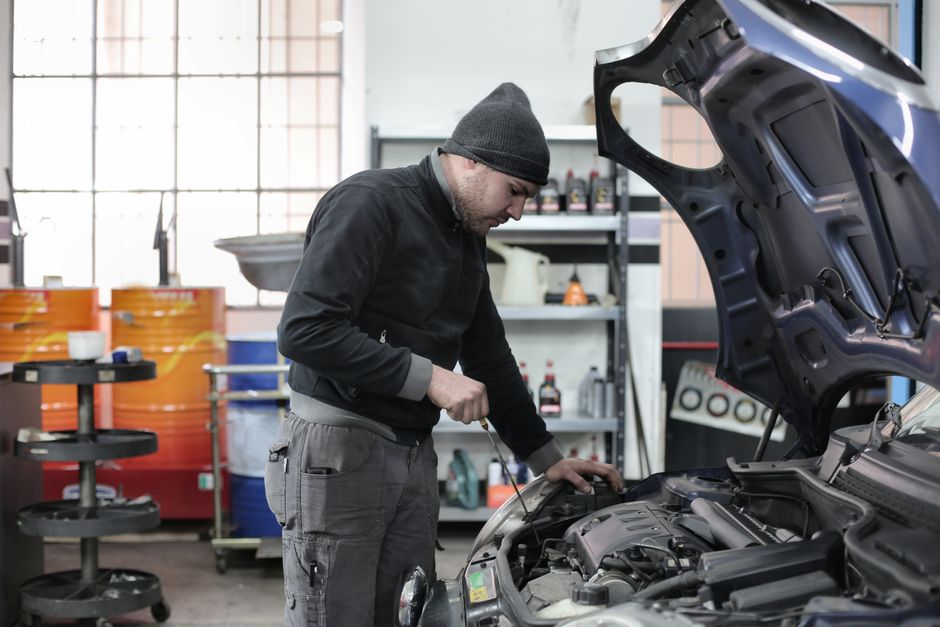
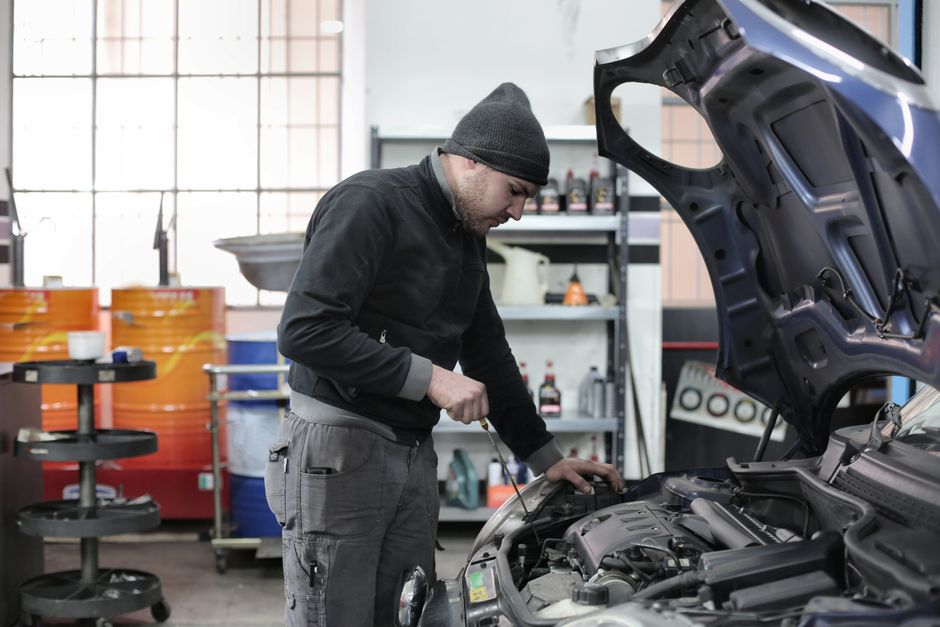
Oil degrades over time and use. Cold starts are especially hard on engines running low or dirty oil. Check your oil level with the dipstick, ideally when the engine is cold and on a flat surface. If it's dark brown to black and sitting at the minimum marker, you're overdue an oil change.
If you're not sure when the oil was last changed, that uncertainty is your answer. Get it changed. The cost of an oil and filter change is between €50 and €100 depending on the car. The cost of an engine rebuild because of oil starvation on a cold January morning is considerably more.
The Spare Wheel Nobody Checks
Here's one that gets mechanics laughing, in a tired sort of way. Someone has a blowout. They pull over. They open the boot. The spare is flat, or missing entirely because they never replaced it after the last puncture. Some cars have a space-saver spare that hasn't been touched since the car was manufactured.
Check your spare tyre now. Check the pressure. If it's a full-size spare, make sure it's roadworthy. If it's a space-saver, know that it has a maximum speed of 80km/h and is for getting to a garage, not driving to Galway.
The Emergency Kit That Saves the Waiting
Mechanics can't stop breakdowns entirely. What they can do is make sure that when something does go wrong, you're not standing in the rain on a dark country road with nothing. A small kit costs almost nothing and lives in the boot.
A hi-vis vest, a warning triangle, a jump starter pack, a torch with working batteries, a decent ice scraper and a small shovel if you're heading anywhere rural in January. That's it. The RSA recommends keeping an emergency kit in your car year-round, and winter is when it earns its place.
The smug feeling from last October's tyre swap is entirely valid, but it covers maybe a quarter of what your car needs before the cold arrives. Get the battery tested. Check the lights. Fill the washer fluid with something that actually works. The hard shoulder on the M7 at half seven in the morning is a lonely place, and entirely avoidable.