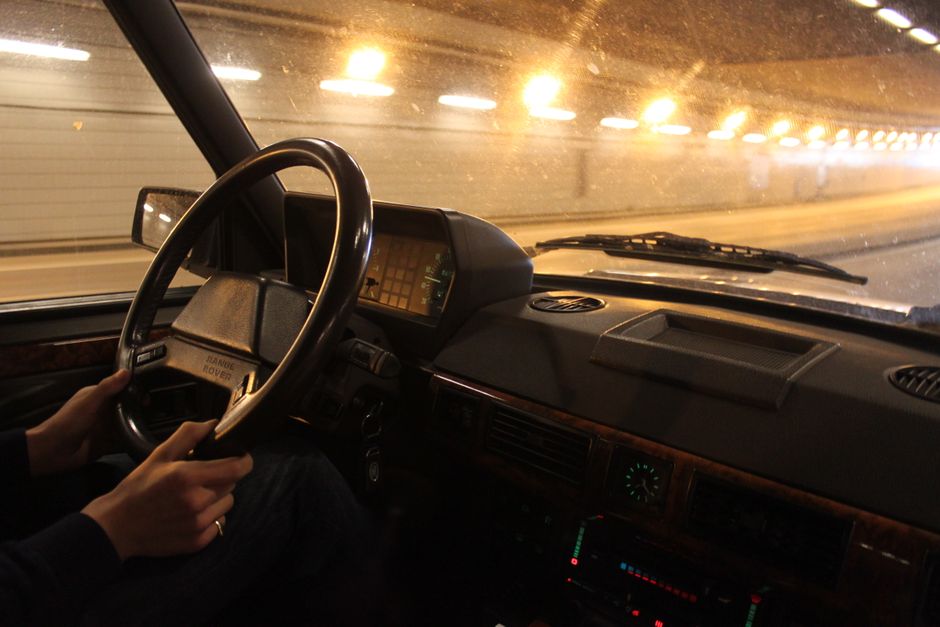
The road looks different at night. Not just darker. Actually different, like someone moved everything three feet to the left while you weren't watching.
That feeling is normal. What's not normal is never preparing for it, then finding yourself driving home from a friend's house at half ten on a wet November Tuesday with zero practice and a sponsor in the passenger seat trying to look calm. Night driving for learners is one of those things everyone assumes will just sort itself out. It won't. The RSA's own figures on young driver collisions point consistently to the hours between 9pm and 3am as the riskiest window for new drivers. Not because darkness itself is the problem, but because nobody told you how to handle it properly.
Your daytime driving skills transfer. But not all of them, and not without adjustment.
What Actually Changes After Dark
The obvious thing is visibility. Your how to drive better in the dark guide covers the practical mechanics, but let's start with what surprises learners most. You lose peripheral vision badly at night. During the day, your eyes catch movement and shape at the edges of the road without you even trying. After dark, that stops working the way you expect. Pedestrians in dark clothes, cyclists without lights, animals at field edges: they all appear later, with less warning.
Depth perception takes a hit too. Judging how far away that oncoming car is becomes genuinely harder when all you have to work with is two lights floating in blackness. New drivers already find distance judgement tricky in daylight. Add darkness and the whole calibration shifts.
Speed feels lower. This is the one that actually catches people. At night, with less visual reference rushing past you, 80km/h can feel like 60. You glance at the speedometer and wonder when that happened.
Fatigue plays a role even for young drivers who think tiredness is for other people. Driving in the dark is cognitively heavier. Your brain is working harder to process less information. After an hour of night driving as a learner, you will be more tired than after two hours of daytime driving. That's not weakness. That's just how it works.
How to Practise Night Driving With a Sponsor
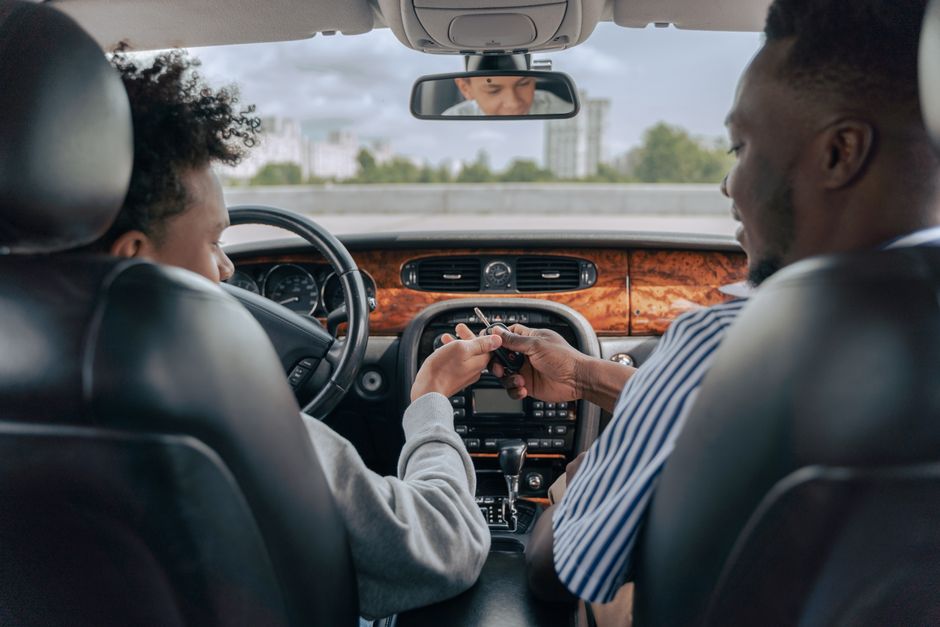
Your sponsor (the full licence holder sitting beside you) is probably more nervous about your night driving than you are. That's grand. Use it. A nervous sponsor pays attention.
Start short. Genuinely short. A 15-minute familiar route in the dark, ideally a road you've already driven in daylight multiple times. The goal is not to cover ground. The goal is to notice what's different. Talk through it as you go. What can you see? What can't you see yet? Where does the light from the headlights actually reach?
Build up in stages. Local roads first. Town driving at night is actually decent practice because there's street lighting and slower speeds. Rural roads come later. Unlit national roads at night are advanced territory and should wait until you're genuinely comfortable with the basics.
Practice specifically with your lights. Know where your dip switch is without looking for it. Know how to kill the full beams fast when someone comes toward you. Practice checking your mirrors more frequently because things creep up from behind differently at night. A set of bright LED headlights in your rear-view can momentarily blind you far more effectively than the same car would in daylight.
Rain and night together deserve their own session. Wet roads at night turn every oncoming headlight into a smear of glare across the tarmac. It's genuinely disorienting the first time. Do it deliberately, in controlled conditions, before it happens by accident on a motorway.
Common Mistakes That Catch Learners Out
Overdriving the headlights. This is the big one. Your dipped headlights illuminate roughly 40 to 50 metres ahead of you. If you're travelling fast enough that you couldn't stop within that distance, you're overdriving your lights. Many learners keep their daytime following speed and simply don't connect that the stopping distance hasn't shrunk because it got dark.
Staring at oncoming lights. When a car approaches with full beams on, the instinct is to look directly at the problem. Don't. Look left, toward the verge or the white line, until they pass. Your eyes need a few seconds to readjust after that kind of glare.
Forgetting about cyclists. A poorly-lit cyclist on a country road in October is essentially invisible until they're thirty metres away. Assume they exist before you can see them. Keep left, slow for bends, treat every dark patch of road like it might have someone in it.
Relying on street lighting and not adjusting when it ends. This one gets learners on the edge of towns constantly. You're in a well-lit 50 zone, feeling comfortable, then the lights end and you're suddenly on a 100 road in total darkness. The transition catches people mid-sentence or mid-thought. Watch for it.
Forgetting that other drivers can't see you properly either. Night driving changes the information available to everyone on the road. At junctions, don't assume that car has clocked you. At pedestrian crossings, check twice. The person stepping out may not have seen your lights until too late.
What to Tell Your Sponsor Before You Go Out
Ask them to let you drive. This sounds obvious but sponsors who are relaxed in daylight can become back-seat operators the moment it gets dark. You need to actually make decisions, not just carry out instructions. If the sponsor is too anxious to let you think, start in an empty car park at night, just getting used to the lights, the mirrors, the difference in what you can see.
Ask them to point out what they see before you do. Not to take over, but to show you what experienced eyes notice. The fox at the field gate. The cyclist a hundred metres ahead. The parked truck with no rear lights. That awareness is what you're building.
EDT and Night Driving
Your Essential Driver Training lessons cover a range of conditions and competencies, but night driving specifically gets less structured attention than it deserves. If you haven't driven at night with your instructor at all, ask. Some instructors will schedule an evening lesson without being asked. Others won't unless you raise it. Raise it.
The driving test itself won't be in the dark, but the roads afterward will be.
That's the whole point. The test ends. The November commutes don't.