Your first insurance quote lands and it feels like a misprint. Four figures. Sometimes five. For a 2010 Volkswagen Polo with 130,000km on it.
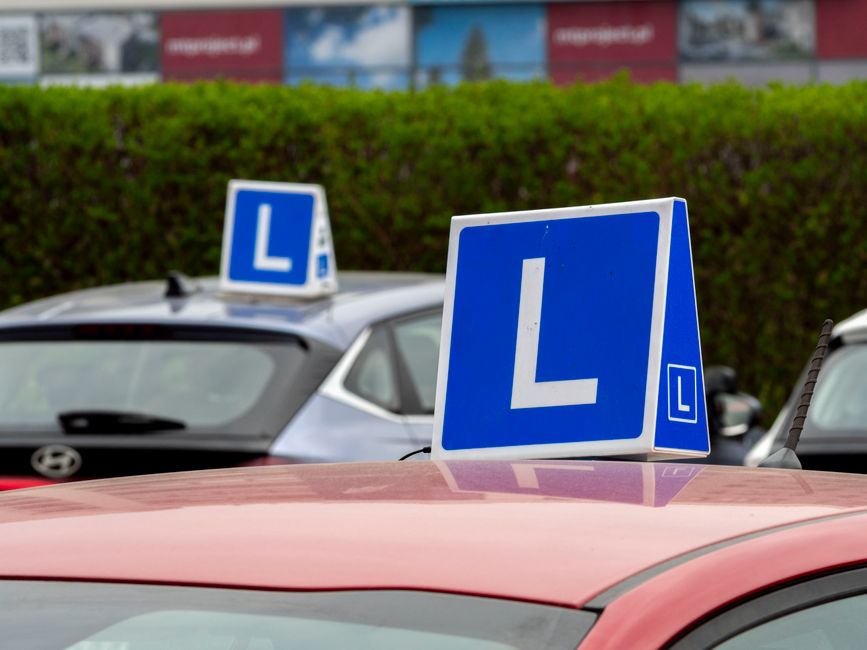
Part of the reason Irish car insurance quotes have gone so high is simple: insurers don't know you yet. You're a 19-year-old with a freshly laminated licence and, statistically, your age group has the worst collision rates on the road. The insurer doesn't care that you're a careful person. They care about the cohort. And the cohort is expensive.
Telematics insurance, what most people call black box insurance, is the industry's answer to that problem. Prove you drive well, and we'll price you accordingly. It sounds fair. It mostly is. But there's more to unpack than the brochure suggests.
What a Black Box Actually Does
The device itself is small. Either a plug-in unit (OBD dongle, goes into the port under your steering column) or a hardwired box fitted by a technician. Some insurers now skip the hardware entirely and use a smartphone app instead.
Whichever format, it's collecting the same core data:
- Speed relative to posted limits
- Acceleration sharpness (how hard you're pulling away from lights)
- Braking force (do you brake early and gently, or stamp on the pedal)
- Cornering smoothness
- Time of day you're driving (late night journeys score worse)
- Mileage
Some policies also log location. That's the one that makes people uncomfortable, and we'll come to it.
All of this gets turned into a score. Usually 0 to 100. Some insurers show it weekly via an app. Others just use it to calculate your renewal price. The higher your score, the bigger the discount next year.
Who Offers Black Box Insurance in Ireland Right Now
The Irish market is smaller than the UK for telematics, but it's growing. The main names offering some form of scored or monitored policy here include:
Aviva. Their young driver telematics product uses app-based monitoring. No physical device needed. They score on speed, braking, acceleration, and time of day. Good scores can translate to meaningful renewal discounts.
AXA. Have offered telematics options for younger drivers, often bundled with their student or new driver products.
AA Ireland. Their connected car offering monitors driving behaviour and provides feedback through an app. Aimed squarely at the under-25 market.
Insuremycar.ie and comparison platforms. These aggregate policies including telematics options from multiple underwriters. Worth checking because the underlying insurer matters, not just the brand selling you the policy.
The Irish market hasn't gone as deep into telematics as Britain, where companies like Marmalade and Insurethebox built their entire business around it. Here it's still largely an add-on option rather than a distinct product category. That's changing, but slowly.
What the Savings Actually Look Like
Here's where honesty is needed, because the marketing is often vague.
The upfront premium reduction for opting into a telematics policy is typically modest. Maybe 5 to 15 percent on year one. The real money is in renewal. A consistently strong scorer, someone who drives mostly in daylight, brakes smoothly, and doesn't treat amber lights as a challenge, can realistically see 20 to 30 percent off their year-two premium compared to a standard policy.
For a 20-year-old paying €2,400 on a standard policy, that's potentially €500 to €700 saved annually. Real money. The catch is that poor scores can increase your premium too. Some policies cap the downside. Others don't. Read the small print before you sign.
The time-of-day scoring is the one that catches most young drivers out. Journeys between midnight and 5am are typically penalised heavily regardless of how well you drive them. If you're finishing shifts late or coming home from nights out (as a sober driver, naturally), those trips will drag your score down. Know this going in.
The Privacy Question Nobody Fully Answers
Your insurer knows where you drove, when you drove there, how fast you went, and how smoothly you handled the car. That's not a conspiracy theory, it's the product.
The data is used to calculate your score and price your renewal. But the question people should be asking is: who else can access it, and under what circumstances?
In Ireland, GDPR applies. Your insurer needs a lawful basis to process your data and must tell you how long they keep it. You have the right to request access to your own telematics data. What most policies are less clear about is whether that data could be used against you in the event of a claim dispute or shared with third parties.
Read the data processing section of your policy. Not the summary. The actual section. Look for how long location data is retained and whether it's shared with anyone beyond the underwriter. If a policy is vague on that, it's worth pushing customer service for a written answer before you sign.
This isn't a reason to avoid telematics. It's a reason to go in with your eyes open.
How to Score Well Without Gaming the System
The irony is that scoring well on a telematics policy mostly just means driving properly. Which is the point.
Drive in daylight where your schedule allows. Leave enough following distance to brake gently rather than sharply. Don't accelerate hard away from junctions. Take corners at a pace where your passengers aren't reaching for the grab handle.
The time-of-day element is the only one that's genuinely structural rather than skill-based. If your lifestyle means you drive regularly between midnight and 4am, a telematics policy may not be the right fit regardless of your skill behind the wheel.
Check your score regularly through the app. Most insurers flag the specific events that dragged your score down. A hard braking event on the N7 on Tuesday at 7pm. That's useful feedback. Use it.
Is It Worth It
For most young drivers, yes. Particularly in that first year post-test when you have no claims history and no no-claims bonus to lean on.
The savings are real if you drive sensibly. The data trade-off is real but manageable if you read your policy properly. And the discipline of knowing your driving is scored tends to produce better drivers, which is the whole point of the exercise.
The black box doesn't lie. For most young drivers, that's actually an advantage.